

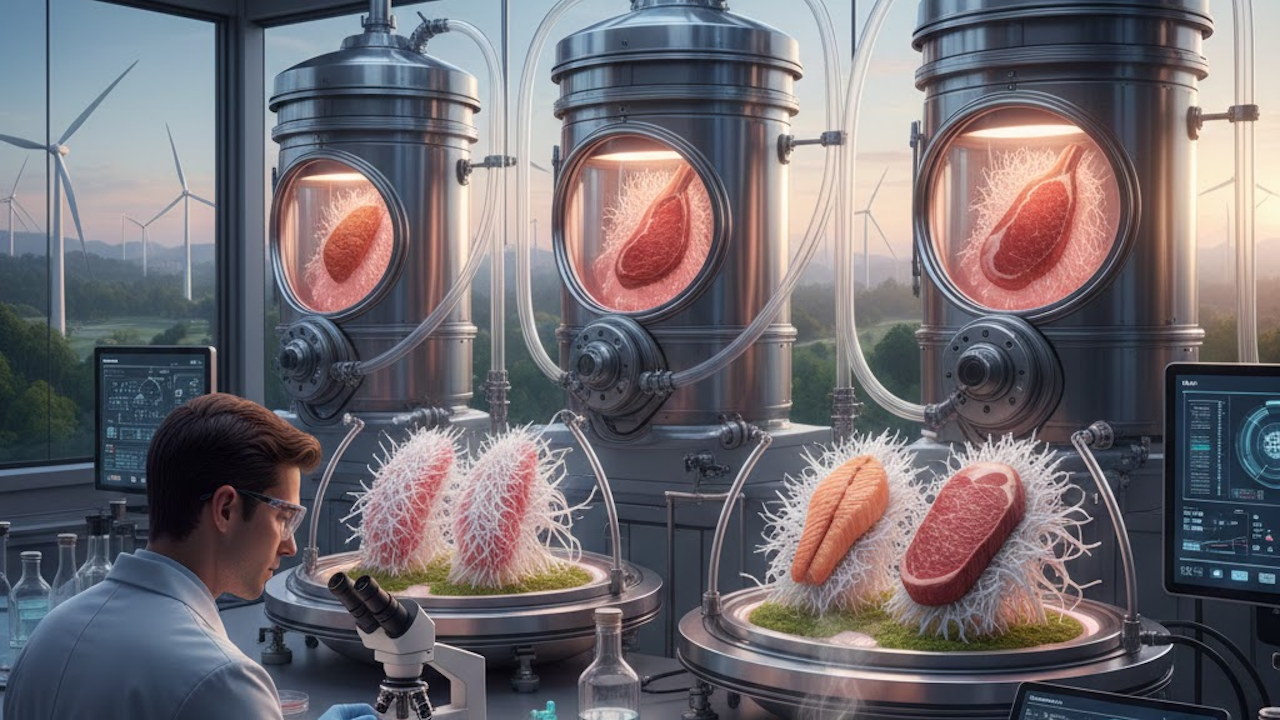
The global food landscape is undergoing a transformation that once lived only in the pages of science fiction. In 1931, Winston Churchill famously predicted that we would eventually escape the absurdity of growing a whole chicken just to eat the breast or wing. Today, that vision has materialized into a multi-billion-dollar industry known as cellular agriculture. Lab-grown meat, also called cultivated or cell-based meat, is no longer a theoretical curiosity but a tangible reality available in select markets around the world.
As of 2026, the industry has moved from proof-of-concept burgers to a diverse array of products including cultivated salmon, ribeye steaks, and even hybrid pet foods. This shift represents one of the most significant pivots in human history: the decoupling of meat production from animal slaughter.
The Science of Cultivation: From Biopsy to Burger
The process of creating cultivated meat is a feat of modern bio-engineering. It begins with a small sample of cells, often obtained via a painless biopsy from a living animal or from a fertilized egg. These cells are typically stem cells, which possess the unique ability to proliferate and differentiate into various tissue types.
The production follows a structured four-step path:
- Cell Isolation: Scientists select high-quality cells that can replicate quickly. These are often “immortalized” cell lines that can divide indefinitely, reducing the need for repeated animal biopsies.
- Proliferation: The cells are placed in large, stainless-steel vessels called bioreactors. These tanks act like an artificial womb, providing a controlled environment with the perfect temperature and oxygen levels.
- Feeding the Culture: To grow, the cells need a “culture medium.” This is a nutrient-rich soup containing amino acids, salts, sugars, and vitamins. While early versions relied on fetal bovine serum, 2026 standards have shifted almost entirely to animal-free, plant-based media to ensure the process remains ethical.
- Scaffolding and Maturing: To move beyond a formless paste of cells, manufacturers use “scaffolds.” These are edible structures, often made of plant-based collagen or cellulose, that give the cells a place to latch onto. This allows the meat to develop the familiar texture of a steak or a fillet.
Environmental and Ethical Impact
The primary driver behind the cultivated meat movement is the urgent need for a more sustainable food system. Traditional livestock farming is a heavy burden on the planet, contributing significantly to greenhouse gas emissions and land degradation.
Resource Efficiency
Cultivated meat offers a staggering reduction in resource use compared to industrial beef production. Studies indicate that lab-grown alternatives can use up to 99% less land and 96% less water. By moving production into urban bioreactors, we can theoretically return millions of acres of grazing land to their natural state, aiding in reforestation and biodiversity recovery.
Climate Considerations
The climate impact of lab-grown meat is nuanced. While traditional cattle produce large amounts of methane, a potent but short-lived gas, lab facilities primarily produce carbon dioxide from energy use. As the global energy grid transitions to renewable sources like wind and solar, the carbon footprint of cultivated meat is expected to drop by over 90% compared to conventional beef.
Animal Welfare and Health
Beyond the environment, the ethical argument is clear. Cultivated meat eliminates the need for intensive factory farming and the slaughter of billions of animals annually. Furthermore, because the meat is grown in a sterile environment, it is produced without antibiotics, significantly reducing the risk of zoonotic diseases and foodborne illnesses like E. coli.
Market Reality in 2026: What’s on the Menu?
While Singapore was the first to approve cultivated chicken in 2020, the mid-2020s have seen a regulatory domino effect. The United States, Israel, and the United Kingdom have all issued updated guidance to help these products reach grocery store shelves.
| Product Type | Availability Status (2026) | Primary Consumer Target |
| Cultivated Chicken | Widely available in select upscale restaurants. | Eco-conscious diners. |
| Hybrid Products | Emerging in specialty grocery stores. | Flexitarians looking for lower costs. |
| Cell-Based Seafood | Limited release in coastal tech hubs. | Sushi enthusiasts. |
| Cultivated Pet Food | High availability via subscription. | Pet owners concerned with ethics. |
Challenges on the Horizon
Despite the optimism, the path to total market dominance is not without hurdles. The “Frankenstein food” perception remains a significant barrier for some consumers who view the process as unnatural. Transparency in labeling and education about the safety of cellular agriculture are the industry’s current priorities.
Cost also remains a factor. While the price of a cultivated burger has dropped from hundreds of thousands of dollars in 2013 to a premium restaurant price today, it still struggles to compete with the subsidized prices of industrial meat. Scaling up production to the “mega-bioreactor” level is the final technical mountain the industry must climb to achieve true price parity.
The Next Step
The future of meat is no longer a question of “if,” but “when” it will become a household staple. As technology matures and costs decline, our grandchildren may find the idea of raising a whole animal for a single meal as strange as we find the idea of a world without the internet.