

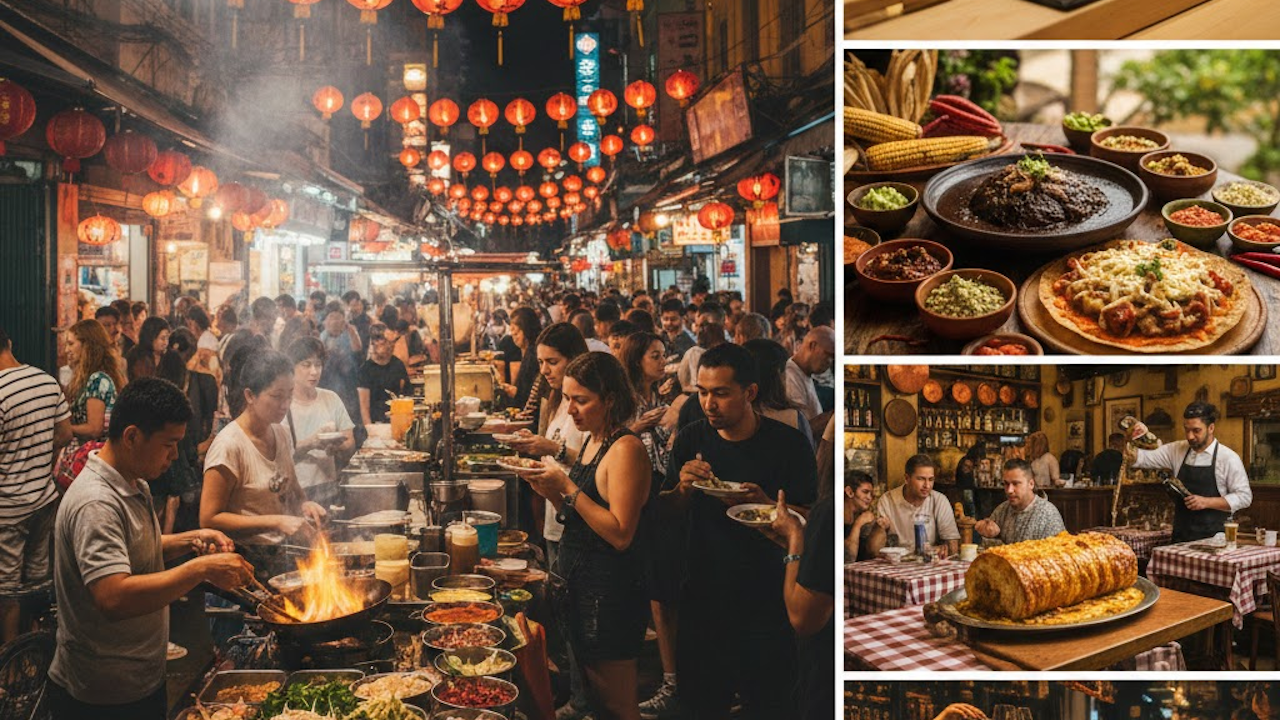
Travel has always offered more than landscapes and landmarks. For a growing number of people, the real journey unfolds at the table, in the market, and along the street where the air carries the scent of grilling meat, simmering spices, or fresh bread. Culinary exploration turns eating into a form of discovery. It rewards curiosity about how ingredients, history, climate, and culture shape what ends up on a plate. The destinations below stand out because they invite visitors to go beyond tourist menus and encounter food as locals experience it: seasonal, regional, and deeply tied to place.
Italy remains one of the most rewarding starting points. Its cuisine is not a single tradition but a collection of fiercely local ones. In Naples, the pizza is thin, blistered, and topped with little more than San Marzano tomatoes, mozzarella di bufala, and basil. The city’s bakers and pizzaioli treat the craft with near religious seriousness, and the best places are often unassuming neighborhood spots rather than polished restaurants. Further north, Bologna and the surrounding Emilia-Romagna region offer a different education. Here the focus shifts to fresh egg pasta, slow-cooked ragù, and aged Parmigiano-Reggiano. Markets in the old town display wheels of cheese, links of salumi, and baskets of seasonal vegetables that reveal how geography and careful production create flavor. Sicily adds yet another layer: Arab, Spanish, and Greek influences appear in dishes that balance sweet and savory, such as pasta with sardines, eggplant caponata, and cannoli filled with ricotta. Travelers who move slowly through these regions learn that Italian food rewards attention to season and origin more than any single recipe.
Japan presents a different kind of intensity. Precision, seasonality, and respect for ingredients define the experience. In Tokyo, sushi counters range from neighborhood spots where the fish is simply excellent to high-end establishments where the chef’s knife work and timing become a performance. The city’s ramen scene is equally serious, with shops specializing in specific broths, noodle textures, and toppings that attract lines of devoted locals. Kyoto offers a quieter, more formal approach through kaiseki, the multi-course meal that follows the calendar and highlights the finest produce of the moment. Markets such as Nishiki in Kyoto or the outer areas of Tsukiji in Tokyo let visitors see the raw materials before they become dishes. Street food in Osaka, from takoyaki to okonomiyaki, shows another side of Japanese eating culture: casual, communal, and full of playful invention. For culinary explorers, Japan teaches the value of restraint and the power of perfect execution.
Thailand thrives on contrast and accessibility. Bangkok’s street food is legendary for good reason. Vendors prepare dishes with a speed and consistency that come from years of practice. Pad Thai, som tam, boat noodles, and grilled meats appear on nearly every corner, often for the price of a few dollars. The city’s wet markets and night markets supply the ingredients and the atmosphere in equal measure. Further north, Chiang Mai introduces the aromatic, herb-heavy cooking of the Lanna tradition, with dishes that use more galangal, lemongrass, and local greens. Southern Thailand brings hotter, sharper flavors influenced by Malay cooking and abundant seafood. Travelers who eat with locals quickly discover that Thai food is less about fixed recipes and more about balance: sour, sweet, salty, spicy, and bitter working together. Learning a few phrases and pointing at what others are eating often leads to the best meals.
Mexico’s culinary landscape is vast and still underappreciated by many outside the country. Mexico City alone could occupy weeks of exploration. Street stands serve tacos al pastor with their vertical spit of marinated pork, while more formal restaurants reinterpret pre-Hispanic ingredients with modern technique. Oaxaca stands out for its complex moles, some containing dozens of ingredients, and for its markets filled with chocolate, cheese, and dried chiles. The Yucatán Peninsula offers different flavors still: slow-cooked cochinita pibil wrapped in banana leaves, citrus-marinated seafood, and the distinctive use of achiote. In each region, the food reflects indigenous, Spanish, African, and other influences layered over centuries. Visitors who seek out markets, family-run fondas, and regional specialties leave with a far richer understanding of Mexican identity than any single dish could provide.
France continues to set a high standard for technique and product quality. Paris remains a center of both classic and contemporary cooking, but the real education often happens outside the capital. Lyon, long considered the gastronomic heart of the country, offers bouchons that serve hearty regional dishes such as quenelles, saucisson, and rich stews. In Provence, the cooking turns lighter and more aromatic, relying on olive oil, herbs, tomatoes, and seafood from the Mediterranean. Bordeaux and Burgundy pair exceptional wine with equally thoughtful food, while the cheese traditions of regions such as Normandy and the Auvergne reward those willing to seek out small producers. French markets, whether in Paris or smaller towns, display the season’s best produce with a clarity that makes shopping itself a lesson. For culinary explorers, France demonstrates how rigorous training and respect for ingredients can elevate everyday eating.
India’s diversity makes it almost impossible to summarize. The food of the north, with its breads, rich gravies, and tandoor cooking, differs sharply from the rice-based, coconut-influenced dishes of the south. Kerala’s coastal cuisine features fish curries, appam, and the use of curry leaves and mustard seeds. Rajasthan’s desert cooking relies on clever preservation techniques and bold spices. Mumbai’s street food scene, from vada pav to bhel puri, shows how urban energy shapes what people eat on the go. Delhi’s old city still offers some of the most intense and flavorful street snacks in the country. Across these regions, spices are not mere seasoning but the architecture of flavor. Travelers who approach Indian food with openness to regional variation and a willingness to eat outside hotel restaurants discover a cuisine of extraordinary range and depth.
Peru has emerged in recent decades as one of the most exciting culinary destinations in the Americas. Lima serves as the main stage, where chefs combine indigenous ingredients such as quinoa, potatoes, and aji peppers with techniques from Japanese, Chinese, and European traditions. Ceviche, prepared with the freshest catch and sharp citrus, remains a national treasure. In the Andean highlands, different potatoes, corn, and meats appear in dishes that reflect altitude and climate. The Amazon region contributes its own unique ingredients and flavors. Markets in Lima and Cusco display the country’s biodiversity in colorful abundance. For explorers, Peru offers both traditional home cooking and some of the most inventive restaurant kitchens in the world, often side by side.
Spain rewards those who move beyond the obvious. Barcelona’s markets, especially La Boqueria, provide an immediate education in Catalan produce and seafood. The Basque Country, particularly San Sebastián, combines outstanding pintxos culture with some of Europe’s most celebrated restaurants. In Andalusia, the cooking turns toward olive oil, sherry, gazpacho, and the slow-cooked stews of the interior. Valencia remains the spiritual home of paella, though the best versions often appear outside the tourist center. Spanish food culture places high value on quality ingredients and social eating. Standing at a bar with a plate of anchovies or cured ham and a glass of wine is as essential to the experience as any formal meal.
Vietnam’s cuisine emphasizes freshness, herbs, and balance. Hanoi’s pho shops serve bowls of clear, aromatic broth with rice noodles and carefully chosen cuts of meat, often early in the morning. The city’s street food extends to bun cha, banh mi, and a wide range of fresh spring rolls. In Ho Chi Minh City, the southern style tends to be slightly sweeter and more varied, with an abundance of tropical fruit and seafood. Markets throughout the country overflow with herbs, greens, and live ingredients that give Vietnamese cooking its distinctive brightness. Travelers who learn to navigate the plastic stools and sidewalk stalls find meals that are both inexpensive and deeply satisfying.
Morocco closes this survey with its own rich traditions. In Marrakech and Fez, the medinas contain stalls selling tagines, couscous, grilled meats, and pastries flavored with orange blossom and almonds. The use of spices such as cumin, cinnamon, saffron, and ras el hanout creates layered, aromatic dishes. Street food includes harira soup, grilled skewers, and fresh-squeezed juices. The country’s markets also supply preserved lemons, olives, and dried fruits that appear throughout the cooking. Moroccan hospitality often means long meals shared with others, where the food becomes a vehicle for conversation and connection.
These destinations share certain qualities that matter to culinary explorers. They possess strong local food cultures that remain accessible rather than locked behind high prices or exclusive reservations. Markets and street food play central roles alongside more formal dining. Regional variation is significant, rewarding those who travel beyond capital cities. History is visible on the plate through layers of influence and adaptation. Most importantly, the best experiences usually involve some form of participation: shopping for ingredients, watching preparation, asking questions, or simply eating what the people around you are eating.
Practical approaches improve the journey. Learning a few words related to food helps. Observing hygiene practices and choosing busy stalls reduces risk. Eating with the seasons and seeking out local specialties rather than international standards leads to better meals. Supporting small producers and family-run places sustains the traditions that make these destinations special. Dietary restrictions can be navigated with patience and clear communication, though some cuisines are more adaptable than others.
Culinary exploration does not require extreme adventure or unlimited budgets. It asks mainly for curiosity, an open mind, and a willingness to let flavor guide the itinerary. The destinations described here offer rich rewards for those who approach them this way. Each meal becomes a conversation with place, history, and the people who continue to shape these food cultures every day. The world remains full of tables waiting to be discovered.