

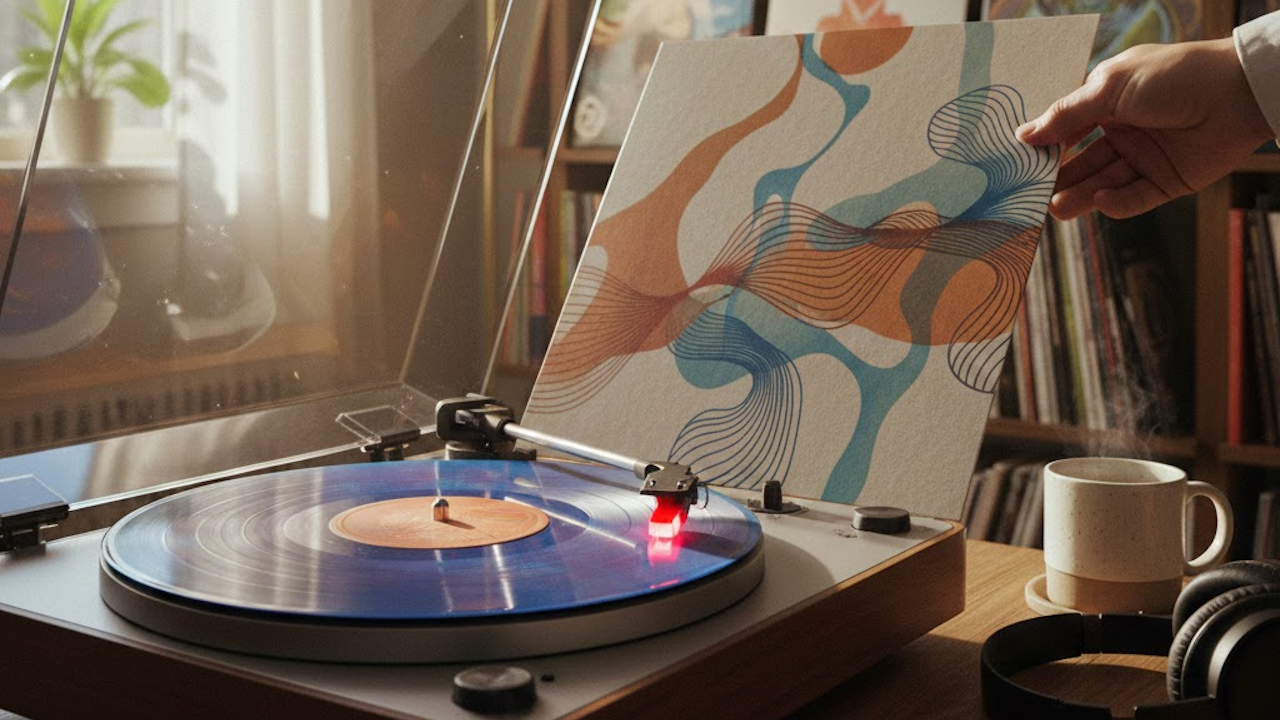
In an era defined by the invisible and the instantaneous, the heavy, tactile presence of a vinyl record feels almost revolutionary. Music has never been more accessible than it is today, yet the digital age has inadvertently created a hunger for the very thing it sought to replace. As we move through 2026, the vinyl revival is no longer a niche hobby for audiophiles or a fleeting exercise in nostalgia. It has become a dominant cultural force, driven by a desire for ownership, authenticity, and a physical connection to art.
The Ritual of Listening
The primary appeal of vinyl lies in the ritual. In a streaming environment, music often becomes background noise, a utility to fill the silence of a commute or a workout. One can skip a track with a flick of a thumb, treating songs as disposable data points. Vinyl demands the opposite.
To play a record, you must physically select the sleeve from a shelf, carefully slide the disc out, and place it on the platter. The act of lowering the needle is a moment of focused intention. Because the medium does not allow for easy skipping, listeners are encouraged to experience an album as a cohesive work of art, exactly as the artist intended. This “slow listening” movement provides a much-needed digital detox, offering a sanctuary of focus in a world of constant notifications.
The Sound of Imperfection
While digital files offer pristine clarity, many listeners argue that they lack the “soul” of analog sound. Vinyl provides a warmer, richer frequency response that many describe as more organic. The slight crackle of the needle hitting the groove is not seen as a flaw by enthusiasts, but rather as a fingerprint of authenticity.
In a technical sense, analog recording captures a continuous wave of sound, whereas digital formats must slice that sound into millions of tiny snapshots. Even if the human ear cannot always distinguish the mathematical difference, the psychological impact of a “full” sound stage is undeniable. It creates an atmosphere of intimacy that compressed MP3s simply cannot replicate.
A Physical Anchor in a Rental Economy
We currently live in a “rental economy.” We subscribe to our movies, our software, and our music libraries. This lack of permanent ownership has created a sense of instability. If a streaming service loses a licensing deal, your favorite album might vanish overnight.
Owning a record provides a sense of permanence. It is a physical artifact that belongs to you regardless of internet connectivity or corporate contracts. For younger generations like Gen Z and Gen Alpha, who have grown up with entirely intangible media, the weight and presence of a 12-inch gatefold sleeve are Novel. These objects serve as more than just music storage; they are pieces of home decor and expressions of identity. A bookshelf filled with records says something about the owner’s taste in a way that a private Spotify playlist never can.
Supporting the Artist
The economics of the modern music industry have also played a role in the vinyl surge. It is widely known that streaming royalties are minuscule, often requiring millions of plays for an artist to earn a living wage.
Buying a record is a way for fans to vote with their wallets. It is a direct investment in the creator’s career. For independent artists and smaller labels, vinyl sales can be the difference between a profitable tour and a financial loss. This “superfan” culture has turned the purchase of a record into a badge of honor, a tangible proof of loyalty that benefits the creator far more than a casual stream.
The Aesthetic of the Object
Finally, we cannot ignore the visual impact of the medium. The 12-by-12-inch canvas of a record jacket allows for stunning photography, intricate typography, and extensive liner notes. Modern releases often experiment with colored wax, splatter patterns, and etched designs, turning the record itself into a piece of sculpture.
In the age of Instagram and TikTok, the visual “vibe” of a spinning record is highly shareable. However, beneath the social media surface is a genuine appreciation for craftsmanship. In 2026, as AI-generated content begins to flood the digital landscape, the human touch of a hand-pressed record feels more valuable than ever.
Vinyl is not coming back because it is more convenient than digital music. It is coming back because it isn’t. It is difficult, physical, and imperfect, and in a world that is increasingly none of those things, that is exactly why it matters.