

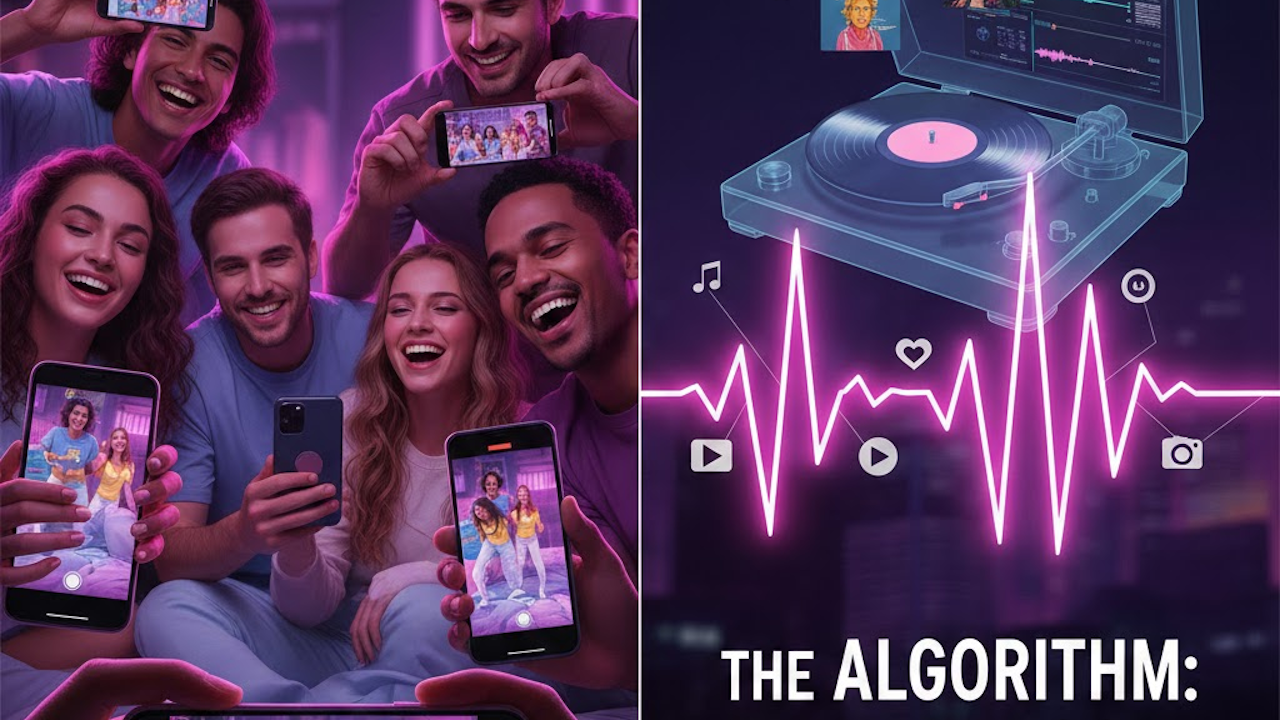
In the modern music landscape, the journey to the top of the Billboard charts no longer begins exclusively in a recording studio or on a radio station. Instead, it often starts in a bedroom where a fifteen second snippet of a song is paired with a clever dance, a relatable meme, or a stunning visual transition. Social media has transformed from a simple promotional tool into the primary engine of the global music industry, turning unknown artists into superstars and resurrecting decades-old tracks for a new generation.
The Birth of a Social Media Hit
The anatomy of a viral song has changed significantly since the rise of platforms like TikTok and Instagram Reels. In the past, a hit was defined by its four minute radio edit. Today, success is often measured by the “meme-ability” of a specific segment. Songs are now frequently engineered or edited to feature a “spark,” which is a punchy lyric or a rhythmic drop that serves as a perfect soundtrack for user generated content.
Data from 2024 and 2025 indicates that over 80% of songs entering the Billboard Global 200 achieved viral status on social media first. This phenomenon is driven by the shift from passive listening to active participation. When users interact with a track by creating their own videos, they are not just consuming music; they are distributing it.
The Resurrection of the Catalog
One of the most surprising effects of social media virality is its power to breathe life into “legacy” tracks. In 2022, Kate Bush’s 1985 hit “Running Up That Hill” reached a global audience through a combination of a Netflix sync and TikTok trends, eventually topping charts nearly forty years after its release.
Similarly, Lady Gaga’s 2011 deep cut “Bloody Mary” became a global sensation in 2023 after fans paired it with a dance from the television show Wednesday. These instances prove that the algorithm does not care about release dates. If a song resonates with a specific mood or aesthetic, it can achieve a “second wind” that often surpasses its original commercial performance.
Case Studies in Viral Success
Several artists have recently demonstrated how to leverage these platforms to build sustainable careers:
- Artemas: The track “i like the way you kiss me” exploded across social media in 2024, using a dark, moody aesthetic that became a staple for “night drive” and fashion content.
- Sabrina Carpenter: While already established, her singles like “Espresso” and “Please Please Please” were supported by highly specific, conversational lyrics that creators used for comedic POVs and summer lifestyle Reels.
- Tommy Richman: His hit “MILLION DOLLAR BABY” showcased the power of the pre-release teaser. By sharing a low fidelity snippet of the song’s infectious beat months before its official drop, he built a massive, hungry audience that drove the song to the top of the charts on its first day of release.
The Algorithmic Engine
The technical driver behind these hits is the recommendation engine. Unlike traditional social media, which prioritizes content from people you already follow, modern platforms surface content based on interest. This allows a song from a completely unknown artist in a different country to land on millions of “For You” pages simultaneously.
The most successful viral tracks usually possess three key traits:
- Rhythmic Clarity: A strong beat that makes it easy to time video edits or dance moves.
- Relatability: Lyrics that describe a universal feeling or a specific social situation.
- Visual Association: A “vibe” that matches popular visual trends, such as “cottagecore,” “grunge,” or “old money” aesthetics.
Conclusion
The era of the viral social media song has democratized the music industry, allowing independent creators to compete with major label stars. However, it has also created a high pressure environment where artists must be content creators as much as musicians. As we move further into 2026, the line between a social media trend and a musical masterpiece continues to blur, proving that the next big hit is likely just one scroll away.