

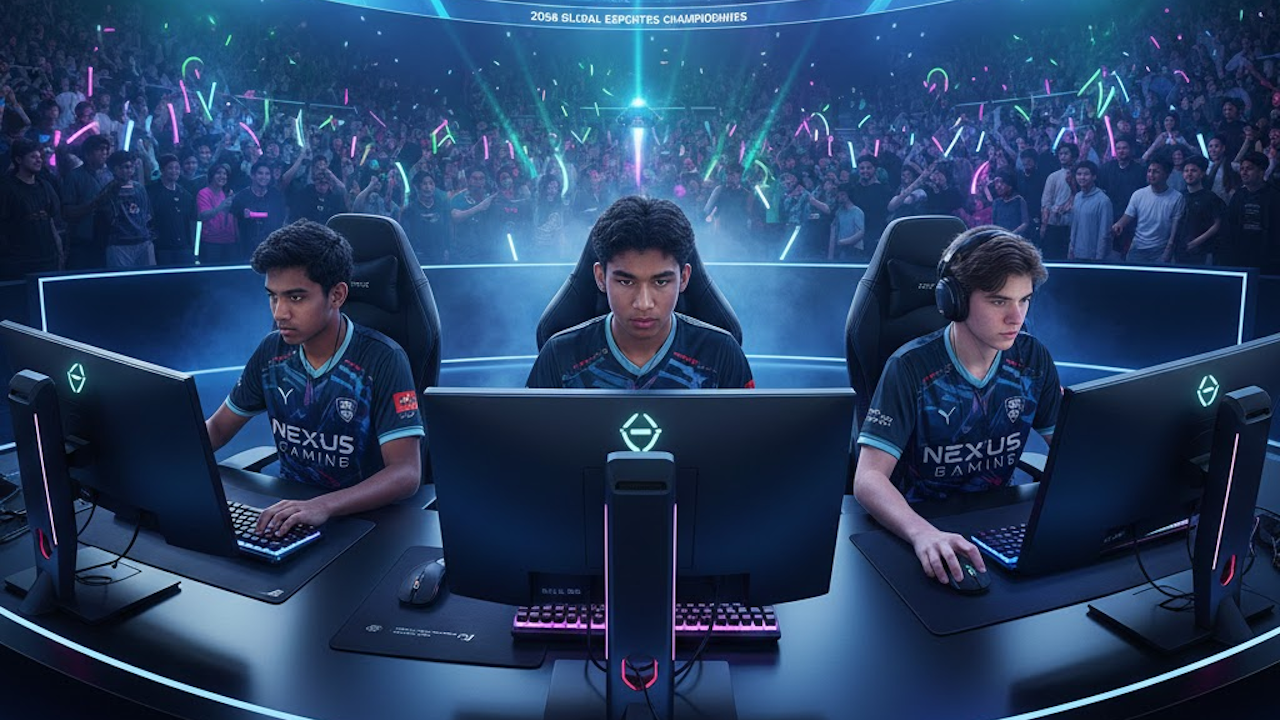
In 2026, the pathway to professional gaming is no longer a niche dream but a hyper accelerated reality. The esports industry has reached a pivotal moment where the barrier between amateur play and professional status is thinner than ever. According to recent data, the global esports audience is projected to exceed 640 million viewers this year, providing the financial backbone for a massive influx of new talent. This surge is not just a result of more people playing games; it is a fundamental shift in how talent is identified, trained, and integrated into the global competitive circuit.
The Age of the Digital Prodigy
One of the most striking trends is the decreasing age of entry for top tier competitors. Games like Valorant, Rocket League, and Fortnite have seen a wave of players reaching professional status before they even graduate from high school. While traditional sports often require a decade of physical maturation, the cognitive and mechanical skills required for gaming can peak in the mid teens.
In Rocket League, the average age of a professional player often hovers around 19, with many world champions securing their titles at 17 or 18. This trend is supported by the fact that reaction times are at their sharpest during these years. Unlike the early 2010s when pro gaming was a precarious career path for college aged individuals, the current ecosystem encourages 15 year olds to treat their hobby with professional level discipline.
Structural Evolution and Academy Systems
The record number of new pros is also a byproduct of better infrastructure. Major organizations such as Team Liquid, G2 Esports, and T1 have invested heavily in academy systems. These programs act as a bridge, taking high ranking players from the public leaderboards and placing them into a structured environment with coaches, analysts, and sports psychologists.
This professionalization of the “scouting” phase mimics the developmental leagues of the NBA or European soccer. Instead of waiting for a player to be “discovered” by a lucky break, teams now use sophisticated AI tools and data analytics to track the performance of thousands of amateurs. When a player shows statistical outliers in high pressure situations, they are often signed to a developmental contract immediately.
The Role of Global Connectivity and Accessibility
The globalization of the industry has opened doors for talent in regions that were previously overlooked. In 2026, the Asia Pacific region accounts for over 57% of all esports viewers, with countries like Vietnam, the Philippines, and Indonesia becoming major exporters of professional talent. The rise of mobile esports has played a massive role here. Because smartphones are more accessible than high end gaming PCs, the talent pool for mobile titles like Mobile Legends: Bang Bang and PUBG Mobile is significantly larger than that of traditional PC games.
Furthermore, the mainstreaming of esports in educational institutions has validated the career path. Thousands of high schools and universities now offer esports programs and scholarships. This academic support provides a safety net that allows young players to pursue professional gaming without the social stigma that once plagued the industry.
Challenges of the Rapid Influx
While the numbers are at record highs, the rapid influx of young talent brings unique challenges. Professional careers in esports are notoriously short, with many players retiring by age 25 due to burnout or the emergence of even faster, younger competitors. The industry is currently grappling with how to provide long term career stability for these young stars.
There is also the question of mental health. Turning pro at 16 means entering a high pressure world of public scrutiny and intense training schedules. Organizations are beginning to prioritize “holistic performance,” which includes physical exercise and mental health support, to ensure that these record breaking numbers of new pros do not lead to record breaking numbers of early retirements.
Looking Ahead
As 2026 progresses, the trend shows no sign of slowing. The integration of generative AI for training and the expansion of cloud gaming will likely lower the barriers even further. We are entering an era where the next global gaming icon is just as likely to be a 16 year old playing on a tablet in Jakarta as a veteran competitor in a Los Angeles studio.