

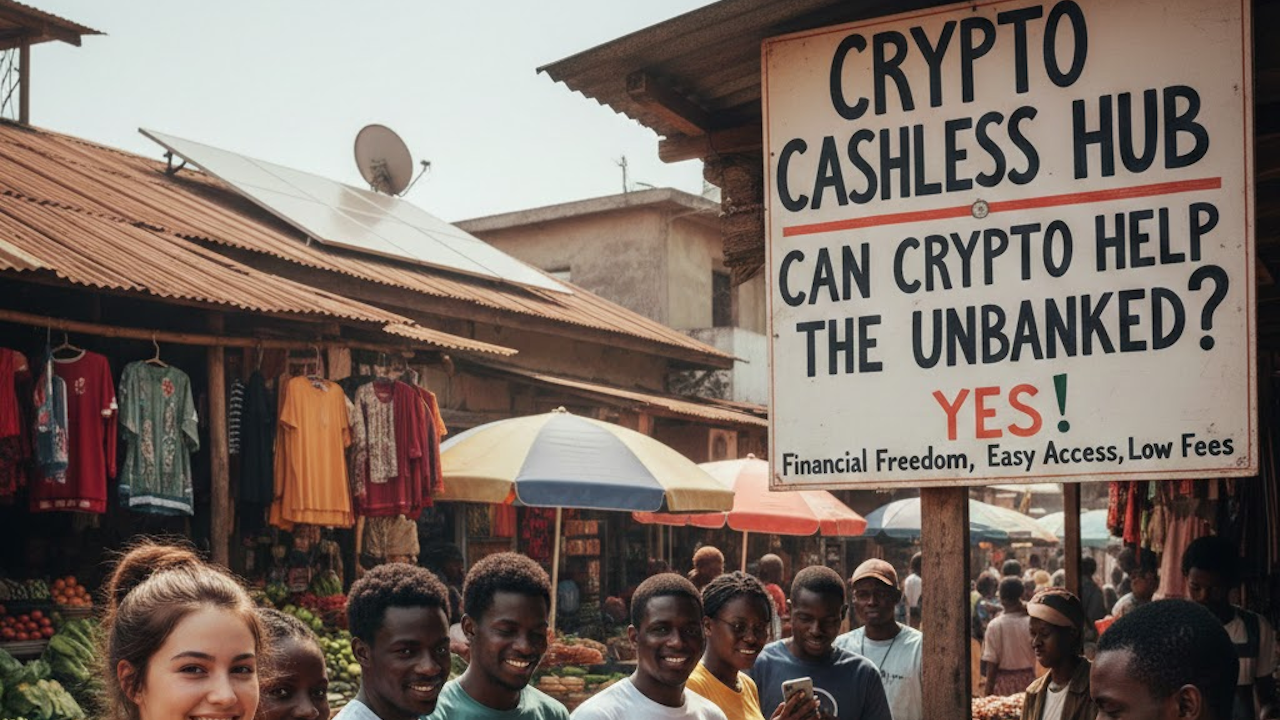
In an increasingly digital world, access to financial services remains a distant dream for billions of people. The unbanked, those without a bank account or access to traditional financial institutions, face significant barriers to economic participation. According to the World Bank’s Global Findex Database 2025, approximately 1.3 billion adults worldwide still lack access to formal financial services. This figure represents a stubborn challenge, even as global financial inclusion has reached record highs, with about 80 percent of adults now having some form of financial account in many regions. The unbanked are disproportionately concentrated in developing economies, where factors like poverty, lack of infrastructure, and regulatory hurdles exacerbate the issue. But could cryptocurrency, often hailed as a revolutionary financial tool, bridge this gap? This article explores the potential of crypto to empower the unbanked, weighing its benefits against substantial challenges, and examines real-world examples and future prospects.
Understanding the Unbanked Crisis
The term “unbanked” refers to individuals who do not have an account at a bank or other financial institution. This exclusion extends beyond mere inconvenience; it limits people’s ability to save securely, receive payments, access credit, or participate in the broader economy. The World Bank estimates that over 650 million of the unbanked live in just eight countries, highlighting the concentration in low-income regions such as sub-Saharan Africa, South Asia, and Latin America. In many unbanked countries, fewer than one in three adults has a financial account, yet mobile phone ownership is widespread, often exceeding 70 percent. This digital divide creates opportunities for alternative solutions.
Poverty is a primary driver, but other factors include geographic isolation, lack of required documentation like identification, high fees for basic services, and distrust in traditional banks due to corruption or instability. In developing economies, remittances from abroad are a lifeline, yet high transfer fees through conventional channels can eat up to 7 percent of the amount sent. The unbanked often rely on cash, which is vulnerable to theft and inflation, or informal lending circles that offer limited scalability. As the global economy digitizes, these populations risk being left further behind, unable to engage in e-commerce, digital payments, or investment opportunities.
Despite progress, with financial inclusion rising from 51 percent in 2011 to around 76 percent by 2024 in developing economies, the remaining gap affects women, rural dwellers, and the poorest disproportionately. The COVID-19 pandemic accelerated digital adoption, but it also underscored inequalities, as stimulus payments and aid often bypassed those without accounts. Addressing this crisis requires innovative, accessible tools that bypass traditional barriers, which is where cryptocurrency enters the conversation.
What Is Cryptocurrency and How Does It Work?
Cryptocurrency is a digital or virtual form of money that uses cryptography for security and operates on decentralized networks based on blockchain technology. Unlike traditional currencies issued by governments, cryptocurrencies like Bitcoin, Ethereum, and stablecoins such as USDT are not controlled by any central authority. Blockchain, the underlying technology, is a distributed ledger that records transactions across many computers, ensuring transparency and reducing the need for intermediaries.
For the unbanked, the appeal lies in its accessibility. All one needs is a smartphone and internet connection to create a digital wallet, send or receive funds, and even earn interest through decentralized finance (DeFi) platforms. Transactions can be borderless and near-instantaneous, with fees often lower than those of banks or money transfer services like Western Union. Stablecoins, pegged to stable assets like the US dollar, mitigate the volatility associated with cryptocurrencies like Bitcoin, making them more suitable for everyday use.
Crypto’s decentralized nature means it can operate in areas where banks are absent or unreliable. In theory, it democratizes finance by allowing anyone to participate without needing approval from a financial institution. However, adoption requires basic digital literacy and reliable infrastructure, which are not universally available.
How Crypto Can Help the Unbanked
Cryptocurrency holds promise as a tool for financial inclusion by addressing key pain points for the unbanked. First, it enhances accessibility. In regions with high mobile penetration but low banking infrastructure, crypto wallets can serve as a gateway to financial services. For instance, apps like those from Binance or local platforms in Africa allow users to buy, sell, and store crypto with minimal setup. This is particularly beneficial in sub-Saharan Africa, where only about 45 percent of adults have bank accounts, but mobile money services have paved the way for crypto integration.
Second, crypto revolutionizes remittances, a critical economic driver in developing countries. Traditional remittances cost an average of 6.5 percent in fees, but crypto transfers can be as low as 1 percent or less. Platforms like Telcoin focus on this, enabling low-cost transfers to the underbanked. In countries like the Philippines or Mexico, where remittances account for significant portions of GDP, crypto reduces costs and speeds up delivery, allowing families to receive funds directly into digital wallets convertible to local currency.
Third, crypto facilitates savings and lending without traditional credit checks. DeFi protocols offer interest-bearing accounts and peer-to-peer loans, potentially yielding higher returns than bank savings accounts in inflationary environments. For the unbanked, this means building wealth without needing collateral or a credit history. Bitcoin, for example, provides a store of value in hyperinflationary economies like Venezuela or Zimbabwe, where local currencies depreciate rapidly.
Moreover, crypto promotes economic empowerment through microtransactions and gig economy participation. Freelancers in developing nations can receive payments in crypto via platforms like Upwork, bypassing currency conversion fees. In agriculture-heavy regions, blockchain-based supply chains ensure fair payments to small farmers. Studies suggest that crypto adoption is highest in developing economies across Asia, Africa, and Latin America, driven by these practical benefits. The primary reason for this growth is the resolution of economic problems like high inflation and limited access to global markets.
Challenges and Risks of Crypto for the Unbanked
Despite its potential, cryptocurrency is not a panacea and comes with significant hurdles that could hinder its role in helping the unbanked. Volatility is a major concern; cryptocurrencies like Bitcoin can fluctuate wildly, eroding savings overnight. While stablecoins offer stability, they are not immune to risks, as seen in past de-pegging events. For populations already vulnerable to economic shocks, this instability could exacerbate poverty rather than alleviate it.
Regulatory uncertainty poses another barrier. Many governments in developing countries view crypto with suspicion, fearing money laundering, tax evasion, or capital flight. Bans or restrictions, as in Nigeria in 2021 (later partially lifted), can stifle adoption. Technological constraints, including unreliable internet and low digital literacy, limit accessibility. Not everyone has a smartphone capable of running crypto apps, and power outages in rural areas compound the issue.
Security risks are rampant; scams, hacks, and phishing attacks target novice users. The irreversible nature of blockchain transactions means lost funds are gone forever. Socio-economic challenges, such as gender disparities in tech access, further complicate matters. Women, who make up a larger share of the unbanked, often face additional barriers to adopting crypto. Environmental concerns, like the energy-intensive mining of Bitcoin, also draw criticism, though shifts to proof-of-stake models in networks like Ethereum aim to address this.
Economic instability drives adoption but also highlights risks; in Turkey, where currency crises have boosted crypto use, users must navigate volatile markets carefully. Overall, while crypto offers opportunities, its challenges include regulatory hurdles, technological barriers, financial volatility, and socio-economic issues that must be mitigated for sustainable impact.
Case Studies: Crypto in Action
Real-world examples illustrate crypto’s mixed success. In El Salvador, the government adopted Bitcoin as legal tender in 2021, aiming to bank the unbanked through the Chivo wallet. While it facilitated remittances and tourism, adoption has been uneven due to volatility and tech issues. In Nigeria, despite regulatory crackdowns, peer-to-peer crypto trading thrives, with platforms like Paxful enabling remittances and hedging against naira devaluation.
In Kenya, where mobile money like M-Pesa is king, crypto integrations are emerging for cross-border payments. Latin America, particularly Argentina, sees high adoption amid inflation; stablecoins provide a dollar-like refuge. These cases show that crypto can fill gaps left by traditional systems, but success depends on supportive policies and education.
Future Outlook: Toward Greater Inclusion
Looking ahead to 2026 and beyond, crypto’s role in helping the unbanked could expand with advancements. Stablecoins are predicted to integrate deeply into banking infrastructure, with more nonbank issuers entering the market. Institutional adoption, including by firms holding over $250 billion in crypto assets by year’s end, signals maturation. Regulatory clarity, as seen in evolving frameworks in the EU and US, may trickle down to developing nations.
Innovations like layer-2 scaling solutions could reduce fees and improve speed, making crypto more viable for microtransactions. Partnerships between crypto firms and mobile operators could bridge tech gaps. However, achieving true inclusion requires addressing volatility through better stablecoin designs and educating users on risks. Blockchain’s potential extends beyond crypto to creating inclusive financial ecosystems, as noted by experts. By 2026, with predictions of accelerated adoption, crypto could significantly reduce the unbanked population if challenges are met head-on.
Conclusion
Cryptocurrency offers a compelling, albeit imperfect, solution to the unbanked crisis. By providing accessible, low-cost financial tools, it empowers individuals in developing economies to save, send money, and build wealth without traditional banks. Benefits like reduced remittance fees and DeFi opportunities are already transforming lives in regions plagued by exclusion. Yet, volatility, regulation, and access barriers remind us that crypto is not a silver bullet. For it to truly help, governments, tech firms, and communities must collaborate on safe, equitable implementations. As the world moves toward a digital economy, crypto’s evolution could mark a turning point, bringing financial freedom to the 1.3 billion still on the sidelines. The question is not just if crypto can help, but how we ensure it does so responsibly.