

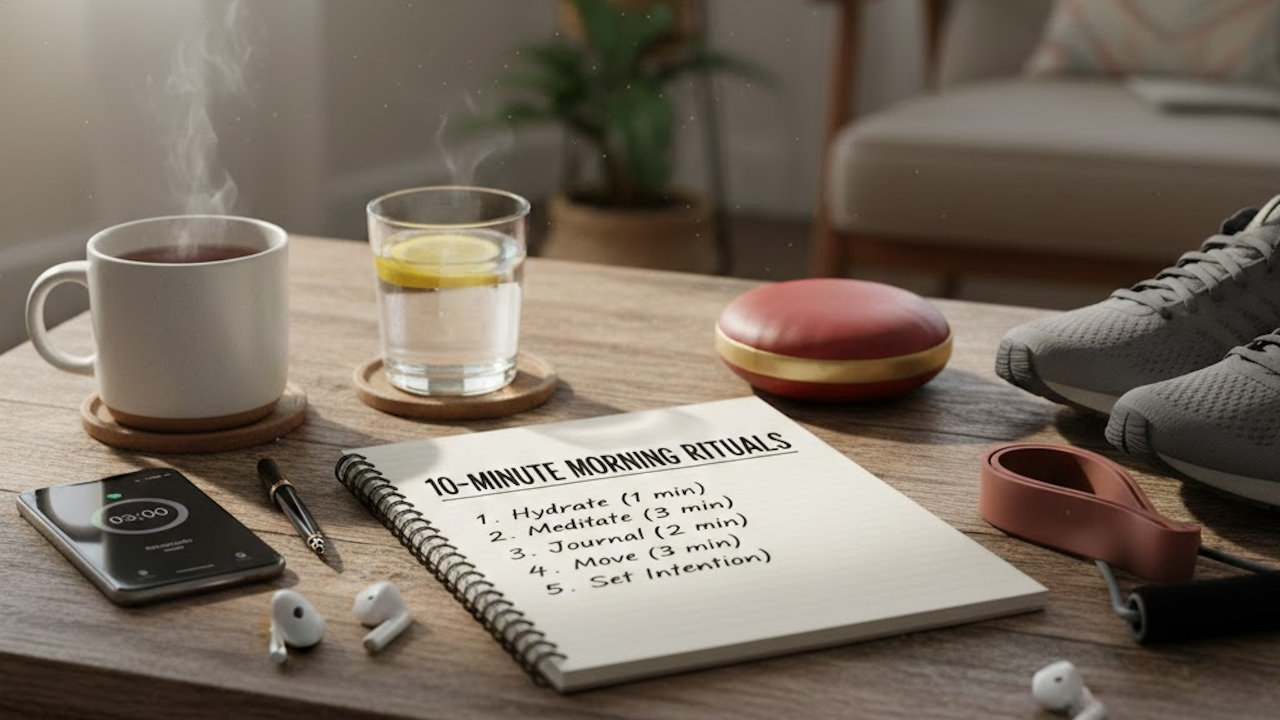
The way you begin the morning often determines the quality of the hours that follow. A rushed, reactive start can leave you feeling scattered and behind before the day has fully begun. A short, deliberate ritual, on the other hand, can create a sense of calm, focus, and quiet confidence that carries forward. The good news is that these practices do not require an hour of free time or elaborate setups. Ten minutes is enough.
What follows are ten self-contained morning rituals. Each one can stand alone as a complete practice. You can rotate through them, combine two when time allows, or stick with one that resonates most. The key is consistency rather than perfection. Choose what fits your life and protect those minutes as non-negotiable.
1. The Hydration Reset
After six to eight hours without water, the body is mildly dehydrated. Starting the day with intentional hydration wakes up the systems that regulate energy, mood, and digestion.
Keep a glass or bottle of water by the bed the night before. Upon waking, sit up and drink it slowly. If plain water feels unappealing, add a squeeze of lemon or a pinch of sea salt. Take two or three minutes to notice the temperature and the sensation of the liquid moving through you. Avoid scrolling or turning on lights during this time. The goal is simple replenishment paired with a brief pause before the day begins.
This ritual takes under five minutes yet signals to the body that care is available. Many people report clearer thinking and fewer mid-morning energy dips when they make this the first action of the day.
2. Three Minutes of Still Breathing
The nervous system carries the residue of the previous day and the anticipatory tension of the one ahead. A short breathing practice clears some of that static.
Sit upright on the edge of the bed or a chair. Close the eyes or soften the gaze. Inhale slowly through the nose for a count of four, hold for a count of four, and exhale through the mouth or nose for a count of six. Repeat for three minutes. If the mind wanders, gently return to the counting. No need for special apps or posture. The only requirement is uninterrupted attention on the breath.
Three minutes is short enough to feel achievable yet long enough to lower heart rate and create a small pocket of calm. Over time the practice trains the mind to settle more quickly when stress appears later in the day.
3. Gratitude in Writing
The brain has a well-documented negativity bias. A deliberate scan for what is already working counters that tendency before it shapes the morning mood.
Keep a small notebook and pen within reach. Write three specific things you are grateful for from the previous day or that you anticipate today. Avoid vague statements. Instead of “my family,” write “the way my partner made coffee without being asked” or “the quiet stretch of time before the house woke up.” Date the entry. Spend no more than five minutes.
The act of writing slows the mind enough for the positive details to register. People who keep this practice for several weeks often notice a gradual shift in what they notice throughout the day. Small pleasures become more visible.
4. Gentle Movement Sequence
The body stiffens during sleep. Ten minutes of light movement restores circulation and releases the tightness that can make the first hours feel sluggish.
Stand barefoot if possible. Reach both arms overhead and lean gently to each side. Fold forward and let the head hang for a few breaths. Move into a few slow bodyweight squats or march in place. Finish with a short stretch for the chest and shoulders by clasping the hands behind the back and opening the front of the body. Keep the pace unhurried. The goal is not fitness. It is waking the muscles and joints with kindness.
This sequence requires no equipment and can be done in pajamas. The mild increase in heart rate and the release of tension often produce a clearer head than caffeine alone.
5. Morning Light Exposure
Natural light in the first hour after waking helps set the body’s internal clock. This improves nighttime sleep quality and daytime alertness.
As soon as practical, step outside or stand by an open window for five to ten minutes. Face the direction of the light without staring directly at the sun. If weather or schedule prevents outdoor time, sit near the brightest window available. Leave the phone inside. Notice the quality of the light, the temperature of the air, and any sounds.
Even on cloudy days the outdoor light is significantly stronger than indoor lighting. Consistent exposure supports better energy regulation and can reduce the evening drag that many people experience.
6. Intentional Planning on Paper
Mental clutter accumulates when the day’s tasks remain vague. A brief planning ritual turns that fog into a short list of priorities.
Open a notebook or a single sheet of paper. Write the date. List the three most important outcomes for the day. Not twenty tasks. Three. Beside each one, note the first small action that will move it forward. Spend the remaining minutes reviewing any fixed appointments so they do not surprise you later. Close the notebook.
This practice takes less than ten minutes and replaces the vague sense of “I have so much to do” with a concrete starting point. The mind relaxes when it knows the next step.
7. Cold Water on the Face and Wrists
A mild cold stimulus activates alertness without the crash that can follow strong stimulants.
Fill a sink or basin with cold water. Splash the face several times, focusing on the area around the eyes and temples. Hold the wrists under the water for twenty to thirty seconds. Dry off slowly. Some people prefer a full cold shower for thirty to sixty seconds, but the face and wrists version is gentler and still effective.
The shock is brief. The resulting clarity often lasts longer than expected. Pair it with a few deep breaths to avoid tensing against the cold.
8. Reading Something That Expands Perspective
The first information the mind receives shapes the day’s frame. Choosing that input carefully is a form of mental hygiene.
Keep a physical book or a printed essay near the morning space. Read for eight to ten minutes. Choose material that is thoughtful rather than urgent: a poem, a short chapter of nonfiction, a letter collection, or a philosophical fragment. Avoid news headlines and social media feeds during this window.
Reading on paper reduces the temptation to switch tasks. The short duration prevents it from becoming another item on a productivity checklist. Over weeks the cumulative effect is a quieter, more reflective tone at the start of the day.
9. Making the Bed with Full Attention
An orderly external environment supports an orderly internal one. Completing a small physical task first thing creates an early sense of agency.
Upon rising, smooth the sheets, arrange the pillows, and fold any blankets. Move deliberately. Notice the texture of the fabric and the satisfaction of clean lines. If the bed is shared, coordinate quietly so the ritual does not become a source of friction.
This practice takes two to four minutes. Its value lies in the completed loop: something was disordered and is now ordered by your own hands. That small win often makes the next task feel more approachable.
10. Spoken Affirmation or Intention
Words spoken aloud carry a different weight than thoughts kept silent. A short spoken intention sets a deliberate tone.
Stand or sit comfortably. Choose one clear sentence that reflects how you want to meet the day. Examples include “I move through today with steady attention,” “I respond rather than react,” or “I protect time for what matters.” Speak it three times, slowly, either in a normal voice or a whisper. Feel the words in the body. Then release them and begin the day.
The practice is brief. Its power comes from repetition across many mornings. The chosen phrase becomes a reference point when the day grows complicated.
Putting the Rituals into Practice
You do not need to perform all ten every morning. That would defeat the purpose of keeping the start simple. Instead, select one or two that feel most relevant to your current season of life. Try each for a week before deciding whether to keep it. Notice which ones leave you feeling more grounded rather than more productive in a forced way.
Protect the ten minutes by preparing the night before. Place the water glass, the notebook, the book, or the open window path so that friction is low. If the household is busy, wake a few minutes earlier or claim a quiet corner. Consistency matters more than intensity. A ritual done imperfectly most days outperforms a perfect one done rarely.
Over time these short practices compound. The body learns to expect care at the start of the day. The mind learns that it does not have to launch straight into reaction. The cumulative effect is a quieter internal climate from which better decisions become easier.
Morning rituals are not about becoming a different person overnight. They are about giving the person you already are a few protected minutes of attention before the demands of the day arrive. Ten minutes is enough to make that difference noticeable.