

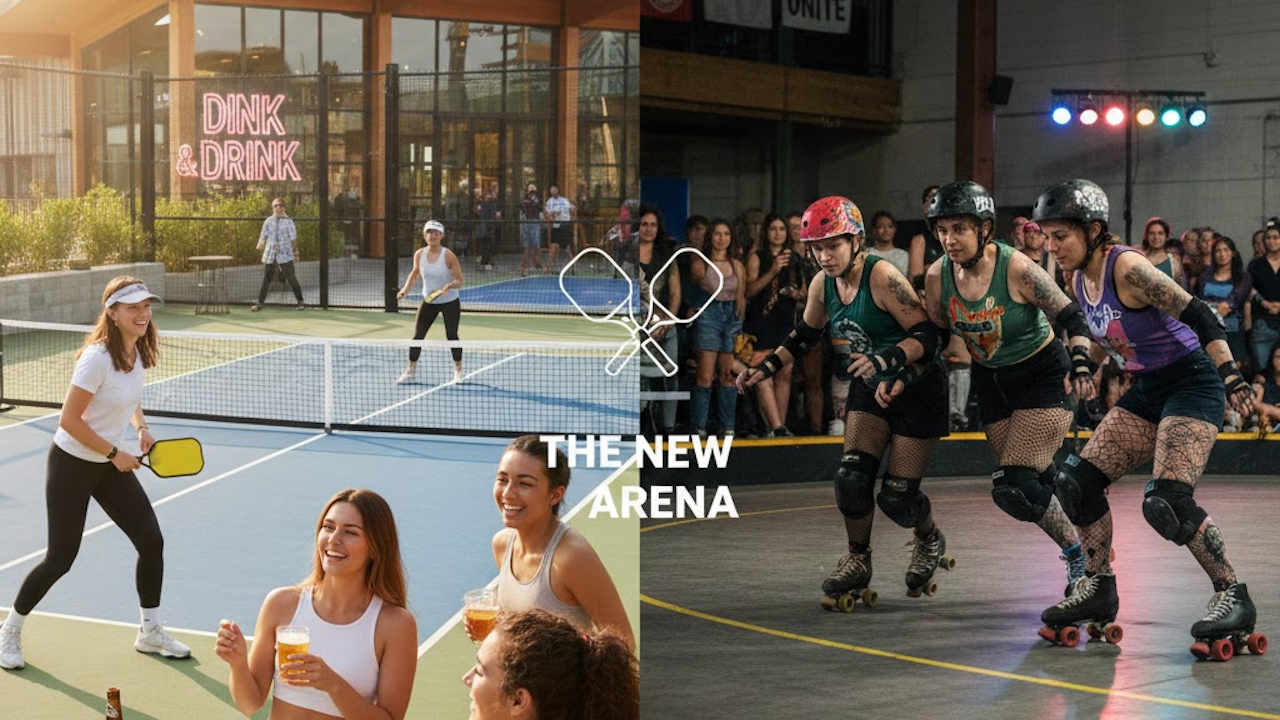
In 2026, the global sports landscape looks vastly different than it did a decade ago. While stadium-sized spectacles still command headlines, a quiet but forceful revolution has taken place in local community centers and parking lots. Two sports in particular have staged a massive comeback: pickleball and roller derby.
At first glance, these two activities seem like opposites. One is often associated with retirees in sun-drenched suburbs, while the other evokes images of tattooed athletes in fishnets crashing into each other on a flat track. However, their simultaneous rise reveals a deeper shift in how we seek connection, physical health, and identity in a post-digital age.
The Pickleball Phenomenon: From Niche to Necessity
Pickleball is no longer just the fastest-growing sport in America; it has become a permanent fixture of modern recreation. As of 2026, participation has surged past 25 million players in the United States alone. Its appeal lies in its radical accessibility. By combining elements of tennis, badminton, and ping pong, it offers a low-impact workout that is easy to learn but difficult to master.
The “pickleball boom” was initially fueled by the pandemic as people sought outdoor, socially distanced activities. But its longevity is driven by the “eatertainment” model. Massive complexes now combine professional-grade courts with high-end dining and craft breweries. It has transitioned from a senior-center pastime to a lifestyle brand embraced by Gen Z and Millennials, who now make up the largest demographic of players. The average age of a player has dropped to 35, proving that the desire for face-to-face social competition transcends generations.
The Roller Derby Renaissance: Grit and Community
While pickleball dominates the suburbs, roller derby has reclaimed the urban spirit. After a period of relative quiet in the mid-2010s, the sport has seen a grassroots resurgence. This revival is less about the kitschy theatricality of the past and more about high-level athleticism and inclusive community building.
Modern roller derby in 2026 is defined by its role as a “safe space.” It has become a cultural lighthouse for the LGBTQ+ community and at-risk youth, offering a rare environment where physical toughness and emotional support coexist. The rise of women’s sports globally has also provided a tailwind, with viewership and sponsorship for contact sports reaching all-time highs. For many, roller derby represents an authentic, “rough around the edges” alternative to the overly polished world of professional league sports.
Why Now? The Common Threads
Despite their different aesthetics, pickleball and roller derby are thriving for the same three reasons:
- Low Barriers to Entry: Both sports prioritize participation over spectatorship. Whether it is a $50 paddle or a pair of used skates, the financial cost to start is relatively low compared to golf or travel soccer.
- The Search for “Third Places”: As traditional social hubs like malls or offices decline, people are desperate for “third places” where they can belong. A pickleball court or a derby track provides a built-in social network.
- Physicality Without the Grind: In an era of sedentary screen time, both sports offer a way to move that feels like play rather than a chore. Pickleball provides cardiovascular health without the joint pain of tennis, while roller derby offers a sense of empowerment and physical agency.
The Conflict Over Space
The success of these two sports has led to an unexpected rivalry: the battle for the rink. Because both sports can be played on flat, hard surfaces, many municipalities are seeing “turf wars” between local derby leagues and pickleball clubs. In cities from Santa Barbara to London, roller rinks are being converted into permanent pickleball courts to meet the skyrocketing demand.
This friction highlights a growing infrastructure crisis. The demand for recreational space is outpacing supply, leading to a new wave of investment in multi-sport facilities that can accommodate both the quiet “dink” of a pickleball and the roar of a derby pack.
Comparison of the Two Movements
| Feature | Pickleball | Roller Derby |
| Primary Appeal | Easy to learn, highly social | Intense community, empowerment |
| Key Demographic | 25 to 34 (largest) and 55+ | LGBTQ+, Gen Z, Women |
| Growth Driver | Corporate investment, “Eatertainment” | Grassroots activism, inclusivity |
| Space Needs | Small court, quiet surface | Large flat track or banked rink |
Looking Ahead
As we look toward the 2030s, these sports are no longer considered “fads.” Pickleball is making a serious push for Olympic inclusion, while roller derby is professionalizing its broadcasting to reach a global digital audience. Their return signals a broader cultural move away from passive consumption and toward active, community-based lifestyles. We are no longer content to just watch athletes on a screen; we want to be the ones on the court, or the track, making the play.