

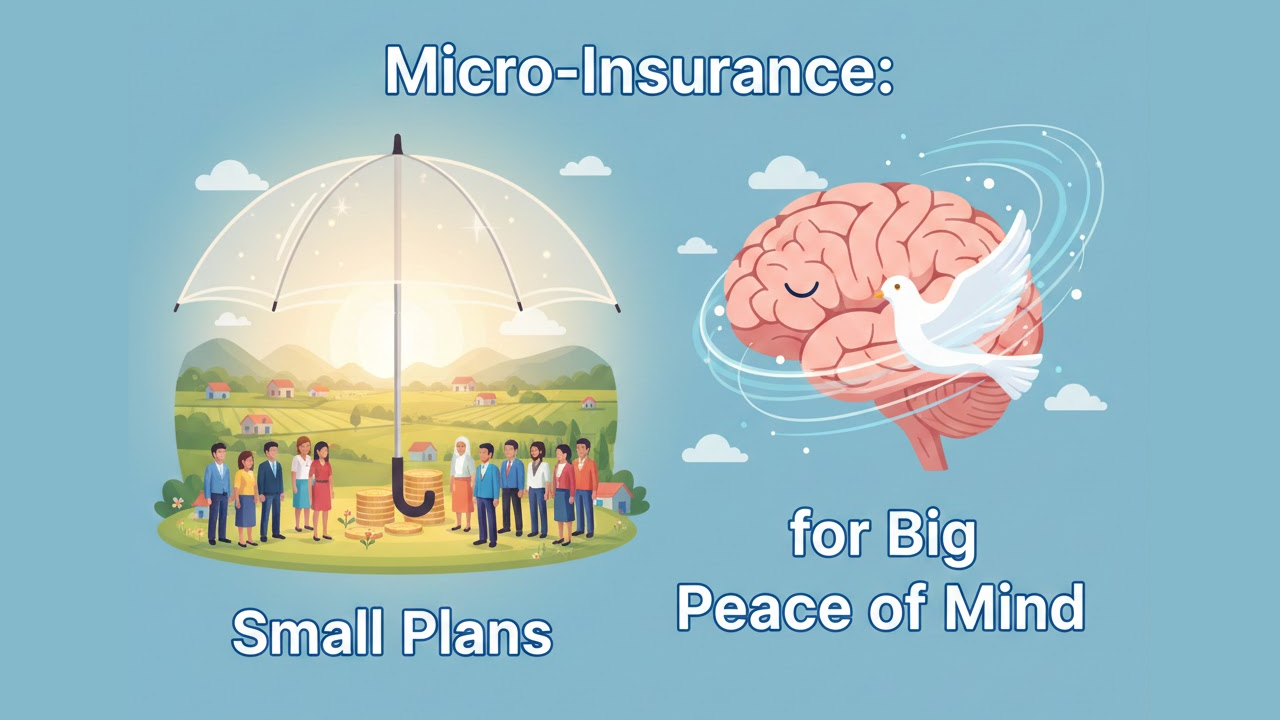
In a world where unexpected events can derail lives overnight, insurance serves as a critical safety net. Yet for billions of people living on low incomes, traditional insurance policies remain out of reach due to high premiums, complex requirements, and limited access. This is where micro-insurance steps in. Micro-insurance offers affordable, simplified coverage tailored to the needs of low-income households, providing protection against common risks like illness, death, crop failure, or property damage. Often involving small premiums paid regularly, these plans pool risks to deliver payouts when needed most, offering not just financial relief but profound peace of mind.
Micro-insurance emerged as a response to the vulnerabilities faced by the poor in developing countries, where formal social security systems are often absent or inadequate. It builds on the principles of risk pooling but scales them down to make coverage viable for those earning modest daily wages. By focusing on essential risks and keeping administration simple, micro-insurance empowers individuals to weather crises without falling into debt or poverty traps.
What Is Micro-Insurance?
Micro-insurance is defined as insurance products designed specifically for low-income populations, featuring low premiums, limited coverage amounts, and straightforward terms. Unlike conventional insurance, which might require extensive documentation and high upfront costs, micro-insurance prioritizes accessibility. Premiums can be as low as a few cents per day or week, often collected through mobile payments or bundled with other services.
Common types include:
- Life and term insurance, providing payouts to families upon the policyholder’s death.
- Health insurance, covering hospitalization, outpatient care, or specific illnesses.
- Property insurance, protecting against theft, fire, or natural disasters.
- Agricultural insurance, such as crop or livestock coverage, often using index-based triggers (e.g., payouts based on rainfall data rather than individual loss assessments).
- Disability or accident insurance, offering support for injuries that prevent work.
Delivery models vary to suit local contexts:
- Partner-agent model: Microfinance institutions or NGOs handle distribution, while established insurers underwrite risks.
- Community-based model: Local groups manage schemes mutually.
- Provider-driven model: Direct sales by insurers, often via mobile networks.
- Full-service model: One entity handles everything from design to claims.
These models leverage partnerships to reduce costs and build trust in communities unfamiliar with insurance.
The Global Landscape and Growth
As of 2023 data extended into recent trends, micro-insurance covers around 344 million people worldwide, primarily in Africa, Asia, and Latin America. However, this represents only about 12 percent of the potential market, estimated at 3 billion individuals who could benefit. An 88 percent protection gap highlights the untapped opportunity.
Market size estimates for recent years vary, but consistent growth is evident. In 2024, valuations ranged from approximately USD 73 billion to USD 94 billion, with projections for strong expansion. Forecasts suggest the market could reach USD 138 billion to USD 155 billion by 2032-2034, driven by compound annual growth rates (CAGRs) of 6 to 7 percent. Key drivers include rising smartphone penetration, mobile money adoption, government financial inclusion policies, and digital platforms that streamline enrollment and claims.
Asia-Pacific dominates, accounting for 31 to 38 percent of the market, fueled by large underserved populations in countries like India, the Philippines, and Indonesia. North America shows faster relative growth in some segments, while Sub-Saharan Africa and Latin America see innovations in parametric products for climate risks.
Major providers include global players like Allianz SE, AXA SA, Zurich Insurance Group, American International Group (AIG), and Hollard Insurance Company, alongside specialized entities such as Pioneer Microinsurance in the Philippines, CLIMBS Life and General Insurance Cooperative, and MIC Global. Many operate through partnerships with microfinance institutions, mobile operators, and governments.
Benefits: Why Micro-Insurance Matters
For low-income households, risks are not abstract; they are daily realities. A sudden illness can wipe out savings, force asset sales, or lead to high-interest loans. Micro-insurance mitigates these by providing timely financial support.
Key benefits include:
- Financial protection: Reduces out-of-pocket expenses, preventing catastrophic health costs or income loss.
- Resilience building: Enables quicker recovery from shocks, allowing families to maintain education, nutrition, and productivity.
- Poverty alleviation: Studies show it decreases vulnerability, with nearly half of policyholders being women, promoting gender equity.
- Economic stimulation: Insured individuals take calculated risks, like investing in farming inputs, boosting local economies.
- Peace of mind: Knowing a safety net exists reduces stress and fosters long-term planning.
In agricultural contexts, index-based products have paid out rapidly during droughts or floods, helping farmers replant and sustain livelihoods.
Challenges in Scaling Micro-Insurance
Despite progress, hurdles persist. Low awareness and trust issues deter uptake; many view insurance skeptically due to past experiences or cultural preferences for informal coping mechanisms like family support.
Operational challenges include:
- High administrative costs relative to small premiums, requiring scale for profitability.
- Distribution difficulties in remote areas.
- Basis risk in parametric products, where triggers may not perfectly match individual losses.
- Low renewal rates, often 10 to 70 percent, due to unmet expectations or liquidity constraints.
- Regulatory barriers or lack of tailored frameworks in some regions.
- Data limitations for accurate pricing and fraud detection.
Gender disparities also exist, though 48 percent of policyholders are women; better data is needed for inclusive design.
Success Stories and Impact
Real-world examples illustrate micro-insurance’s transformative potential.
In the Philippines, Pioneer Microinsurance, through partnerships like CardPioneer, grew from 260,000 to 18 million enrollments in five years by focusing on fast claims (half within two days) and customer-centric products.
India’s Pradhan Mantri Suraksha Bima Yojana, a government-backed accident insurance scheme, enrolled over 510 million people by 2025, with significant rural and female participation.
In Tanzania and Ghana, mobile-linked programs offer free or low-cost life coverage proportional to airtime usage, introducing over a million first-time users to insurance.
Peru’s Seguro Agrícola Catastrófico protects smallholder farmers from weather extremes via public funding.
Bolivia’s sports accident insurance covers amateur athletes through associations.
These cases show how bundling with mobile services, government support, or community ties drives adoption and payouts, building trust and resilience.
Broader impact studies confirm micro-insurance reduces financial vulnerability, especially in health and agriculture, though more rigorous evaluations are needed.
The Future: Innovations and Opportunities
Looking ahead, technology is revolutionizing micro-insurance. Mobile platforms enable instant enrollment, premium collection via wallets, and automated claims using satellite data for agriculture or AI for health.
Parametric insurance grows for climate risks, offering swift payouts without assessments.
Embedded products, bundled with loans or utilities, increase convenience.
Regulatory support, like exemptions for micro-products, and public-private partnerships expand reach.
As middle classes rise in developing nations and awareness grows, demand will surge. Providers innovating in education, simplicity, and speed will lead.
Conclusion
Micro-insurance proves that protection need not be a luxury. Small premiums fund big safeguards, turning vulnerability into strength. For low-income families, it delivers not just compensation but dignity and hope. As coverage expands through innovation and collaboration, micro-insurance will increasingly provide the peace of mind that everyone deserves, bridging gaps and fostering inclusive growth worldwide. In an uncertain world, these small plans offer profound reassurance.