

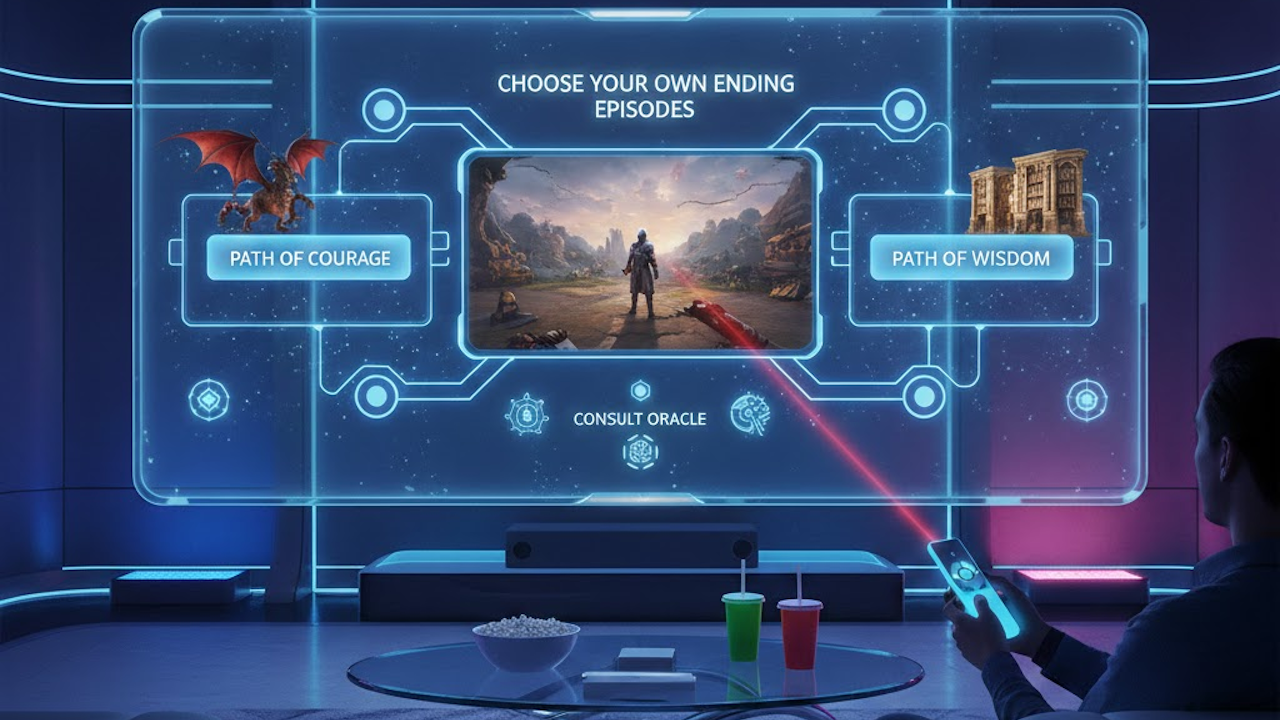
Interactive television has transformed the way audiences engage with stories, turning passive viewers into active participants. At the heart of this evolution lies the concept of choose-your-own-ending episodes, where viewers make decisions that influence the narrative’s direction, leading to multiple possible outcomes. This format draws inspiration from choose-your-own-adventure books, but it leverages modern technology to create immersive experiences on screen. In these episodes, choices might range from simple decisions like what a character eats for breakfast to pivotal plot turns that alter the entire storyline. The appeal is clear: it offers replayability, personalization, and a sense of agency in an era where streaming services dominate entertainment. While traditional TV relies on linear storytelling, interactive formats blur the lines between film, gaming, and literature, promising a more engaging future for media consumption. This article explores the history, key examples, technology, challenges, and prospects of choose-your-own-ending episodes in interactive TV.
Historical Roots
The idea of audience-driven narratives predates television altogether. It can be traced back to literature, where branching stories first emerged. In 1930, American authors Doris Webster and Mary Alden Hopkins published Consider the Consequences!, a romance novel with 43 alternative endings that allowed readers to decide the fates of the characters. This was revolutionary, as it introduced the concept of multiple plot paths in a single book. Decades later, in 1969, lawyer Edward Packard conceived the modern choose-your-own-adventure format while telling bedtime stories to his daughters. His idea evolved into the popular book series launched in 1979 with The Cave of Time, where readers could encounter dinosaurs or UFOs based on their choices.
The transition to visual media began with film. In 1967, at Expo 67 in Montreal, Czech director Radúz Činčera unveiled Kinoautomat, considered the world’s first interactive movie. Audience members voted on plot developments using buttons, altering the story in real time. This experiment highlighted the potential of technology to involve viewers, though it was limited by the era’s tools. Advances in filmmaking continued to push boundaries, but it was television that brought interactivity to living rooms.
Early TV experiments relied on audience participation through phone calls or basic voting systems. In Brazil, from 1992 to 2000, the show Você Decide allowed viewers to call in and vote on episode endings, pioneering interactive storytelling on broadcast TV. Similarly, in France, Hugo Délire (1992) let selected viewers control gameplay via telephone keys to win prizes. In the UK, Noel’s House Party (1991-1998) featured the NTV segment, where hidden cameras and viewer input created a two-way interaction, making audiences feel part of the show. These efforts were constrained by technology, often limited to yes/no choices or group voting, but they laid the groundwork for more sophisticated formats.
The Rise of Streaming and Digital Interactivity
The advent of streaming platforms in the 2010s revolutionized interactive TV by enabling seamless branching narratives without the need for live audience input. Netflix led the charge, experimenting with the format to differentiate itself in a crowded market. In 2017, the service introduced interactive content aimed at children, starting with Puss in Book: Trapped in an Epic Tale, a Shrek spin-off where viewers made 13 choices, leading to over 3,000 story permutations and endings ranging from 18 to 39 minutes long. This was followed by Buddy Thunderstruck: The Maybe Pile, where kids decided on silly scenarios like contests or workouts.
The breakthrough for adult audiences came in December 2018 with Black Mirror: Bandersnatch, a standalone episode of the dystopian anthology series. Set in 1984, it follows programmer Stefan Butler as he adapts a choose-your-own-adventure novel into a video game, blurring reality and fiction. Viewers make decisions for Stefan, from mundane choices like breakfast cereal to life-altering ones involving drugs or violence, resulting in five main endings with variants. The meta-narrative, where the protagonist questions his free will, mirrored the viewer’s experience, making it a critical and cultural hit. Netflix reported high engagement, with users replaying to explore all paths.
Post-2018, Netflix expanded its interactive library. In 2019, You vs. Wild starring Bear Grylls let viewers choose survival decisions in wilderness scenarios, blending education and adventure. The same year, Unbreakable Kimmy Schmidt: Kimmy vs. the Reverend served as an interactive finale to the comedy series, with choices leading to humorous or disastrous outcomes. Other notable entries include Carmen Sandiego: To Steal or Not to Steal (2020), a heist adventure with branching missions, and The Boss Baby: Get That Baby! (2020), where viewers navigate corporate challenges as a Baby Corp recruit.
In 2023, Netflix released Choose Love, a romantic comedy where protagonist Cami selects between three suitors, exploring themes of relationships with multiple endings. However, by late 2024, Netflix announced it would remove most interactive specials, retaining only four: Bandersnatch, Kimmy vs. the Reverend, You vs. Wild, and Ranveer vs. Wild with Bear Grylls. This shift reflects a pivot toward actual games, but the retained titles underscore the format’s enduring appeal.
Beyond Netflix, other platforms have dabbled. For instance, in 2021, Bulletproof used AI to let viewers interrogate a suspect via voice, saving lives based on dialogue choices. Traditional broadcasters have also experimented, though streaming’s on-demand nature suits interactivity best.
Notable Examples and Their Innovations
Several choose-your-own-ending episodes stand out for their creativity and impact.
- Black Mirror: Bandersnatch (2018): With over 100 choices and a runtime varying from 40 to 90 minutes, it features Easter eggs and loops that encourage multiple viewings. A 2025 follow-up episode, Plaything, reprises characters in the same universe.
- Unbreakable Kimmy Schmidt: Kimmy vs. the Reverend (2020): This comedy special offers absurd branches, like robot apocalypses or celebrity cameos, with viewer choices determining the fate of the cult-busting plot.
- You vs. Wild (2019): Bear Grylls’ survival series includes eight episodes where decisions like crossing rivers or eating bugs lead to success or failure, with educational value on real-world skills.
- Minecraft: Story Mode (2018-2019): Adapted from the video game, this interactive series feels like a true game, with choices affecting alliances and battles in a blocky world.
- Choose Love (2023): A rom-com with uneven suitor options, it highlights the challenges of balancing choices in emotional narratives.
These examples demonstrate how the format adapts to genres, from horror and comedy to adventure and romance.
The Technology Behind the Scenes
Creating choose-your-own-ending episodes requires sophisticated tools. Streaming platforms use branching video technology, where pre-recorded segments are stitched together based on user input. Netflix’s system caches multiple paths to ensure seamless playback, avoiding buffering delays. Writers employ story-mapping software to chart hundreds of permutations, ensuring coherence across branches. Production involves filming alternate scenes, often doubling or tripling shoot times.
Advancements like AI enhance interactivity. In Bulletproof, AI-driven dialogue engines respond to voice commands, creating dynamic conversations. Future tech, such as 5G and ATSC 3.0, promises faster delivery for more complex experiences, including virtual reality integrations.
Challenges and Criticisms
Despite its innovations, the format faces hurdles. Production costs soar due to multiple filming paths, and writing must avoid unsatisfying branches. Critics argue some choices feel superficial, with stories converging regardless of input. Accessibility issues arise, as not all devices support interactivity, and it can disrupt group viewing. Netflix’s decision to scale back suggests limited mainstream appeal, possibly due to viewer fatigue or competition from games.
Impact on Storytelling and Audiences
Choose-your-own-ending episodes empower viewers, fostering deeper engagement and replay value. They reflect a shift toward personalized media, where data from choices informs future content. For creators, it opens new narrative possibilities, blending TV with gaming. Audiences report higher satisfaction from agency, though some prefer linear stories for emotional depth.
Future Prospects
As of 2026, the format evolves amid Netflix’s cutbacks. Emerging platforms may fill the gap, incorporating AI for infinite branches or social features for collective decisions. Hybrid models, like interactive news or education, could expand its reach. With technologies like augmented reality, viewers might enter stories physically. While challenges persist, the core idea of choice-driven narratives ensures its relevance.
Conclusion
Interactive TV’s choose-your-own-ending episodes represent a bold fusion of old and new, from literary roots to digital frontiers. They challenge conventions, offering unique experiences that captivate and innovate. As technology advances, this format may redefine entertainment, making every viewer a co-creator in the stories they love.