

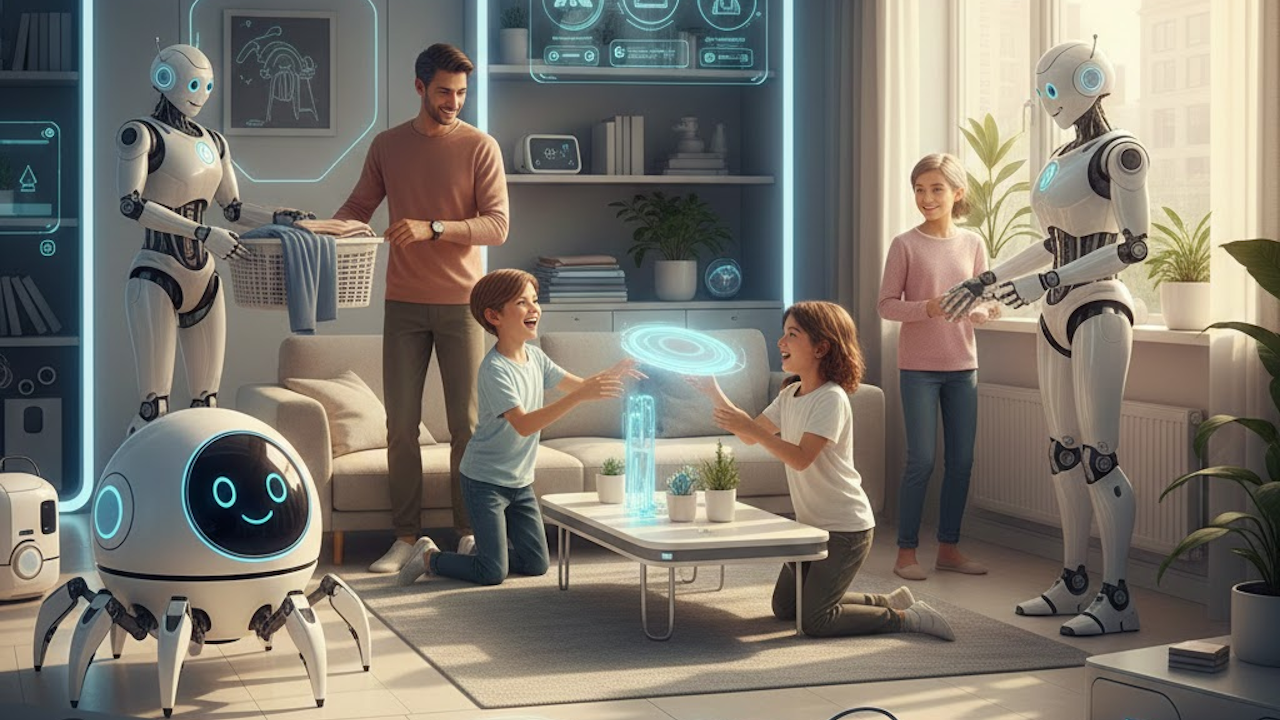
In the year 2026, the once-futuristic dream of having a robot handle your household drudgery is no longer confined to science fiction novels or animated shows like “The Jetsons.” Instead, it’s becoming a tangible reality, with advanced home robots stepping into living rooms, kitchens, and laundry areas across the globe. These bots are not just efficient taskmasters; they’re designed to infuse a sense of fun into the mundane, turning chores into interactive experiences or even playful companions. From folding laundry with precision to preparing simple meals while chatting about the weather, home robots are redefining domestic life. As we delve into this topic, we’ll explore the latest advancements, the key players in the market, and how these machines are making everyday tasks more enjoyable.
The Evolution of Home Robots: From Simple Vacuums to Sophisticated Helpers
Home automation has come a long way since the early 2000s, when the Roomba first introduced the concept of robotic vacuuming. Those early models were basic: they bumped around rooms, sucking up dirt in a somewhat random fashion. Fast forward to 2026, and the landscape has transformed dramatically. Advances in artificial intelligence, machine learning, and robotics hardware have enabled bots to handle complex, multi-step tasks that require dexterity, perception, and even social interaction.
This shift is largely driven by the convergence of AI and physical robotics, often referred to as “Physical AI.” Unlike traditional robots programmed for repetitive actions in controlled environments, these new models use vision-language models to understand their surroundings, adapt to changes, and learn from user feedback. For instance, robots can now recognize objects in a cluttered kitchen, decide the best way to organize them, and execute the task without constant human oversight. This evolution isn’t just about efficiency; it’s about making chores engaging. Imagine a robot that gamifies cleaning by tracking points for completed tasks or shares fun facts while dusting shelves, turning a tedious afternoon into an entertaining one.
The catalyst for this boom? Events like CES 2026, where companies unveiled prototypes and production-ready models that promise to automate everything from laundry to meal prep. According to industry reports, the global market for household robots is exploding, with projections showing widespread adoption by the end of the decade. In homes across the US, UK, and beyond, about 15% of households are expected to invest in advanced cleaning robots this year alone.
Spotlight on 2026’s Star Home Robots
Several standout robots are leading the charge in 2026, each bringing unique features that blend utility with whimsy. Let’s break down some of the most promising ones.
First up is the 1X NEO, a humanoid robot from 1X Technologies that’s already available for pre-order. Priced at around $20,000 or through a $500 monthly subscription, NEO is designed as a versatile home companion. It can fold laundry, make tea, vacuum floors, and even relax on the couch to recharge when not in use. What makes it fun? NEO incorporates emotive elements, like expressive “ear rings” that light up during interactions, and it responds to voice commands with natural conversation. Early adopters are using it not just for chores but as a quirky household member that tells jokes or plays music while tidying up. Deliveries began in early 2026, and users report it’s like having a helpful roommate who never complains.
LG’s CLOiD is another CES 2026 highlight, embodying the company’s “Zero Labor Home” vision. This wheeled humanoid features two articulated arms with five-fingered hands for precise manipulation, allowing it to load dishwashers, fold clothes, and prepare breakfast. Integrated with LG’s ThinQ ecosystem, it coordinates with other smart appliances, such as starting the washer and then folding the dried load. The fun factor comes from its AI-driven personality: CLOiD can learn user preferences, suggest recipes based on fridge contents, and even engage in light banter. For example, it might say, “I’ve got the laundry covered; you enjoy your coffee.” While not yet in full retail release, pre-orders are expected soon, with pricing in the $10,000 to $15,000 range.
SwitchBot’s Onero H1 takes a more accessible approach. At about $10,000 to $13,500, this wheeled bot with extendable arms focuses on everyday tasks like making coffee, organizing shelves, and folding laundry. It uses an OmniSense vision-language-action model to adapt to cluttered environments, making it ideal for real homes rather than demo stages. To add enjoyment, it integrates with smart home systems for voice-activated games or reminders, turning chore time into interactive sessions. Pre-orders opened post-CES, with deliveries slated for mid-2026.
For specialized cleaning, Roborock’s Saros Rover stands out with its stair-climbing ability, a game-changer for multi-level homes. This vacuum-mop hybrid navigates obstacles effortlessly, using AI to map rooms and avoid pet messes or toys. It gamifies cleaning through an app that awards badges for spotless floors, encouraging users to “level up” their home maintenance.
Other notables include ECOVACS’ DEEBOT series, which expands into window cleaning, lawn mowing, and even pet companionship with the LilMilo bot. And for those eyeing Tesla’s Optimus, mass production ramps up in 2026, promising affordable humanoid help for groceries, pet care, and more.
| Robot Model | Key Features | Price Range | Fun Element | Availability |
|---|---|---|---|---|
| 1X NEO | Laundry folding, tea making, vacuuming, natural conversation | $20,000 or $500/month | Emotive expressions, joke-telling | Pre-order now, deliveries 2026 |
| LG CLOiD | Dish loading, meal prep, appliance coordination | $10,000-$15,000 (est.) | Personalized banter, recipe suggestions | Pre-orders soon |
| SwitchBot Onero H1 | Coffee making, tidying, adaptive AI | $10,000-$13,500 | Interactive games via app | Mid-2026 deliveries |
| Roborock Saros Rover | Stair-climbing vacuum/mop, obstacle avoidance | $800-$1,200 | Gamified app with badges | Available now |
| ECOVACS DEEBOT/LilMilo | Multi-surface cleaning, pet interaction | $500-$2,000 | Companionship features for fun engagement | Available now |
This table highlights how these bots cater to different needs while incorporating elements of enjoyment.
Making Chores Fun: The Human Touch in Robotics
What truly sets 2026’s home robots apart is their ability to transform chores from burdens into enjoyable activities. This is achieved through several innovative approaches.
Gamification is a big one. Many bots, like the Saros Rover, connect to apps that track progress, offer rewards, and even compete with friends’ robots for “cleanest home” leaderboards. This turns sweeping into a game, motivating users especially in households with kids.
Companionship adds another layer. Robots like NEO and CLOiD are equipped with generative AI for conversation, making them feel like friendly helpers rather than cold machines. They can share trivia, play podcasts, or remind you of fun events while working. For elderly users or those living alone, this social aspect reduces isolation, blending utility with emotional support.
Efficiency itself breeds fun by freeing up time. Studies suggest that automating chores could reclaim hundreds of hours annually, allowing more leisure pursuits. Picture this: Your robot handles dinner prep while you unwind with a hobby, turning “chore time” into “me time.”
Moreover, customization options let users personalize bots with voices, personalities, or even outfits, making them integral family members. One X post humorously noted NEO as the “ultimate roommate who cleans without drama.”
Challenges and Considerations
Despite the excitement, home robots in 2026 aren’t without hurdles. Cost remains a barrier; while prices are dropping (humanoid manufacturing costs fell 40% recently), $10,000+ is steep for many. Subscription models help, but they’re not universal.
Privacy and safety are concerns too. These bots use cameras and sensors, raising data security questions. Manufacturers emphasize local processing to minimize risks, but users should vet encryption features. Safety-wise, designs prioritize soft materials and emergency stops to prevent accidents.
Dexterity gaps persist; robots excel at structured tasks but struggle with unpredictable messes. Experts predict full autonomy is still years away, with 2026 models often requiring some supervision.
Looking Ahead: The Future of Fun Chores
By 2030, experts forecast millions of home robots in use, expanding into education, healthcare, and entertainment. Tesla aims for 10 million Optimus units annually by 2027, potentially driving prices down further. As AI improves, bots could compose custom playlists for cleaning sessions or collaborate on creative tasks like decorating.
In essence, 2026 marks a pivotal year where home robots evolve from novelties to necessities, injecting joy into routines. Whether it’s NEO folding your shirts with a witty comment or CLOiD whipping up breakfast, these bots are here to make life easier and more entertaining. As adoption grows, the line between chore and cheer will blur, ushering in an era of delightful domesticity.