

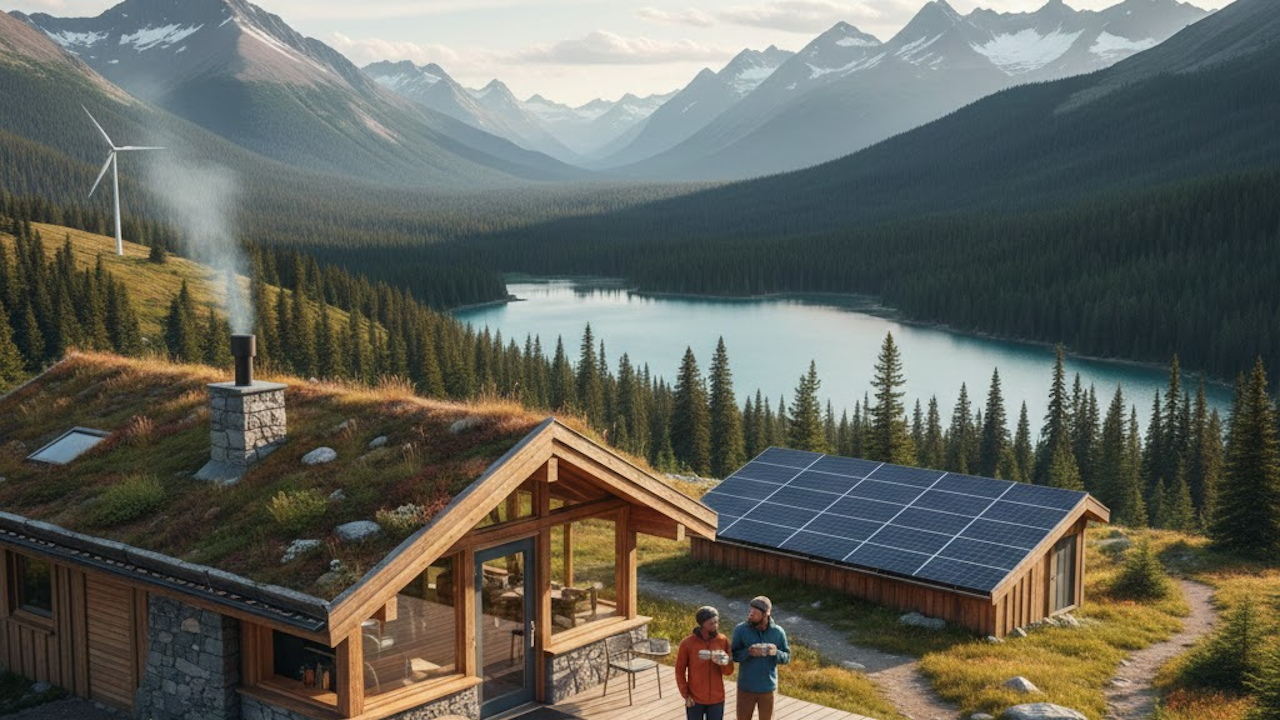
In an era defined by constant connectivity, algorithmic feeds, and the relentless pace of digital life, the idea of stepping away has taken on new urgency. Off-grid retreats, once the domain of hardened survivalists or remote homesteaders, have evolved into a mainstream pursuit for people seeking genuine restoration. By 2026, these escapes into nature represent more than a vacation. They have become a deliberate counterbalance to an always-on world, offering silence, self-reliance, and a return to rhythms dictated by sunlight, weather, and the land itself.
The concept is straightforward yet profound. An off-grid retreat means spending time in a place disconnected from municipal power, water, and often cellular networks. Shelter might be a simple cabin, a yurt, a converted shipping container, or even a tent pitched far from marked trails. Energy comes from solar panels, wind turbines, or wood stoves. Water is collected from streams, rain catchment systems, or hauled in. Waste is managed through composting toilets or careful packing out. The goal is not deprivation for its own sake but freedom from the infrastructure that both supports and constrains modern existence.
Several forces have converged to make 2026 a peak year for this kind of travel. Remote and hybrid work arrangements, solidified after years of experimentation, allow many professionals to leave the city for weeks rather than days. Digital fatigue has intensified as artificial intelligence tools permeate daily tasks, generating an endless stream of notifications and content. Climate awareness continues to shape preferences, with travelers favoring low-impact stays that leave minimal footprints. At the same time, advances in portable renewable energy have made true off-grid living more accessible and comfortable than it was a decade ago. Lithium battery systems, efficient solar arrays, and reliable water filtration units now fit into backpacks or small trailers, lowering the barrier for newcomers.
The psychological draw is equally strong. Studies and anecdotal reports alike point to measurable benefits from extended time in natural settings without screens. Cortisol levels drop. Sleep patterns improve. Attention spans lengthen. Many participants describe a gradual quieting of the internal chatter that accompanies urban or suburban life. In forests, mountains, deserts, or coastal wilds, the mind recalibrates to slower inputs: bird calls, wind in trees, the crackle of a fire. This is not romantic nostalgia. It is a practical response to environments engineered for constant stimulation.
Off-grid retreats take many forms, catering to different levels of comfort and experience. At one end sit rustic backcountry camps where participants carry everything they need and practice Leave No Trace principles rigorously. These trips often involve multi-day hikes to remote sites, foraging knowledge, and basic wilderness first aid. At the other end are glamping-style setups that retain the isolation while providing elevated tents, outdoor showers heated by solar, and carefully designed kitchens powered by modest photovoltaic systems. Between these poles exist family-friendly cabins on large private parcels, tiny homes parked on conservation land, and community-oriented eco-villages that offer short-term stays with shared resources.
Popular regions in 2026 reflect both accessibility and genuine remoteness. In North America, the Pacific Northwest continues to draw visitors to coastal forests and Cascade mountain foothills, where dense canopy and frequent rain create a sense of enclosure. The American Southwest offers high-desert mesas and canyon country, prized for clear night skies and dramatic temperature swings. Appalachian hollows and northern New England provide hardwood forests and lakes that feel worlds away from major cities. In Europe, the Scottish Highlands, Scandinavian interior, and certain alpine valleys maintain strong off-grid traditions. Further afield, parts of Patagonia, New Zealand’s South Island, and remote Australian bushland attract those willing to travel farther for deeper solitude.
Preparation remains essential. Successful off-grid time begins long before departure. Prospective retreaters research local regulations carefully. Many public lands require permits for overnight stays beyond established campgrounds. Private land hosts increasingly use platforms that verify off-grid capabilities, including solar capacity and water sources. Weather patterns demand attention; shoulder seasons can deliver ideal conditions or sudden storms. Gear lists emphasize reliability over novelty: multi-tool, quality knife, water purification tablets or filters, first-aid kit tailored to the environment, and layered clothing suitable for temperature extremes. Food planning prioritizes non-perishables that require minimal fuel, supplemented by whatever can be safely gathered or caught where regulations allow.
Technology occupies an interesting middle ground. Pure disconnection appeals to many, yet practical safety considerations often argue for limited tools. Satellite messengers that send location pings without full cellular service have become standard for solo travelers. Compact solar chargers keep essential devices powered without grid dependence. Some retreat organizers provide shared satellite Wi-Fi for emergency use only, enforcing digital boundaries while acknowledging real-world risks. The art lies in intentionality: deciding in advance which tools support the experience and which undermine it.
Sustainability forms the ethical core of the movement in 2026. Participants are expected to minimize impact. This means packing out all waste, avoiding single-use plastics, choosing biodegradable soaps, and staying on durable surfaces. Many hosts now track water usage and energy consumption, sharing data with guests as a form of education. Regenerative practices are gaining ground as well. Some properties incorporate food forests, native plant restoration, or wildlife corridors into the retreat experience, inviting guests to contribute a few hours of work in exchange for deeper connection to place.
Challenges exist and deserve honest acknowledgment. Isolation can amplify anxiety for those unaccustomed to silence. Physical demands of hauling water or managing a wood fire prove steeper than expected. Weather can turn uncomfortable quickly. Wildlife encounters require knowledge and respect rather than fear. Social dynamics in group settings sometimes surface tensions that city life masks. Yet these difficulties often become the most memorable teachers. Learning to adapt, to problem-solve with limited resources, and to sit with discomfort builds a form of resilience that translates back into everyday life.
The benefits extend beyond the individual. Families report stronger bonds after shared off-grid time, free from competing screens. Couples rediscover conversation without the background hum of notifications. Solo travelers frequently describe a restored sense of agency. Communities of return visitors form around particular sites, exchanging tips and stories in low-tech ways. Even short retreats of three to five days produce noticeable shifts in mood and perspective that linger for weeks.
Looking forward from mid-2026, the trajectory points toward greater integration of off-grid principles into ordinary life. Tiny home villages on the edges of cities, urban rooftop solar cooperatives, and neighborhood tool libraries all borrow from the same ethos of reduced dependence. Educational programs teaching basic off-grid skills to schoolchildren and adults are expanding. At the same time, the purest form of the retreat, the complete temporary withdrawal into nature, retains its power precisely because it remains distinct from daily routine.
Choosing an off-grid retreat in 2026 is ultimately an act of prioritization. It declares that silence matters, that self-reliance is worth practicing, and that the natural world still holds answers unavailable through screens. The experience does not require perfection. It asks only for presence, preparation, and a willingness to meet the land on its own terms. Those who answer that invitation often return with clearer priorities, quieter minds, and a renewed capacity to navigate the connected world they temporarily left behind. In a time of accelerating change, such returns to the elemental may prove among the most practical forms of progress available.