

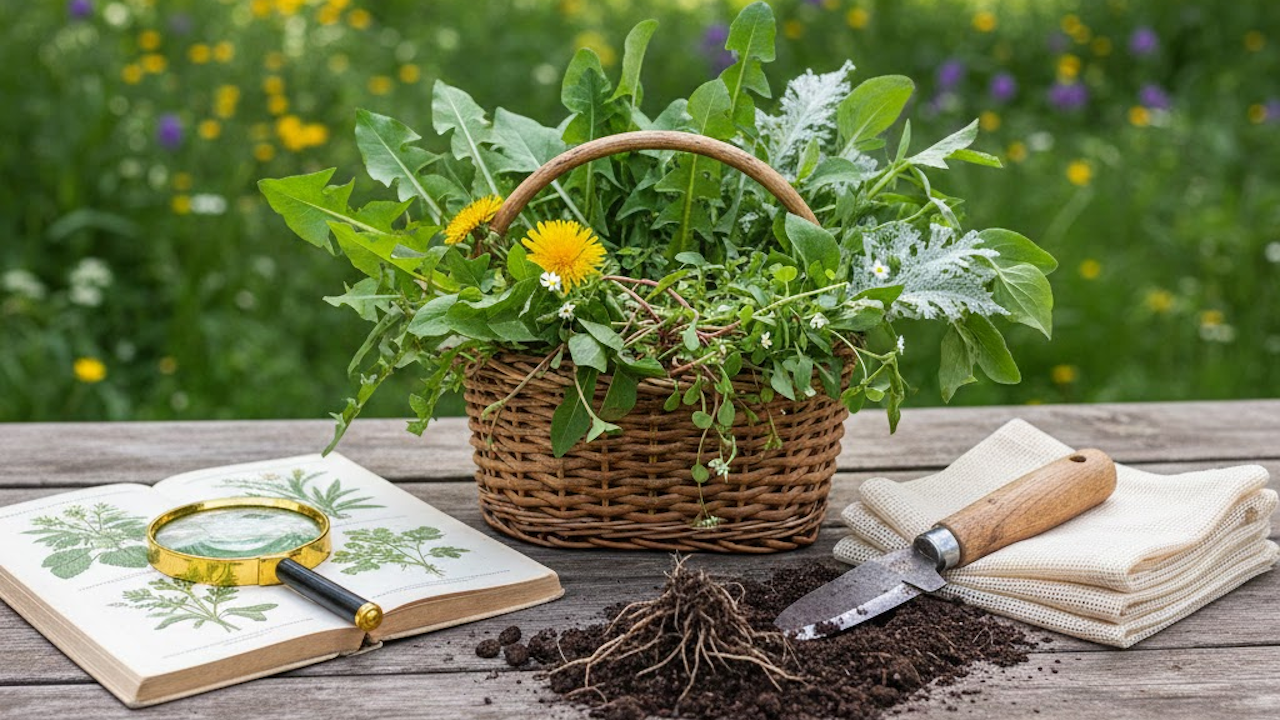
Foraging is a skill as old as humanity itself, yet in our modern era of supermarkets and delivery apps, it has become a lost art. Your backyard is likely not just a patch of grass; it is a potential pantry filled with nutrient-dense greens, medicinal herbs, and seasonal fruits. By learning to identify what grows naturally in your region, you can reduce your grocery bill and connect more deeply with the local ecosystem.
The Forager’s Golden Rule: Safety First
Before you pick a single leaf, you must commit to the absolute rule of foraging: never eat anything unless you are 100% certain of its identity. Many edible plants have toxic lookalikes. For example, wild carrots look remarkably similar to poison hemlock.
Additionally, consider the history of your soil. Avoid harvesting from areas that have been treated with chemical pesticides, herbicides, or fertilizers. If you live in an urban environment, be wary of plants growing near old lead-painted fences or high-traffic roads where heavy metals might have leached into the ground.
Common Backyard Edibles
Most people spend hours trying to eradicate “weeds” that are actually more nutritious than the kale sold in stores. Here are some of the most common finds:
1. Dandelions (Taraxacum officinale)
The entire dandelion is edible. The young leaves are excellent in salads, though they become bitter as they age. The yellow flower heads can be fried into fritters or used to make syrup. Even the roots can be roasted and ground into a caffeine-free coffee substitute. Dandelions are packed with vitamins A, C, and K.
2. Purslane (Portulaca oleracea)
Often found peeking through cracks in the driveway or garden beds, purslane is a succulent with thick, fleshy leaves. It has a slightly lemony crunch and contains more omega-3 fatty acids than almost any other leafy vegetable. It is wonderful when added to tacos, salads, or sandwiches.
3. Chickweed (Stellaria media)
Chickweed thrives in cool, moist soil and often appears in early spring. It has a delicate, grass-like flavor. Because it is tender, it is best used raw in pestos or as a garnish. It is a cooling herb often used in traditional salves for skin irritation, but it is equally valuable as a fresh green.
4. Lamb’s Quarters (Chenopodium album)
Also known as wild spinach, this plant is a relative of quinoa. You can identify it by the dusty, white powder on the underside of its triangle-shaped leaves. It can be prepared exactly like spinach: steamed, sautéed with garlic, or tossed into soups.
Seasonal Harvesting Guide
Foraging is a calendar-based activity. What you find in April will be vastly different from what is available in September.
| Season | Common Finds | Best Use |
| Spring | Dandelion greens, Chickweed, Violets | Fresh salads and pestos |
| Summer | Purslane, Wood Sorrel, Berries | Refreshing snacks and desserts |
| Fall | Acorns, Rose Hips, Crabapples | Flour, teas, and preserves |
| Winter | Pine Needles, Rose Hips | High-vitamin C teas |
Essential Tools for the Backyard Forager
You do not need expensive equipment to start foraging, but a few basic items will make the process cleaner and more efficient:
- A Field Guide: Carry a physical book specific to your region.
- A Hori-Hori or Garden Knife: This is useful for digging up stubborn roots like burdock or dandelion.
- Breathable Bags: Use mesh or cloth bags to keep your harvest fresh. Plastic bags can cause greens to wilt and sweat quickly.
- A Magnifying Glass: This helps you check for small identifying features like hair on a stem or the shape of a seed.
Sustainable Harvesting Practices
To ensure that your backyard continues to provide food year after year, you must practice “honorable harvest” techniques. Never take the first plant you see, and never take the last. A common rule of thumb is to take no more than 10 percent of a healthy colony. This leaves enough for the plant to reproduce and provides food for local pollinators and wildlife.
By shifting your perspective, you will stop seeing a messy lawn and start seeing a diverse, edible landscape. Every weed is a potential meal, and every season offers a new flavor to explore right outside your back door.