

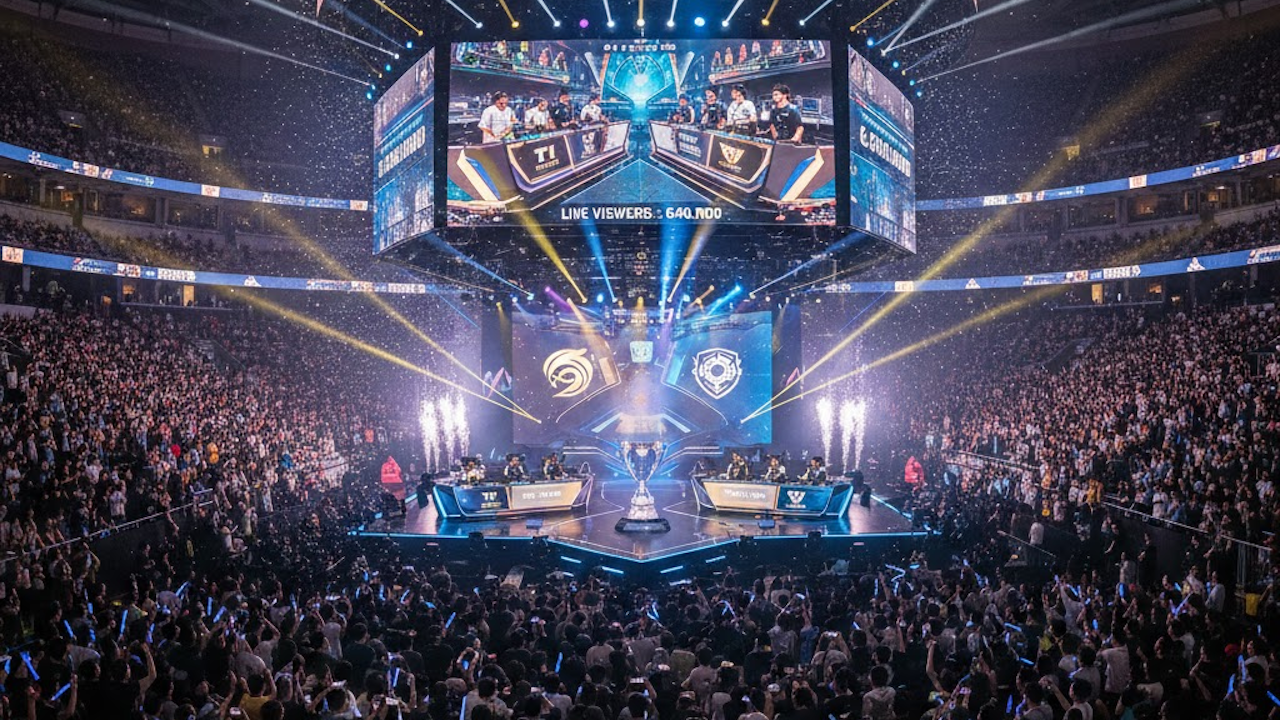
The global esports landscape has undergone a monumental shift over the last two years. As of late 2025, the industry is no longer just a niche interest for tech enthusiasts; it has become a primary pillar of global entertainment. Competitive gaming tournaments are now routinely outperforming traditional sports broadcasts in terms of digital engagement and live concurrent viewers. From the sprawling arenas of London and Seoul to the booming mobile markets of Southeast Asia, the data reveals an industry that is consistently shattering its own glass ceilings.
The Apex of Competitive Gaming: League of Legends
League of Legends continues to serve as the undisputed heavyweight champion of the esports world. The 2024 World Championship set a historic benchmark that many thought would take years to match. The grand final between South Korea’s T1 and China’s Bilibili Gaming reached a staggering peak of 6.94 million concurrent viewers. This figure, notably excluding the massive but difficult-to-track Chinese streaming platforms, marked the highest viewership for any single esports event in history.
The momentum carried into 2025 with the revamped LCK Season. By replacing traditional seasonal splits with a continuous format, the South Korean regional league achieved over 161 million hours watched. This sustained engagement proves that fans are not just showing up for the finals; they are following the seasonal narratives with the same intensity as fans of the Premier League or the NBA.
Top Peak Viewership Events (2024 to 2025)
| Tournament | Game | Peak Viewers |
| Worlds 2024 Final | League of Legends | 6.94 Million |
| Worlds 2025 Final | League of Legends | 6.75 Million |
| M5 World Championship | Mobile Legends | 5.07 Million |
| MPL Indonesia Season 15 | Mobile Legends | 4.13 Million |
| M6 World Championship | Mobile Legends | 4.12 Million |
The Mobile Revolution: Southeast Asia Leads the Charge
While PC titles like League of Legends hold the record for peak spikes, the most significant growth is happening in the mobile sector. Mobile Legends: Bang Bang (MLBB) has become a cultural phenomenon, particularly in Indonesia and the Philippines. In 2025, the MPL Indonesia Season 15 recorded a peak of 4.13 million viewers, which is higher than the world championships of most major PC titles.
The rise of mobile esports is driven by accessibility. In many regions, the smartphone is the primary gaming device, allowing millions of fans to participate in the competitive ecosystem without the need for expensive hardware. This has resulted in mobile gaming accounting for approximately 56% of all global esports viewership in 2025.
Tactical Shooters and the Return of the Major
Tactical shooters have seen a revitalization in interest thanks to the transition from Counter-Strike: Global Offensive to Counter-Strike 2 and the continued expansion of VALORANT.
The BLAST.tv Austin Major 2025 became a landmark event for the North American scene, selling out 40,000 tickets in mere hours. Although it did not break the all-time peak record held by the 2021 Stockholm Major, it generated over 76 million hours watched, proving that the veteran FPS community remains one of the most dedicated in the world.
VALORANT has similarly maintained its trajectory. The VCT Masters Madrid 2024 set an early season record with 3.1 million peak viewers, while the 2024 Champions event in Seoul saw a massive surge in unique viewers, reaching over 44 million throughout the tournament.
The Middle East: A New Global Hub
Perhaps the most notable trend of 2025 is the emergence of Saudi Arabia as a central power in the industry. The Esports World Cup 2025 in Riyadh was an unprecedented undertaking. Spanning seven weeks and featuring 25 different game titles, the event attracted 3 million live visitors.
The tournament boasted a total prize pool exceeding $70 million, the largest in history. More importantly, it achieved a peak online viewership of 7.5 million concurrent viewers across its various stages and titles, signaling a shift in where the world’s biggest competitive events are hosted.
Factors Driving the New Records
Several key elements have contributed to these soaring numbers:
- Co-Streaming: Tournament organizers now embrace popular influencers who broadcast the matches to their own audiences, bringing in millions of viewers who might not watch the official feed.
- Regional Diversity: Records are being broken not just in English, but in Vietnamese, Portuguese, and Tagalog, reflecting the global spread of the fanbase.
- The “Faker” Effect: Legendary players like Lee “Faker” Sang-hyeok continue to draw massive crowds. When T1 plays, viewership figures typically spike by 30% to 50% compared to other matchups.
- Infrastructure: Better internet access and the ubiquity of mobile devices have lowered the barrier to entry for fans in emerging markets.
The trajectory of esports viewership suggests that the industry is still far from its peak. As the line between digital and physical sports continues to blur, the next few years will likely see the 10 million concurrent viewer milestone finally being surpassed.