

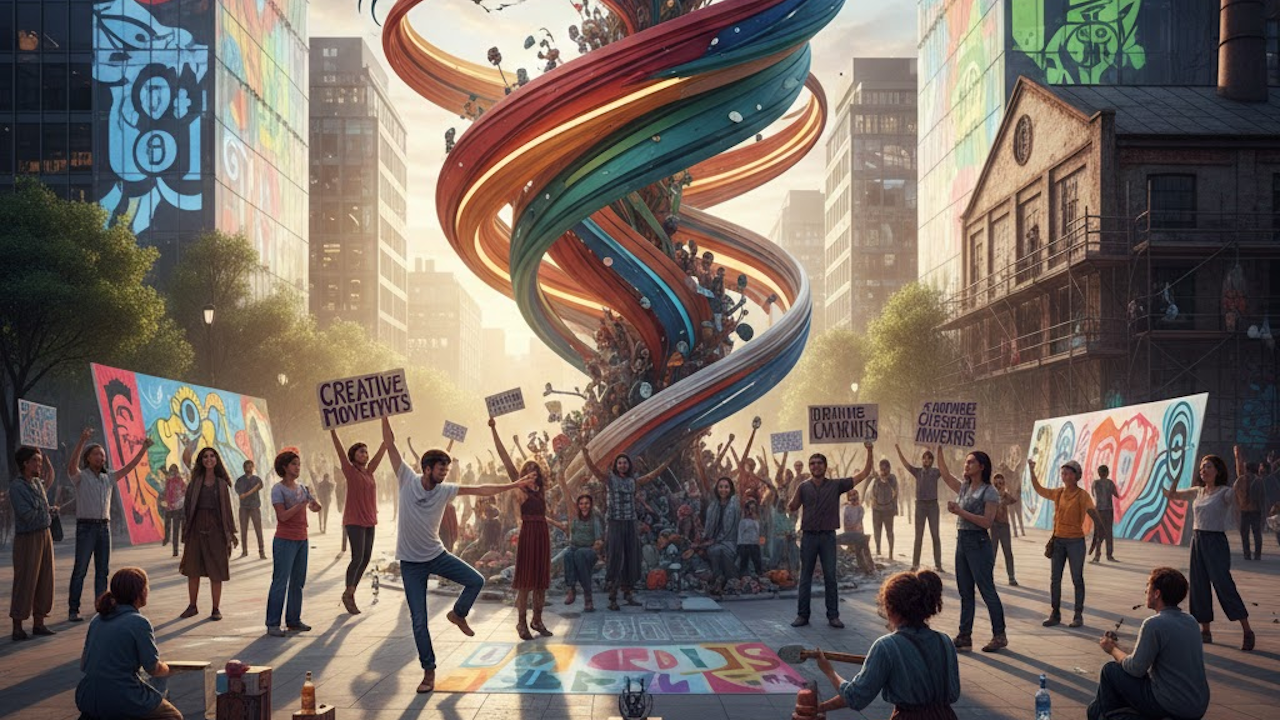
Introduction to Creative Movements
Creative movements are collective endeavors that aim to express innovative ideas, challenge existing norms, and provoke thought across various domains, including art, literature, music, and social activism. Historically, these movements have played a pivotal role in catalyzing social, political, and cultural transformation. They often emerge in response to prevailing societal conditions, driving change by introducing new perspectives and fostering an environment of inquiry and exploration.
Throughout history, numerous creative movements have significantly influenced ideologies and societal structures. The Renaissance, for instance, marked a profound shift in artistic and intellectual pursuits, emphasizing humanism and individual expression. This era gave rise to iconic figures such as Leonardo da Vinci and Michelangelo, who not only transformed artistic standards but also challenged the rigid doctrines of the time, thereby paving the way for modern thought.
Another notable example is the Surrealist movement of the early 20th century, which sought to unlock the unconscious mind and challenge conventional perceptions of reality. Artists like Salvador Dalí and André Breton utilized dream-like imagery and absurd juxtapositions to provoke critical engagement with the established order, thus encouraging a re-evaluation of societal norms and values. In a more contemporary context, movements such as street art have emerged as powerful forms of expression, addressing pressing social issues while democratizing access to art.
The relevance of creative movements in today’s society cannot be overstated. They continue to serve as platforms for expression and innovation, encouraging dialogues surrounding identity, equity, and collective action. As we delve into the examination of these movements, it becomes evident that they are not merely artistic trends but are, in fact, essential forces driving progress and reshaping cultures. By understanding their historical significance, we can better appreciate their impact on current and future trends in innovation and expression.
Notable Creative Movements in History
Throughout history, various creative movements have emerged, serving as catalysts for social change and innovation. One prominent example is the Renaissance, a period spanning from the 14th to the 17th century that marked a profound cultural rebirth in Europe. Originating in Italy, this era was characterized by a renewed interest in classical philosophy, literature, and art. Key figures such as Leonardo da Vinci, Michelangelo, and Raphael made groundbreaking contributions that not only transformed the aesthetic landscape but also laid the groundwork for modern scientific inquiry and humanistic thought. The Renaissance embodies how creative expression can inspire new dimensions of human experience.
Another significant movement is the Beat Generation, which emerged in the 1950s in the United States. This literary and cultural movement, led by influential figures like Jack Kerouac, Allen Ginsberg, and William S. Burroughs, challenged conventional norms through a distinctive style of writing that emphasized spontaneous creativity and self-exploration. Their works often advocated for social change, questioning materialism and societal constraints, thereby opening pathways for subsequent countercultural movements. The Beat Generation’s focus on personal freedom and authenticity played a crucial role in shaping contemporary literature and activism.
In the context of social reform, the Civil Rights Movement of the 1960s stands out for its creative strategies in the pursuit of equality and justice. Pioneered by figures like Martin Luther King Jr., Rosa Parks, and Malcolm X, this movement utilized art, literature, and nonviolent protest as powerful tools to challenge systemic discrimination. Through songs, speeches, and visual art, these activists conveyed vital messages that galvanized public opinion and brought about legislative changes. The integration of creativity within the Civil Rights Movement highlights the potential of innovative thinking to drive societal transformations.
The Role of Technology in Creative Movements Today
In the 21st century, technology has emerged as a fundamental driving force behind creative movements. The proliferation of digital platforms, particularly social media, has revolutionized the way individuals and groups communicate, collaborate, and innovate. Through platforms such as Twitter, Instagram, and TikTok, creative ideas can be shared and amplified rapidly, enabling grassroots movements to gain traction and visibility that were previously unimaginable. For instance, the climate activism movement has utilized these platforms to mobilize support, raise awareness, and ultimately inspire action against climate change. By leveraging hashtags and viral campaigns, activists have successfully spread their messages to vast audiences, emphasizing the role of technology in creating a global conversation around pressing issues.
Moreover, the realm of digital art has flourished due to advancements in technology, empowering artists to experiment with new mediums and reach wider audiences. Digital art collectives, which often thrive in online spaces, serve as incubators for creative collaboration. Artists can now produce and share their work without the constraints of traditional galleries, leading to a richer and more diverse range of artistic expression. Technological innovations such as virtual reality and augmented reality are further pushing the boundaries of creativity, allowing for immersive experiences that engage audiences in unprecedented ways.
The influence of technology extends into online activism, where sophisticated tools such as data visualization and mobile applications help to organize participants and track progress. This shift towards a more interconnected world fosters a spirit of collaboration, which enhances the impact of various movements. As communities harness technological advancements for social good, the democratization of creativity is increasingly apparent. Through these innovative platforms, individuals from diverse backgrounds can contribute their unique perspectives and talents, ultimately shaping a more engaged and creative society.
Future Trends: Creative Movements Shaping Tomorrow
The landscape of creative movements is rapidly evolving, influenced by pressing global challenges and the need for innovative solutions. As we look towards the future, it becomes evident that trends such as sustainability, inclusivity, and intersectionality are gaining prominence and redefining the way creativity is harnessed. Sustainability, in particular, is not merely a buzzword but a driving force in many creative sectors, prompting artists, designers, and entrepreneurs to adopt environmentally friendly practices. This shift is reflected in the growing demand for sustainable materials, eco-conscious branding, and the integration of green initiatives in creative projects, thus merging creative expression with environmental stewardship.
Inclusivity is another key trend that is transforming creative movements. The demand for diverse representation across various creative fields is changing the narrative, opening doors for underrepresented voices and fostering a richer array of perspectives. This inclusivity extends beyond race and gender, embracing diverse experiences, backgrounds, and forms of creativity. As more individuals and collectives come together to share their unique stories, the creative landscape becomes a more vibrant and dynamic space, one that encourages collaboration and mutual respect.
Intersectionality, which examines how various social identities converge, is also becoming increasingly relevant in creative endeavors. By recognizing the interconnectedness of different social movements, creatives can foster collaborations that address multiple facets of societal issues simultaneously. This approach not only enhances the creativity of projects but also broadens the impact of social movements, encouraging innovative solutions to complex challenges. As creative movements continue to evolve, they hold the potential to be transformative forces, fostering community engagement and contributing to meaningful change in society. The future will likely see a synergy among these trends, bolstering the role of creativity as a catalyst for progress and innovation.