

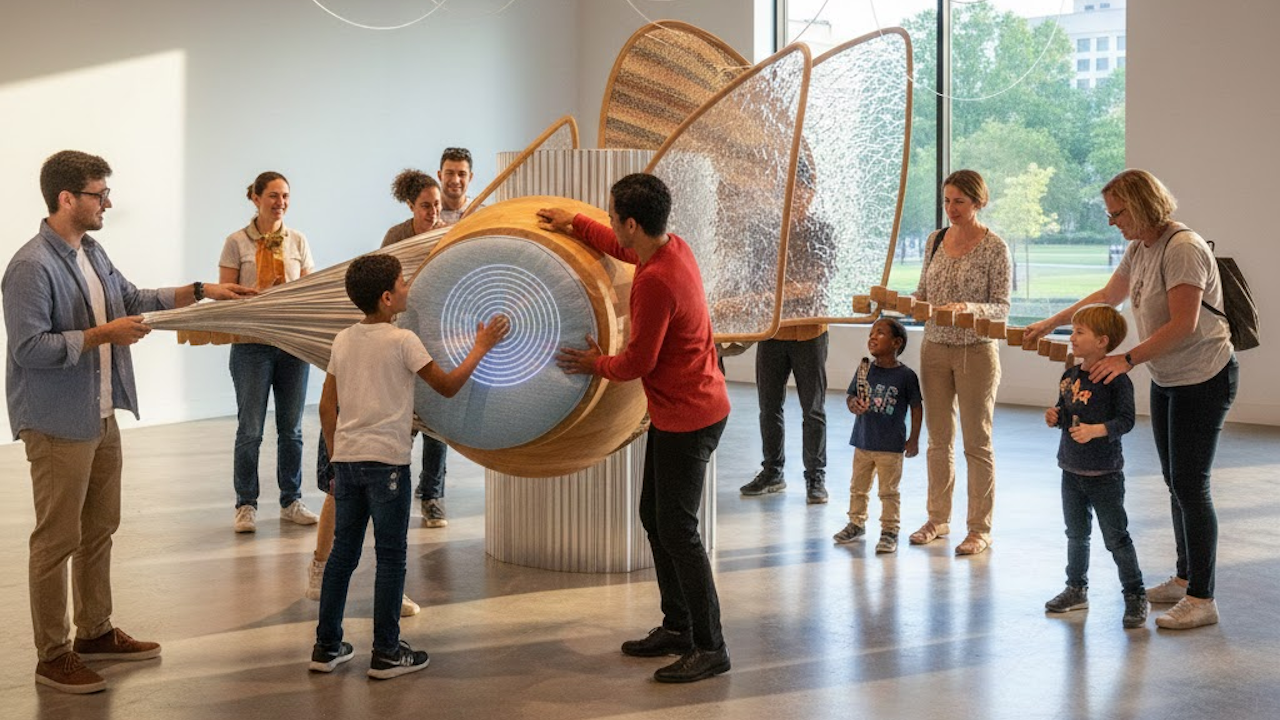
Art that invites touch, movement, and interaction holds a special place in today’s creative landscape. Instead of asking viewers to keep a respectful distance, it welcomes participation. It turns spectators into collaborators, and transforms the act of viewing into a lived experience. This shift has expanded the definition of what art can be. It opens new possibilities for connection, curiosity, and even playfulness. As museums, galleries, and public spaces continue to experiment with interactive installations, people are discovering that art becomes richer when it engages the whole body rather than just the eyes.
Interactive art has existed in various forms for centuries, but its current rise is tied to changes in how people relate to culture. Many individuals crave experiences rather than passive observation. They want to feel involved, to sense textures, to activate sounds, or to trigger movement. When people can touch art, they experience it in a deeply personal way. The cold smoothness of metal, the softness of fabric, or the subtle warmth of wood communicates ideas that are hard to render visually. Touch becomes a language that carries its own stories.
Tactile installations often use materials that respond directly to the viewer. Consider sculptures coated in velvety fibers, walls lined with rubber shapes that bounce back when pressed, or interactive textiles woven with sensors that emit light when brushed. These works reward curiosity. They create feedback loops between the object and the person exploring it. The experience feels less like learning through instruction and more like discovering through play. Many artists choose tactile materials precisely because they disrupt expectations. What looks hard might feel soft. What appears fragile might be surprisingly durable. That tension invites questions and encourages deeper engagement.
Sound based works also play an important role in art that can be touched and activated. A visitor might step on a platform that rings like a chime, tap a surface that triggers spoken words, or turn a handle that builds a rhythmic pattern. In these installations, the viewer becomes a composer. The sounds produced are not just byproducts of the artwork but essential elements of it. The piece is incomplete until someone interacts with it. This type of art expands the sensory range of the experience and often appeals to those who feel their creativity spark when they can influence what they perceive.
Movement is another crucial dimension. Kinetic installations allow people to set elements in motion. Some pieces spin when pushed, some unfold as they are pulled, and some sway whenever someone walks past. These works highlight physical cause and effect, which ties them to childhood exploration. When adults engage with these pieces, they often rediscover a sense of wonder that may have faded over time. The interactive nature of kinetic art reminds visitors that play does not have to be limited to early years. Play can be a form of learning, reflection, and emotional release at any age.
Public art has embraced this idea with enthusiasm. In parks, plazas, and walkways, installations encourage passersby to stop and participate. People might climb gently sloping structures, walk through ribbons of fabric that rustle in the wind, or push glowing orbs that look like floating lanterns. These experiences break down boundaries between art and everyday life. They create communal moments where strangers laugh together, exchange ideas, or offer each other a turn. Public interactive art strengthens a sense of place by giving people shared memories rooted in touch and motion.
For museums, allowing direct contact with art once seemed unthinkable. The fear of damage overshadowed the potential benefits. Yet many institutions now dedicate entire galleries to interactive works. Some museums offer soft sculpture rooms where visitors can rearrange the pieces. Others display digital works that respond to touch with shifting colors or projected shapes. These spaces attract families, school groups, and adults who might not otherwise feel comfortable in traditional galleries. By embracing interactivity, museums demonstrate that creativity is not just something to observe but something that unfolds between the artwork and its audience.
The educational impact of tactile and playful art is significant. Children learn through sensory exploration, and these installations allow them to form strong connections with abstract ideas. A sculpture that vibrates when pressed can introduce concepts related to physics. A wall of puzzle like shapes can encourage spatial reasoning. A sound installation that changes tempo based on movement can teach rhythm and pattern. Adults benefit as well. Experiential art can reduce stress, stimulate memory, or spark conversations that lead to new insights.
Artists who create touchable works often reflect deeply on accessibility. Traditional visual art privileges sight, but interactive pieces open doors for people with different sensory strengths. Textures support those with limited vision. Sound invites people who respond more strongly to auditory cues. Movement centered pieces allow those with kinesthetic sensitivity to experience art in ways that feel natural. By welcoming all forms of interaction, artists build inclusive environments where more people can connect meaningfully with creative expression.
Ultimately, art you can touch, feel, and play with reminds us that creativity thrives when boundaries loosen. These works demonstrate that engagement is not a distraction from artistic intention. It is part of the story. They celebrate curiosity and encourage viewers to become active participants in the unfolding of meaning. Through texture, sound, and motion, interactive art creates experiences that linger long after the moment ends. It honors the idea that art should be encountered with the full human body and not just through distant observation.