

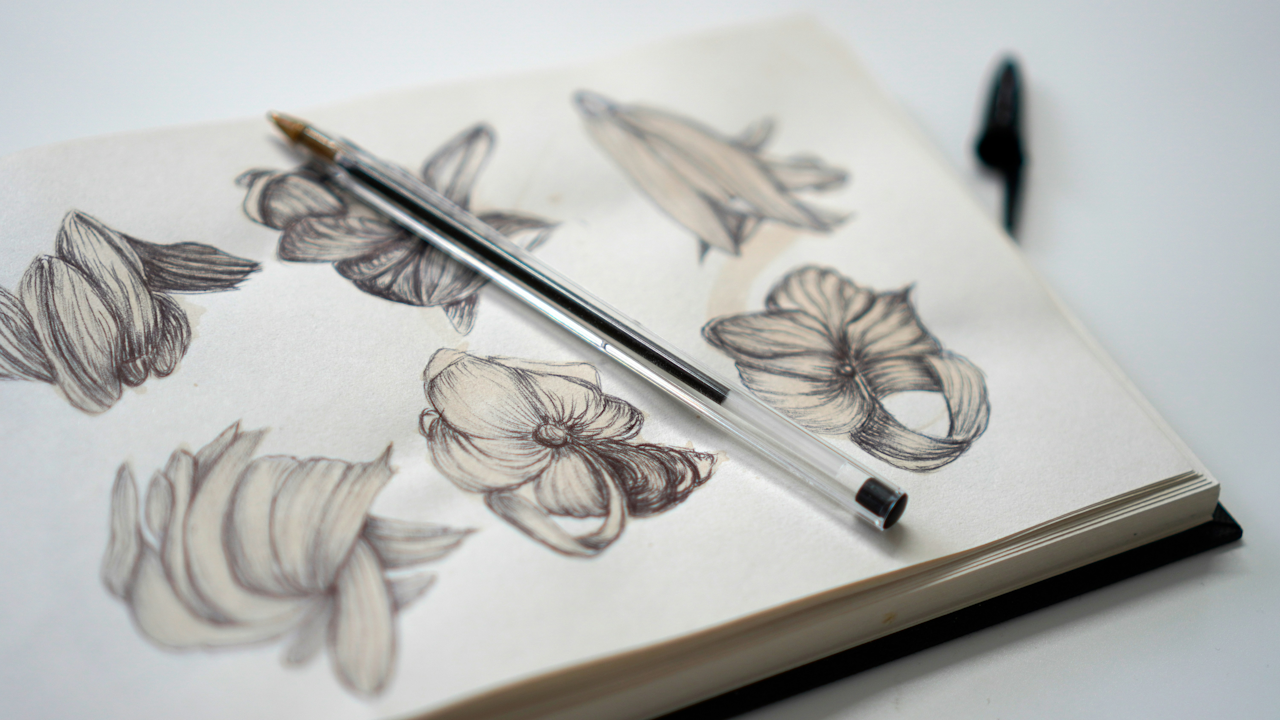
In the pages of a well worn sketchbook lies something far more profound than practice drawings or idle doodles. These private volumes capture the unfiltered essence of an artist in ways that polished gallery pieces rarely can. They serve as intimate records where ideas emerge raw, emotions surface without restraint, and the slow unfolding of a creative life becomes visible. Unlike finished paintings or sculptures crafted for public view, sketchbooks exist in a protected space. Here the artist answers to no one but the page itself. This freedom turns each volume into a mirror of the soul, reflecting not just what the artist sees but who they are at their core.
The act of keeping a sketchbook demands consistency and honesty that few other artistic habits require. Every page turned represents another day of showing up, of committing thoughts to paper even when inspiration feels distant. Over months and years these accumulated pages form a visual autobiography. Recurring motifs appear like recurring dreams. A certain curve of line or choice of subject matter surfaces again and again, revealing obsessions the artist may not have recognized consciously. The sketchbook does not lie. It cannot be curated for an audience in the same way a portfolio can. What remains between the covers is the evidence of a mind at work, a heart processing experience, and a hand translating both into form.
The Intimate Sanctuary of the Sketchbook
Artists often treat their sketchbooks with a reverence reserved for diaries. Many refuse to show them to others, guarding the pages as fiercely as personal journals. This protectiveness stems from the vulnerability contained within. A sketchbook holds failed attempts, abandoned ideas, and half formed thoughts that never reach completion. It preserves the awkward stages of creation that finished works erase. In these pages an artist can experiment without fear of external judgment. A line can be crossed out. A color can be tested and rejected. The messiness itself becomes part of the record.
This privacy creates space for genuine self discovery. An artist flipping back through old volumes often encounters earlier versions of themselves. They see how a fascination with certain landscapes evolved into deeper explorations of memory and loss. They notice how figures drawn during periods of grief differ in weight and posture from those made in times of joy. The sketchbook becomes both laboratory and archive. It allows the artist to trace their own development with a clarity that memory alone cannot provide. In this way the pages function as a conversation across time between the artist they were and the artist they are becoming.
Historical Windows: From Renaissance to Modern Masters
Throughout art history sketchbooks and notebooks have served as essential companions to great creators. Leonardo da Vinci filled thousands of pages with anatomical studies, mechanical inventions, and observations of nature. These volumes reveal a mind that refused boundaries between art and science. The quick sketches of flying machines sit beside careful drawings of the human heart. Together they demonstrate a relentless curiosity that defined his entire life. The notebooks do not merely document projects. They expose the connective tissue of a polymath’s thinking, showing how one observation sparked another across disciplines.
Later masters continued this tradition of private visual thinking. Picasso produced hundreds of sketchbooks across his long career. Each phase of his stylistic evolution appears first in rapid, exploratory drawings. The shift from representational figures to fragmented forms can be tracked page by page. These volumes capture the restless energy of an artist who treated style as something to be continually dismantled and rebuilt. Lucian Freud’s sketchbooks similarly expose his intense focus on the human figure. The repeated studies of sitters reveal not just technical skill but a psychological intensity that marks all his mature work. In each case the sketchbook provides access to the artist’s mind during the moments when public expectations had not yet shaped the outcome.
The Raw Process: Ideas in Formation
A finished artwork often conceals the struggle required to reach it. Sketchbooks preserve that struggle in visible form. Thumbnail compositions crowd the margins. Multiple versions of the same subject appear in sequence, each attempt refining or rejecting the previous one. Notes scrawled beside drawings record internal dialogue. “Too tight,” “looser here,” or “remember the light from yesterday” turn the page into a working document of thought. These annotations expose the decision making process that remains invisible in the final piece.
The iterative nature of sketching mirrors the iterative nature of self understanding. An artist rarely arrives at a powerful image on the first try. Instead they circle the subject, approaching from different angles until something true emerges. This circling is not inefficiency. It is the necessary work of aligning hand, eye, and inner vision. When viewers later encounter only the resolved painting, they miss the evidence of doubt, persistence, and eventual clarity that the sketchbook preserves. The pages therefore offer a more complete picture of artistic labor than any single masterpiece can convey.
Personality on the Page: What Drawings Reveal
Edgar Degas once observed that drawing is the artist’s most direct and spontaneous expression, a species of writing that reveals true personality better than painting ever can. The quote captures something essential about sketchbooks. In the speed and pressure of the mark, in the choice of what to include and what to ignore, personality asserts itself. One artist’s lines may be delicate and searching, another’s bold and confrontational. Some pages overflow with detail while others rely on economy of gesture. These differences are not merely stylistic. They reflect temperament, values, and ways of moving through the world.
Even subject matter carries personal significance. An artist who repeatedly draws solitary figures may be processing feelings of isolation. Another who fills pages with crowded urban scenes may be expressing a hunger for connection. The emotional temperature of the work often registers before the artist can name it. Over time patterns become impossible to ignore. A sketchbook kept for decades functions as a long term psychological record, charting shifts in mood, interest, and self perception through visual evidence rather than words.
Emotional and Psychological Depths
Sketchbooks frequently serve as outlets for emotions that resist verbal expression. During periods of grief, anxiety, or upheaval, the act of drawing provides a channel for processing experience. The physicality of mark making, the focus required to translate feeling into form, can bring a measure of calm. At the same time the resulting images often externalize inner states with startling directness. Dark, heavy shading may surround figures during difficult seasons. Bright, fragmented marks may signal creative breakthrough or emotional release.
Because sketchbooks accumulate over long periods, they also document resilience. Pages made in the aftermath of loss sit beside pages made during recovery. The continuity of the practice itself becomes a form of testimony. An artist who keeps returning to the book demonstrates a commitment to staying present with their own experience. This commitment transforms the sketchbook from a mere tool into a companion through the full range of human emotion. The pages bear witness to both fragility and endurance.
The Artist’s Diary: Life Captured in Lines
Pablo Picasso described painting as another way of keeping a diary. Sketchbooks extend this idea further by capturing the daily texture of an artist’s life. Travel sketches record not just places visited but the quality of attention brought to those places. Studies of family members or pets preserve relationships in visual form. Even seemingly random doodles made while on the phone or waiting for appointments reveal the restless undercurrent of creative thought. Together these fragments construct a portrait of a life lived in dialogue with the visual world.
Unlike written diaries, which rely on narrative and reflection, sketchbooks communicate through immediacy. The speed of execution often preserves sensations that words would filter. A quick drawing of a storm cloud carries the weight of that moment’s atmosphere more viscerally than a descriptive paragraph. Over years the accumulation of such moments creates a rich, nonlinear autobiography. Later viewers, or the artist themselves in retrospect, can read the emotional weather of entire chapters of life through these accumulated images.
In an Age of Digital Polish: The Enduring Power of Paper
Contemporary artists face new choices about how to record their visual thinking. Digital tablets offer layers, perfect undo functions, and the ability to work at any scale. Yet many artists continue to maintain physical sketchbooks alongside or instead of digital tools. The limitations of paper prove valuable. The inability to erase completely forces acceptance of mistakes and encourages bolder risk taking. The fixed sequence of pages creates a chronological record that digital files can obscure. The tactile qualities of different papers and media engage the body in ways that screens sometimes bypass.
Even artists who work primarily digitally often keep a physical book for the moments when the soul needs direct contact with material. The resistance of pencil on paper, the smell of ink, the sound of pages turning, all contribute to a grounded creative state. In a culture saturated with polished online images, the sketchbook remains a countercultural space where process matters more than product and imperfection is not only allowed but essential. This resistance to perfection preserves the humanity at the center of artistic practice.
Conclusion: Peering Into the Soul
To look through an artist’s sketchbooks is to encounter that artist in a state of unusual openness. The volumes do not present a carefully constructed public image. They present the ongoing negotiation between vision and execution, between inner experience and outer form. In these pages one finds the courage to begin again after failure, the persistence required to develop a voice, and the quiet joy of discovery that sustains creative work across a lifetime.
Finished artworks offer beauty and resolution. Sketchbooks offer something rarer: the living record of an artist becoming themselves. They remind us that art is not only about what ends up on gallery walls. It is also about the private, daily practice of paying attention, of translating experience into marks, and of remaining in conversation with one’s own evolving soul. For anyone seeking to understand an artist beyond surface achievement, the sketchbook remains the most honest and revealing document available. Its pages hold the evidence that no polished statement or retrospective can fully replace.