

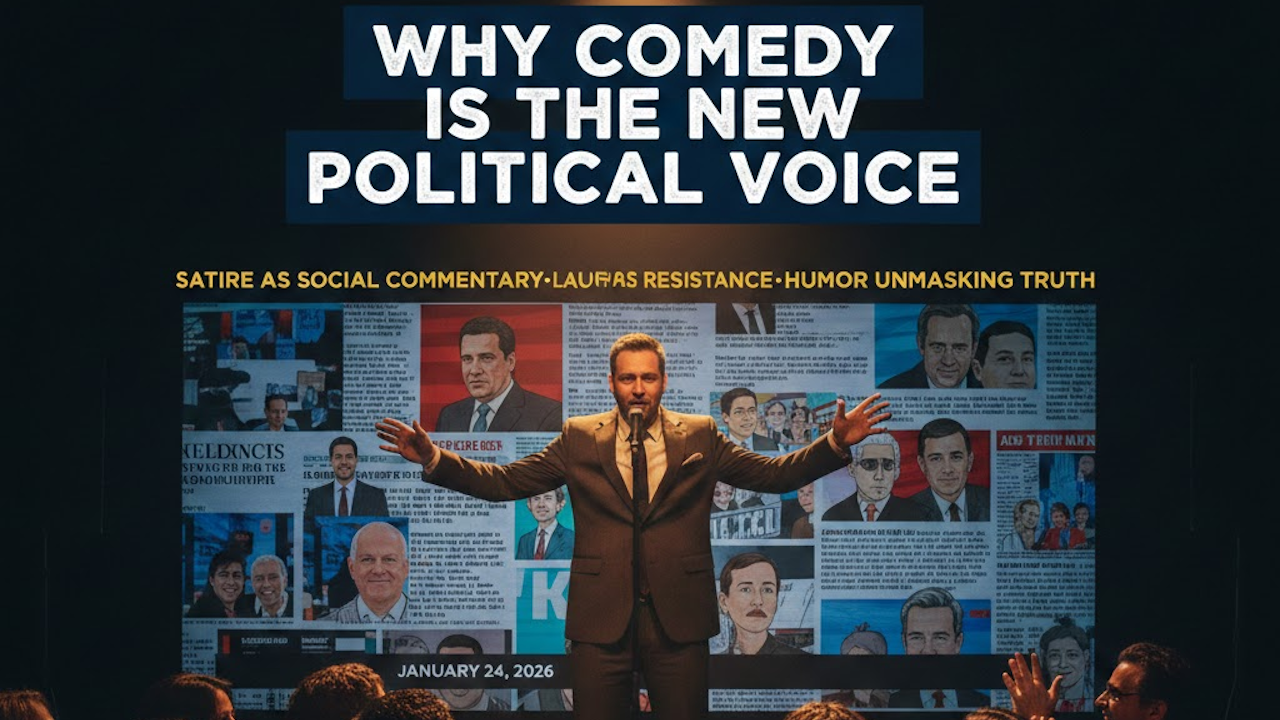
Historically, comedy has served as a vital tool for social commentary, providing a lens through which societal norms and political frameworks are analyzed and critiqued. Comedy dates back to ancient civilizations, where jesters and satirists played crucial roles in challenging the status quo. These early performers crafted their art to comment on power dynamics and the human condition, setting a precedent for the integral role comedy would later play in political discourse.
In contemporary society, comedians have the power to influence public opinion significantly. Through various forms of media—stand-up shows, late-night talk shows, and satirical television programs—comedians address current events and cultural trends, often highlighting injustices or absurdities that may otherwise remain unexamined. By using humor, they create an environment where audiences can engage with complex or controversial issues that might be uncomfortable to discuss in a straightforward manner. This disarming quality of comedy effectively breaks down barriers, facilitating a deeper understanding of difficult subjects.
Notable examples throughout history underscore comedy’s potency as an agent of change. Comedians like George Carlin and Richard Pryor challenged societal norms and confronted sensitive topics, influencing generations of viewers. More recently, shows such as “The Daily Show” and “Saturday Night Live” have become critical platforms for political commentary, allowing viewers to grapple with pressing issues wrapped in humor. By employing comedic elements, these programs not only entertain but also inform, shaping public perceptions and motivating individuals to reflect on the societal and political landscapes.
Overall, the unique ability of comedy to marry entertainment with critique positions it as an essential component of modern discourse, fostering dialogue, and encouraging a more informed citizenry. As humor continuously evolves, its role in influencing cultural norms and challenging authoritative structures will likely expand further, reshaping how society interacts with pressing global issues.
Modern Political Satire: A Platform for Change
The evolution of political satire has been significantly influenced by the rise of digital platforms, which has transformed how comedians engage with political discourse. In the past, traditional media outlets such as television dominated the landscape of satire, but with the advent of the internet and social media, new avenues have emerged. Platforms like Twitter, Facebook, and YouTube have not only increased the accessibility of satirical content but also provided comedians with a vast audience, often leading to viral sensations that spark intense public discourse.
Streaming services such as Netflix and Hulu have also entered the realm of political satire, supporting shows like “The Daily Show” and “Last Week Tonight with John Oliver.” These platforms have allowed comedians to explore political topics in-depth, presenting nuanced commentary that can resonate with a wide range of viewers. By utilizing the flexibility of these modern mediums, political satirists are able to address current events in real-time, responding swiftly to breaking news and societal issues, which further enhances their relevance and impact.
Moreover, the interactive nature of social media amplifies the voices of comedians, allowing audiences to engage, share, and react to satirical content instantaneously. This engagement often translates into increased political awareness and mobilization around critical issues. The humor employed in political satire serves not just as entertainment but also as a means of critique, urging individuals to reconsider their perspectives and actions regarding pressing political matters.
As a result, modern political satire has become a catalyst for change, encouraging public dialogue and fostering a culture where humor can coexist with activism. By highlighting the absurdities of political situations and the failings of institutions, satirists play a pivotal role in shaping societal narratives and promoting civic engagement.
Comedians as Agents of Social Change
In recent years, comedians have increasingly emerged as significant voices in the realm of social justice, using their platforms to challenge political norms and advocate for meaningful change. Stand-up comedy, satirical news shows, and online sketches often serve as vehicles for social commentary, allowing comedians to tackle sensitive issues while provoking thought and sparking dialogue among their audiences.
Prominent figures such as Jon Stewart, John Oliver, and Hasan Minhaj exemplify this phenomenon. Through their respective shows, they have addressed a myriad of topics ranging from racial inequality to systemic corruption. For instance, Jon Stewart’s “The Daily Show” played a pivotal role during the political landscape post-9/11, unpacking complex issues while bringing humor to the forefront of public discourse. Similarly, John Oliver’s “Last Week Tonight” often dedicates entire episodes to highlighting social injustices, exposing flaws in governance and corporate practices, while utilizing humor to make the content more palatable and engaging for viewers.
Moreover, the capacity of comedians to influence public opinion and mobilize grassroots movements cannot be overlooked. By weaving topics of injustice and advocacy into their routines, they become agents of change, encouraging audiences to reflect, discuss, and act on various social issues. For instance, minuscule shifts in viewer perception following comedic commentary have demonstrated the genre’s potential to inspire action, as seen during movements such as Black Lives Matter, where humor has played a crucial role in energizing supporters and amplifying their message.
Comedy as a catalyst can foster community engagement by enabling audiences from diverse backgrounds to connect over shared laughter while simultaneously confronting uncomfortable truths. This blending of humor with activism creates a unique space in which individuals can come together, provoking critical conversations that might otherwise remain unaddressed. As comedians continue to utilize their influence as platforms for advocacy, their contributions to social change are increasingly recognized as an essential component of modern political discourse.
The Potential Pitfalls of Comedy in Politics
While comedy can serve as a powerful tool in political discourse, it is not without its potential pitfalls. One significant concern is the risk of misinformation. Comedians often present political commentary through satire and exaggeration, which can blur the lines between fact and fiction. This blending might leave some audiences misinformed, either misunderstanding the actual issues at stake or developing skewed perceptions based on comedic interpretations. When audiences consume political humor without critical engagement, there is a genuine risk that they may adopt misleading narratives as truths.
Another challenge arises from the trivialization of serious issues. Comedy has the ability to tackle complex subjects, yet it can inadvertently downplay their significance. When critical political debates are reduced to punchlines, the gravity of the issues may be overshadowed. The necessity of maintaining a balance between humor and the seriousness of topics such as social justice, health care, or climate change is paramount. This can lead to audiences not fully appreciating the importance of these debates, viewing them instead through a lens of entertainment rather than urgency.
Moreover, the use of humor in political commentary may alienate certain groups of people. Comedic content can cater to specific demographics, potentially marginalizing or offending those with differing viewpoints. Comedians must navigate their responsibilities carefully, ensuring that their jokes do not reinforce divisions or exclude individuals from dialogues that affect them. This balancing act—between entertaining an audience through humor and fulfilling a duty to promote informed political discussion—is a tightrope that many comedians must walk.