

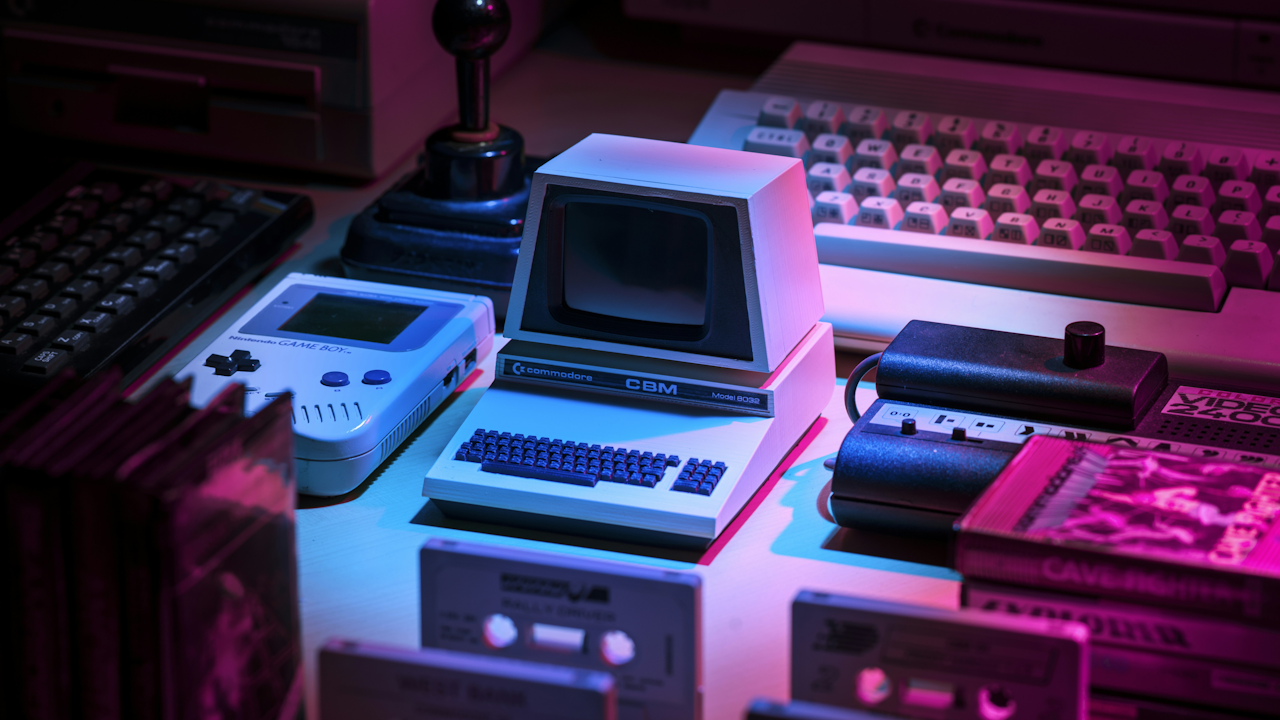
In a world where technology updates itself every few months, a quiet rebellion is taking place in basements, attics, and dedicated hobby rooms across the globe. Vintage tech collecting has emerged as a passionate pursuit for those who find joy in the weight of a Bakelite radio knob, the satisfying click of a mechanical keyboard from the 1980s, or the warm glow of a cathode-ray tube television. This hobby is not merely about acquiring old devices. It is about reconnecting with a simpler era of innovation, when gadgets felt personal and mechanical rather than invisible and disposable. Nostalgia drives the collector forward, turning dusty shelves into time capsules that remind us how far we have come and what we might have lost along the way.
The roots of vintage tech collecting stretch back decades, though the movement gained real momentum in the early 2000s. Early adopters began hoarding items from the 1950s through the 1990s as manufacturers phased out analog components in favor of digital miniaturization. Radios from the golden age of broadcasting, reel-to-reel tape recorders, and the first generation of home computers found new life in the hands of enthusiasts. By the 2010s, online marketplaces and social media groups amplified the trend. Suddenly, a generation raised on floppy disks and cathode-ray tube monitors realized these artifacts represented their childhoods. What started as a niche interest among engineers and historians evolved into a mainstream cultural phenomenon, complete with dedicated museums, restoration workshops, and high-profile auctions.
At its core, the appeal lies in nostalgia, that bittersweet longing for times we can never revisit. Psychologists often describe nostalgia as a coping mechanism, a way to anchor ourselves amid rapid change. Old gadgets provide a tangible link to those feelings. Consider the Sony Walkman. Introduced in 1979, it allowed millions of teenagers to carry music wherever they went, creating private soundtracks to everyday life. Holding one today, with its cassette door that pops open with a gentle push and its headphone jack that still works without adapters, evokes memories of bike rides, school bus commutes, or late-night mixtape sessions. The device is heavy by modern standards, its plastic casing slightly yellowed with age, yet it functions with a reliability that feels almost defiant. Collectors report that simply powering one up and hearing the faint whir of the tape mechanism can transport them back decades in an instant.
This emotional pull extends beyond personal memory to a broader appreciation for design and engineering that emphasized durability over disposability. Early gadgets were built to last. A 1970s Texas Instruments calculator, with its LED display and chunky buttons, might still compute accurately after fifty years if the batteries are replaced carefully. Contrast that with today’s slim smartphones, engineered for obsolescence after two or three years. Vintage tech collectors often speak of a “tactile satisfaction” missing from glass-and-aluminum slabs. There is pleasure in the heft of a 1984 Macintosh 128K, in the way its mouse tracks across a desk with audible clicks, or in the satisfying snap of inserting a cartridge into an original Nintendo Entertainment System. These interactions feel deliberate and rewarding in ways that swipe-based interfaces rarely match.
Collectors divide their interests into several popular categories, each with its own devoted following. Audio equipment remains one of the largest segments. Turntables from brands like Dual or Technics, cassette decks with Dolby noise reduction, and even eight-track players attract those who value analog warmth over digital perfection. A fully restored Nakamichi Dragon cassette deck from the 1980s can command thousands of dollars not just for rarity but for its legendary sound quality. Video game consoles form another major pillar. The Atari 2600, with its wood-grain finish and simple joystick, represents the birth of home gaming. The original Game Boy, complete with its green-tinted screen and brick-like build, reminds collectors of long summer afternoons spent battling in Pokemon or Tetris. Early personal computers occupy a special place as well. The Commodore 64, Apple IIe, and IBM PC XT sit proudly in many collections, often paired with period-correct monitors and printers. These machines remind us that computing once required patience, creativity, and a willingness to type commands line by line.
Communication devices also hold strong nostalgic value. Rotary dial telephones from the 1960s, with their satisfying mechanical ring, or early mobile phones like the Motorola DynaTAC 8000X, nicknamed “the brick,” symbolize the transition from wired to wireless life. Pager collectors form a smaller but dedicated group, treasuring the simple numeric displays that once kept doctors and businesspeople tethered to their work without the constant buzz of modern notifications. Even early digital cameras, such as the Sony Mavica from the late 1980s that recorded images on floppy disks, appeal to photography enthusiasts tired of endless gigabytes of cloud storage.
Starting a vintage tech collection requires patience, research, and a willingness to learn new skills. Beginners often begin at flea markets, estate sales, or thrift stores, where hidden gems sometimes surface for a few dollars. Online platforms like eBay remain essential, though buyers must scrutinize seller photos and descriptions for signs of damage or missing parts. Local classifieds and specialized forums can yield better deals and stories from previous owners. The key is to focus on condition. A device that powers on and performs its original functions holds far more value than a non-working display piece. Rarity matters too. Limited-edition color variants of the Game Boy or prototype circuit boards can transform an ordinary collection into something remarkable.
Restoration forms a crucial part of the hobby. Many collectors become amateur repair experts out of necessity. Common issues include leaking batteries that corrode internal components, dried-out capacitors that cause erratic behavior, and faded plastic that yellows over time due to ultraviolet exposure. Cleaning involves isopropyl alcohol, soft brushes, and sometimes specialized tools for desoldering and resoldering connections. Online tutorials and community wikis provide step-by-step guidance, turning frustration into accomplishment. The reward comes when a long-silent device hums back to life, its original lights flickering as if no time has passed. Some enthusiasts go further, creating custom modifications that blend old hardware with modern conveniences, such as adding Bluetooth to a 1980s boombox while preserving its external appearance.
Challenges abound, however. Space quickly becomes an issue as collections grow. A single early computer setup might require an entire desk, complete with peripherals. Environmental factors pose risks too. Humidity can damage circuit boards, while extreme temperatures warp plastic housings. Parts scarcity represents another hurdle. Manufacturers no longer produce replacement belts for tape drives or ribbon cables for old printers, forcing collectors to hunt through salvage yards or 3D-print compatible substitutes. Authenticity concerns have risen with the hobby’s popularity. Reproductions and “Frankenstein” devices assembled from mismatched parts occasionally flood the market, requiring buyers to develop a keen eye for original markings and serial numbers.
Despite these obstacles, the social dimension of vintage tech collecting keeps enthusiasts engaged. Online communities thrive on platforms dedicated to specific eras or devices. Members share restoration progress, trade spare parts, and organize virtual meetups. In-person events such as retro computing festivals or electronics swap meets allow collectors to connect face to face, often resulting in spontaneous storytelling sessions about childhood devices. Museums dedicated to technology history, such as those showcasing early computing or consumer electronics, provide educational context and inspiration. Younger generations have begun joining the ranks, drawn by the sustainability angle of reusing old hardware rather than constantly purchasing new.
From an economic perspective, vintage tech can sometimes function as an investment, though this should never be the primary motivation. Prices for certain items have climbed steadily. A working Apple I computer from 1976, one of the earliest personal computers, sold for hundreds of thousands of dollars at auction in recent years. More accessible pieces like a pristine Sony Walkman or original Nintendo Game Boy still appreciate at modest rates, especially if they include original packaging and manuals. Market trends fluctuate with cultural nostalgia cycles. The release of a popular documentary or video game revival can suddenly spike demand for related hardware. Savvy collectors track these patterns while remembering that the true value lies in personal enjoyment rather than resale potential.
Looking ahead, the future of vintage tech collecting appears bright yet complex. As digital-native generations age, they too will seek connections to their formative technological experiences. Smartphones from the early 2000s, once dismissed as outdated, are already entering collections as symbols of the first mobile internet era. Meanwhile, advancements in 3D printing and open-source hardware may make restoration easier, allowing more people to participate. Some worry that the hobby could become commercialized, with prices rising beyond reach for casual enthusiasts. Others see opportunity in hybrid approaches, where modern software emulates vintage experiences on contemporary devices without sacrificing the charm of original hardware.
Ultimately, vintage tech collecting reminds us that progress does not erase the past. It preserves it. Each restored gadget tells a story of human ingenuity, of moments when technology felt magical rather than mundane. In an age of seamless updates and infinite connectivity, these old devices offer a gentle counterbalance. They encourage us to slow down, to appreciate the click and whir of mechanical life, and to remember the excitement of unwrapping a new gadget that promised to change everything. For those who collect them, nostalgia is not mere sentimentality. It is a living connection to the roots of the digital world we inhabit today. Whether the collection holds one treasured item or dozens, the satisfaction remains the same: a quiet celebration of gadgets that once captured our imaginations and continue to do so long after their time in the spotlight has passed.