

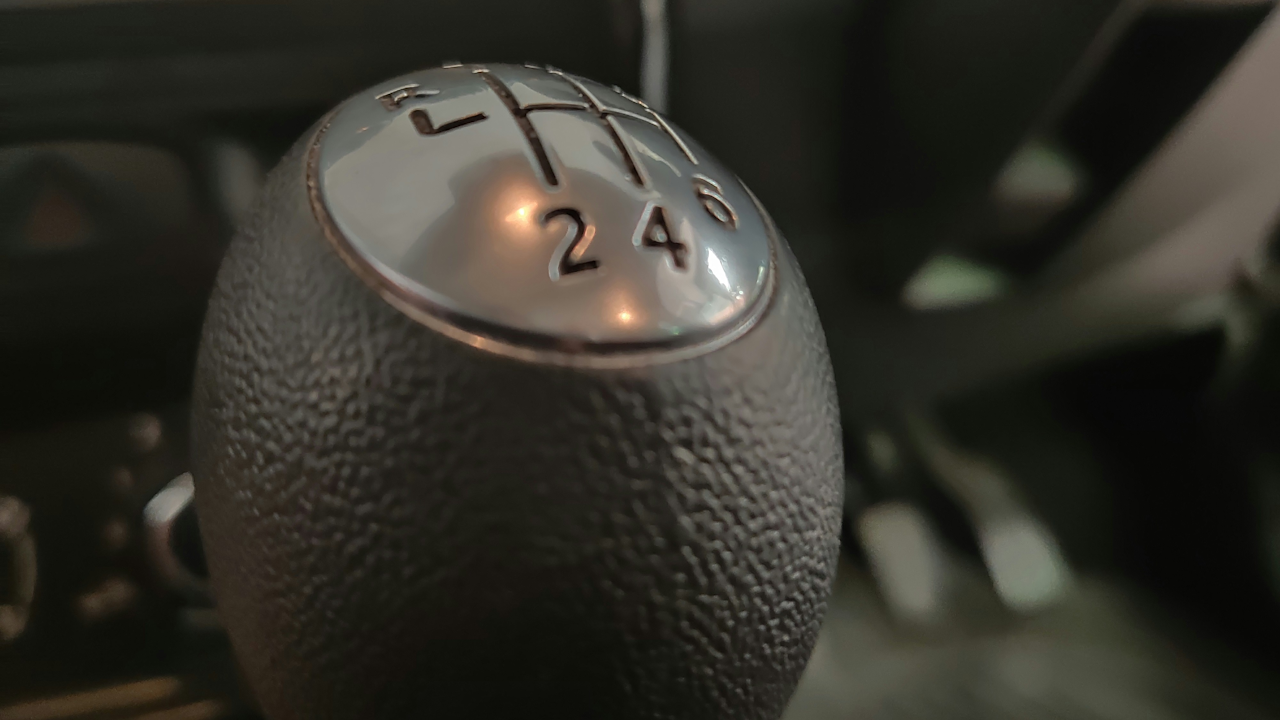
In an era dominated by seamless automatic shifts, lightning-fast dual-clutch gearboxes, and the silent hum of electric motors, the humble manual transmission stands as a defiant holdout. Once the default choice for nearly every driver on the road, the stick shift has retreated into a specialized corner of the automotive world. Yet far from fading into oblivion, manuals are experiencing a quiet resurgence among a dedicated group of enthusiasts. This is not a mass-market revival. Sales figures remain minuscule compared to their peak decades ago. Instead, it is a niche comeback fueled by passion, skill, and a yearning for raw connection in an increasingly automated driving landscape. As of 2026, the manual transmission has become a badge of honor for those who view driving as an active pursuit rather than a passive commute.
To understand this phenomenon, it helps to look back at the long arc of transmission history. Manual gearboxes trace their roots to the earliest automobiles in the late 19th century. Inventors like Karl Benz and others paired simple sliding-gear mechanisms with internal combustion engines to harness power efficiently. By the mid-20th century, manuals were ubiquitous. They offered drivers direct control over engine RPMs, allowed for precise power delivery, and kept costs low for manufacturers and buyers alike. In Europe and much of the world outside North America, manuals remained the standard well into the 21st century, prized for their mechanical simplicity and lower purchase price. In the United States, however, the tide began turning earlier. The rise of two-pedal driving gained momentum in the 1950s with early automatics from General Motors and others, promising ease in traffic and everyday use.
The decline accelerated dramatically in the 2000s and 2010s. Advances in automatic transmission technology played a central role. Modern automatics with eight, nine, or even ten speeds could shift faster and more smoothly than any human hand. They improved fuel efficiency through optimized gear ratios and torque-converter lockups that rivaled or surpassed manuals. Dual-clutch systems, first popularized in high-performance cars and later trickling down to mainstream models, delivered lightning-quick changes without interrupting power flow. Meanwhile, continuously variable transmissions (CVTs) promised even greater efficiency for economy-focused vehicles. Regulatory pressures added another layer. Stricter emissions standards and corporate average fuel economy requirements favored transmissions that maximized engine output without driver error. Hybrids and plug-in electric vehicles complicated the picture further. Most EVs dispense with traditional multi-gear transmissions altogether, relying on single-speed reducers or sophisticated electronic controls.
By the early 2020s, the numbers told a stark story. In the United States, manual-equipped new vehicles dipped below one percent of total sales in 2021, hitting a low of roughly 0.9 percent. This represented a plunge from around 15 percent two decades earlier. Many manufacturers responded by phasing out the option entirely. Models that once offered manuals as standard or popular choices quietly dropped them in favor of automatics that appealed to broader audiences. Even in segments where enthusiasts once demanded sticks, such as compact sedans and entry-level sports cars, the three-pedal setup became optional at best and often carried a slight price premium or required specific trim levels.
Yet amid this contraction, something unexpected happened. Starting around 2022, manual transmission adoption began to tick upward from that rock-bottom baseline. Industry data showed shares climbing to about 1.2 percent in 2022 and 1.7 percent in 2023, with projections pushing past two percent in subsequent years. This modest rebound was not driven by mainstream buyers suddenly rediscovering the clutch pedal. It stemmed from a core group of dedicated drivers who refused to let the skill fade away. Take rates in specific performance models soared. For instance, nearly 90 percent of Subaru BRZ buyers chose the manual in recent years, while the WRX saw 85 percent stick with the shifter. Porsche 911 GT3 variants posted manual selection rates between 53 and 83 percent depending on the exact trim. Toyota’s GR Corolla achieved 71 percent manual uptake, and even the Cadillac CT4-V Blackwing exceeded 60 percent. These figures reveal a pattern: when given the choice in cars designed for engagement, buyers overwhelmingly opt for the manual.
What explains this niche appeal? At its heart lies the intangible joy of involvement. Driving a manual demands focus and coordination. The driver must anticipate shifts, match revs on downshifts, and modulate the clutch with precision. This creates a symbiotic relationship between human and machine that automatics simply cannot replicate. Every gear change becomes a deliberate act, turning routine drives into engaging experiences. Enthusiasts describe it as more immersive, more tactile, and ultimately more rewarding. The mechanical linkage provides direct feedback through the shifter’s weight and the engine’s response. There is no electronic buffer intervening between intent and execution. In an age when many vehicles feel like rolling computers, the manual restores a sense of agency.
Younger generations are playing a surprising role in sustaining this interest. Millennials and Gen Z buyers, many of whom grew up with video games and smartphones, are increasingly drawn to analog experiences in other hobbies. Vinyl records have enjoyed a renaissance for their warmth and ritual. Film photography appeals for its deliberate process. Similarly, learning to drive a stick shift offers a counterpoint to autonomous features and touch-screen interfaces. Insurers and specialty car trackers like Hagerty have noted that younger enthusiasts are willing to pay premiums of 10 to 40 percent more for used cars equipped with manuals. They seek out 1990s and 2000s models that still offer that third pedal, viewing it as a connection to driving’s roots. This demographic shift has helped stabilize demand even as overall availability shrinks.
Manufacturers have taken notice, albeit selectively. Rather than abandon manuals across the board, several brands have preserved them in enthusiast-focused lineups. Mazda continues to champion the cause with the MX-5 Miata, where the six-speed manual feels almost mandatory for the lightweight roadster’s playful character. Honda offers manuals in the Civic Si and the high-revving Civic Type R, models that prioritize driver involvement over outright convenience. Toyota’s Gazoo Racing division equips the GR86, GR Corolla, and GR Supra with sticks as core options. Subaru’s BRZ and WRX maintain strong manual loyalty. Ford keeps the Mustang GT and Dark Horse variants alive with three pedals for those who want to row through corners. BMW offers manuals on the M2, M3, and M4 in select configurations, while Porsche reserves the option for iconic 911 models like the Carrera T and GT3. Even niche players such as Cadillac with its Blackwing sedans and limited-production exotics maintain the tradition. On the utility side, a handful of trucks and SUVs cling to manuals, including the Ford Bronco, Jeep Wrangler, and Toyota Tacoma, appealing to off-road purists who value control in low-traction situations.
By 2026 estimates, the United States market hosts roughly two dozen new models with manual availability, down from over 35 just a few years prior. This list spans affordable hot hatches like the Hyundai Elantra N and Volkswagen Jetta GLI to premium sports cars and a smattering of off-roaders. The roster continues to thin as some nameplates discontinue the option or exit production. Yet the surviving models often command strong loyalty. In many cases, the manual version becomes the enthusiast’s default, sometimes outselling the automatic counterpart despite requiring more driver effort.
This persistence carries practical advantages too. Manual transmissions are mechanically simpler than their automatic counterparts. They contain fewer electronic components, fewer fluid circuits, and less complexity overall. This translates to lower manufacturing costs in many applications and potentially greater long-term reliability when properly maintained. Repairs can be more straightforward for skilled mechanics, and some owners report better fuel economy through attentive shifting. In certain performance contexts, a well-executed manual can even deliver quicker acceleration or more predictable handling than an automatic tuned for comfort.
Of course, the niche status brings challenges. Learning to drive a manual requires time and practice that many modern buyers lack. City traffic with frequent stops can feel exhausting compared to one-pedal driving in an EV. The pool of available new cars is small, forcing enthusiasts to hunt for specific trims or even consider imports and gray-market options. Development costs deter manufacturers from creating new manual gearboxes for low-volume applications. Some brands have cited expense as a reason for phasing them out, preferring to allocate engineering resources toward electrification. Global trends vary as well. While the United States has long favored automatics, Europe historically embraced manuals in over 80 percent of sales due to cost sensitivity and cultural preference. Even there, however, the share has dropped below one-third in recent years as automatics proliferate.
Transmission specialists also see signs of sustained demand. Companies like Hewland Engineering, known for high-performance gearboxes, report increased interest in H-pattern manual units for enthusiast vehicles. They anticipate that while mass-market cars will gravitate toward EVs and advanced automatics, a significant segment of buyers will continue seeking the thrill of manual control in dedicated performance machines. This aligns with broader industry observations that manuals will not vanish but will evolve into a deliberate choice for those who prioritize engagement over ease.
Looking ahead, the future of manuals remains tied to the trajectory of internal combustion engines. As governments push for full electrification, traditional gearboxes face an uncertain path in mainstream vehicles. EVs rarely incorporate multi-speed manuals, though a few hypercars experiment with simulated shifting for drama. Hybrids sometimes pair electric motors with manual options, but these remain rare. Still, the niche appeal suggests manuals could endure in a parallel universe of analog driving. Track days, weekend canyon runs, and collector markets will likely keep demand alive. Some envision a future where manuals become like manual-focus cameras or mechanical watches: appreciated for their craftsmanship and the discipline they demand.
The manual transmission’s niche comeback is ultimately a story of resilience. It thrives not because of widespread necessity but because a passionate community refuses to surrender the joy of shifting gears. In a world racing toward autonomy and digital mediation, these three-pedal machines remind us that driving can still be an art form requiring human input. Manufacturers who continue offering them do so partly out of tradition and partly because loyal buyers reward the effort with strong take rates and vocal support. For the rest of us, the sight of a well-worn shifter or the distinctive sound of a rev-matched downshift serves as a reassuring signal that not every aspect of motoring has been automated away.
As long as there are drivers who crave that direct link between foot, hand, and road, the manual will persist. It may never reclaim its former dominance, but in its specialized role it has found renewed purpose. The niche has become its strength, a space where purity and passion outweigh convenience. In that sense, the comeback feels less like a desperate last stand and more like a deliberate evolution. Drivers who choose manuals today do so with eyes wide open to the trade-offs, and that deliberate choice makes every mile behind the wheel feel earned. The stick shift endures because, for a select few, nothing else quite captures the essence of driving.