

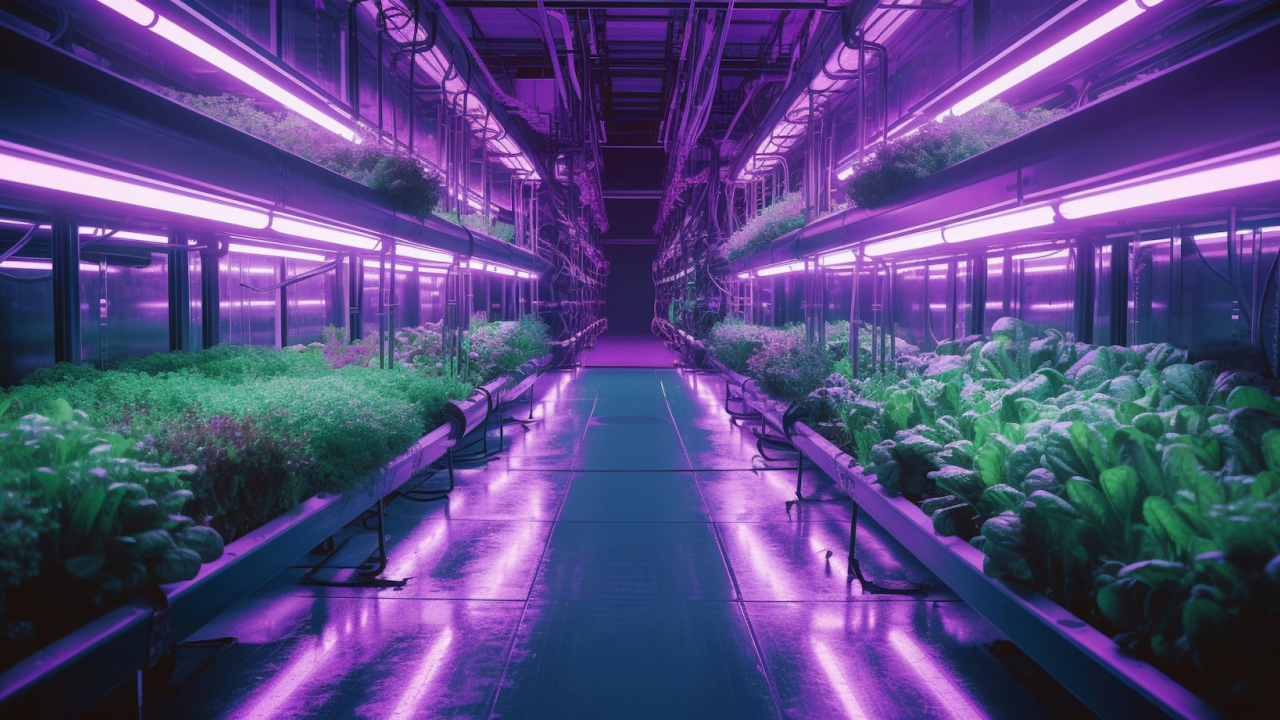
In an age of rapid urbanization and climate uncertainty, traditional agriculture struggles to meet the demands of a growing global population while preserving natural resources. Vertical farming has stepped forward as a groundbreaking method that stacks crops in layered, indoor systems to produce fresh vegetables, herbs, and select fruits with remarkable efficiency. This approach relies on controlled environment agriculture to optimize every variable from light to nutrients, delivering produce that reaches consumers faster and with higher quality than field grown counterparts. By minimizing land use, slashing water consumption, and eliminating long distance transport, vertical farming addresses key vulnerabilities in the fresh produce supply chain and offers a pathway toward more resilient food systems.
The roots of vertical farming trace back centuries, though its modern form represents a fusion of ancient ingenuity and cutting edge technology. Early civilizations practiced rudimentary versions of layered cultivation. The Hanging Gardens of Babylon, dating to around 600 BC, featured tiered terraces that supported diverse plants in an arid landscape. Similarly, the Aztecs engineered chinampas, floating rafts layered with nutrient rich soil and vegetation on lake surfaces. The term vertical farming itself appeared in print as early as 1915 in a book by Gilbert Ellis Bailey. Yet the contemporary vision crystallized in 1999 when Dickson Despommier, a professor at Columbia University, and his students proposed skyscraper scale farms capable of feeding urban populations year round with minimal environmental strain. Despommier envisioned multistory structures on vacant city lots that would reduce reliance on distant rural fields and fossil fueled transport.
Practical development accelerated in the late 20th century through advances in soilless cultivation. Hydroponics, refined in the 1930s, allows plants to absorb nutrients directly from oxygenated water solutions, often supported by inert media such as perlite or gravel. Aeroponics, pioneered by NASA researchers in the 1990s, suspends roots in air and delivers nutrients via a fine mist, further reducing water needs. Aquaponics integrates fish farming by converting aquatic waste into plant fertilizer through beneficial bacteria, creating a closed loop ecosystem. These methods form the foundation of today’s vertical farms, which operate inside repurposed warehouses, shipping containers, or purpose built facilities. Artificial lighting, primarily energy efficient light emitting diodes tuned to specific wavelengths, replaces sunlight and enables precise control over photosynthesis. Sensors monitor temperature, humidity, carbon dioxide levels, and nutrient delivery in real time, while automated systems adjust conditions to maximize growth rates.
The operational mechanics of vertical farming deliver substantial gains in resource efficiency, particularly for fresh produce such as leafy greens, herbs, microgreens, and certain berries. Traditional field farming dedicates vast horizontal expanses to single crops, exposing them to weather extremes, pests, and soil degradation. Vertical systems stack growing trays or towers in multiple layers, often reaching 10 to 20 tiers high within a compact footprint. This configuration yields 10 to 400 times more produce per square foot than conventional methods, depending on the crop and technology employed. Water usage plummets because closed loop recirculation captures and reuses nearly all moisture. Studies indicate reductions of up to 95 percent compared with soil based agriculture, where much of the water evaporates or runs off unused. Land requirements drop by 70 to 99 percent, freeing arable areas for restoration or other purposes. Pesticide application becomes unnecessary in sealed indoor environments, resulting in cleaner harvests free from chemical residues and lower disease pressure.
These efficiencies translate directly into fresher, more nutritious produce with a dramatically reduced environmental footprint. Conventional supply chains for items like lettuce or basil often involve thousands of food miles from rural fields to urban tables, during which spoilage and quality loss occur. Vertical farms locate production inside or adjacent to cities, collapsing transport distances to mere hours or days. This proximity cuts carbon emissions from trucking and refrigeration by up to 70 percent in some analyses and minimizes packaging needs since produce travels shorter routes. Harvest occurs at peak ripeness and reaches grocery shelves or restaurants within a day, preserving vitamins, flavor, and texture that degrade during extended storage or transit. Year round cultivation regardless of season or weather ensures consistent supply, shielding consumers from price spikes caused by droughts, floods, or freezes that plague outdoor farms. For urban populations, this model enhances food security by creating local jobs in high tech agriculture and reducing dependence on vulnerable global logistics networks.
Economic and social dimensions further underscore the revolutionary potential. The global vertical farming market reached approximately eight billion dollars in 2025 and continues expanding at a compound annual growth rate exceeding 25 percent, driven by demand for sustainable local food. Operations focus initially on high value, quick turnover crops such as romaine, kale, basil, and strawberries, which command premium prices due to superior taste and shelf life. Successful enterprises have forged direct partnerships with retailers and food service providers, scaling production to match confirmed demand rather than speculative output. In the United States, companies have demonstrated viability by repurposing industrial buildings and integrating automation to control labor costs. Beyond economics, vertical farming fosters community benefits by revitalizing vacant urban spaces and providing employment opportunities that blend technology with agriculture. Educational programs attached to some facilities introduce students to sustainable practices, building long term awareness of food systems.
Real world implementations illustrate these advantages in action. Facilities operated by 80 Acres Farms in Ohio, now integrated with Soli Organic, serve hundreds of retail locations with leafy greens grown in stacked hydroponic systems. Their model emphasizes retail relationships established before full scale production, ensuring steady revenue streams. Oishii in New York specializes in premium strawberries cultivated under precisely calibrated conditions that replicate ideal Japanese growing climates, achieving consistent flavor and appearance that justify higher shelf prices. Intelligent Growth Solutions based in Scotland supplies modular technology platforms rather than operating farms directly, allowing others to deploy scalable systems efficiently. Gotham Greens maintains multiple urban greenhouses and vertical setups across the country, delivering produce with minimal transit time. These operations highlight a shift from experimental prototypes to commercially sustainable models, particularly after an industry shakeout in the early 2020s that weeded out undercapitalized ventures.
Despite clear strengths, vertical farming confronts notable hurdles that temper its immediate widespread adoption. Initial capital expenditures remain steep, often ranging from one thousand to twenty five hundred dollars per square meter for infrastructure including lighting, climate control, and automation. Energy demands for artificial illumination and heating, ventilation, and air conditioning systems can account for more than half of operational costs, although advances in light emitting diode efficiency have reduced consumption by up to 50 percent in recent generations. Not every crop suits vertical methods. Leafy greens and herbs thrive, yet staple items such as grains, tubers, or large fruit trees demand further innovation in genetics and structural design. Scalability depends on securing reliable power sources, often renewable, to avoid offsetting water and land savings with elevated greenhouse gas emissions. Technical expertise is essential for system maintenance and optimization, creating a skills gap in some regions. Market acceptance also requires educating consumers that indoor grown produce matches or exceeds the quality of field counterparts.
Industry leaders address these limitations through continuous innovation. Integration of artificial intelligence and robotics enables predictive analytics that fine tune environmental parameters, detect early signs of stress, and automate seeding, harvesting, and packaging. Machine learning algorithms analyze vast datasets from sensors to boost yields while trimming energy use. Hybrid systems combine natural daylight with supplemental lighting in transparent structures, further lowering electricity needs. Biotechnology research explores crop varieties engineered for compact growth and enhanced nutrient uptake in soilless setups. Policy support, including subsidies for renewable energy installations and urban agriculture incentives, accelerates deployment. Projections suggest that with these refinements, vertical farming could capture up to 50 percent of the United States leafy green market within a decade, alongside smaller but meaningful shares of berries and tomatoes.
Looking ahead, vertical farming stands poised to integrate more deeply into global food systems. As urban populations swell and climate disruptions intensify traditional yields, indoor layered production offers a buffer of reliability. Advances in modular container farms allow rapid rollout in diverse settings, from rooftops to repurposed factories. Partnerships between technology providers and traditional growers may hybridize approaches, blending outdoor resilience with indoor precision. Consumer preferences for locally sourced, traceable, and sustainably grown food continue to drive demand, rewarding operators who prioritize transparency through blockchain enabled supply chain tracking. Ultimately, the revolution extends beyond mere production volumes to a fundamental rethinking of fresh produce. Vertical farming transforms agriculture from a resource intensive, weather dependent endeavor into a precise, data driven enterprise that conserves water, land, and energy while delivering superior nutrition and flavor directly where people live.
Vertical farming does not replace all forms of agriculture but complements them by handling high demand items that benefit most from proximity and control. Its expansion signals a broader shift toward regenerative, efficient food systems capable of nourishing billions without exhausting planetary limits. As costs decline and technologies mature, this method will increasingly define the availability and quality of fresh produce on tables worldwide, proving that innovation rooted in necessity can cultivate abundance in even the most constrained environments.