

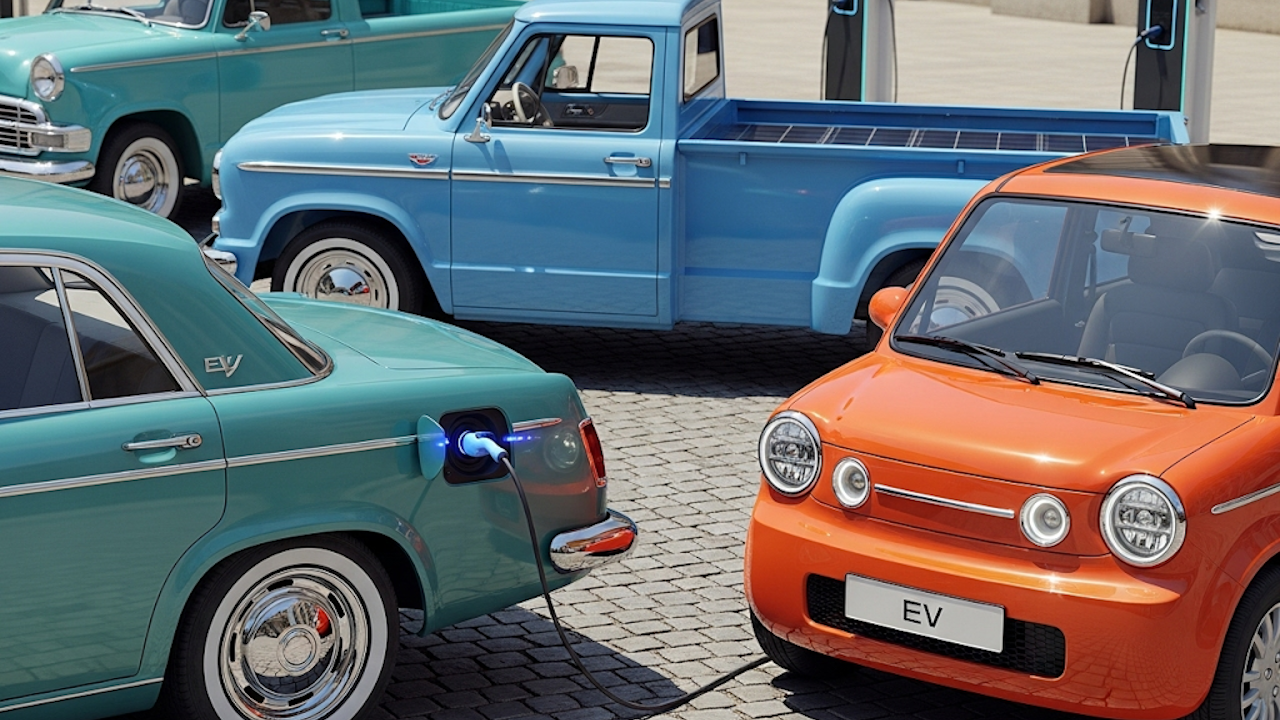
In the rapidly evolving world of automotive design, a compelling movement has taken hold. Retro-inspired electric vehicles marry the nostalgic silhouettes and charming details of classic cars from decades past with the advanced engineering and zero-emission performance of contemporary electric powertrains. This blend satisfies drivers who crave emotional connection to automotive heritage while embracing the environmental and technological imperatives of the present day. As battery technology improves and consumer tastes shift toward sustainability, manufacturers and specialized converters are resurrecting iconic forms. They hide sophisticated electric motors, large-capacity batteries, and digital interfaces beneath exteriors that evoke the 1950s, 1960s, and 1970s. The result is a category of vehicles that feels both familiar and futuristic, proving that progress does not have to erase the past.
The appeal of retro-inspired EVs stems from a deeper cultural yearning. For many, cars represent more than mere transportation; they embody memories of family road trips in a Volkswagen camper van or the thrill of a compact Fiat 500 zipping through city streets. Early electric vehicles from the late 19th and early 20th centuries were themselves simple and elegant in design, but the internal combustion engine soon dominated with its roar and complexity. Now, as EVs shed their initial perception as sterile pods for the environmentally conscious, designers are leaning into nostalgia to broaden their market. Retro styling differentiates these models from the sleek, aerodynamic shapes of many modern EVs that prioritize efficiency over personality. It also allows brands to leverage established nameplates and loyal fan bases without starting from scratch. The strategy works because modern battery packs can be integrated seamlessly into classic floorpans or chassis, preserving proportions while delivering instant torque, whisper-quiet operation, and impressive range.
One of the most prominent examples of this trend is the Volkswagen ID.Buzz. Launched as a production model after years of concept teasing, it revives the spirit of the original Type 2 Microbus from the 1950s and 1960s. The ID.Buzz retains the rounded body, two-tone paint options, and distinctive front grille that made the Kombi a counterculture icon. Yet beneath the surface sits a modern EV platform with rear- or all-wheel-drive configurations, advanced driver assistance systems, and a spacious interior suited for families or adventurers. Its electric motor provides smooth acceleration that the original air-cooled flat-four could only dream of, while the low center of gravity from floor-mounted batteries enhances handling. Owners appreciate the camper-ready variants that echo the classic Westfalia conversions, now equipped with efficient climate control and over-the-air software updates. The ID.Buzz demonstrates how retro design can scale to practical family use without sacrificing the fun and freedom associated with vintage vans.
Similarly, the Renault 5 E-Tech Electric captures the essence of its 1970s and 1980s predecessor, a beloved supermini known for affordability and cheeky character. The new version features the same compact dimensions, distinctive headlights, and playful proportions, but it incorporates a fully electric powertrain with competitive range and rapid charging capabilities. Renault has updated the interior with digital displays that mimic analog gauges for a nostalgic touch while offering smartphone integration and energy-efficient climate systems. This model appeals particularly to urban drivers who want something stylish yet practical for daily commutes. Its success highlights how European manufacturers are reviving homegrown classics to compete in the affordable EV segment, where nostalgia meets necessity amid rising fuel costs and urban emission zones.
The Fiat 500e follows a parallel path, reinterpreting the iconic Italian city car that has symbolized la dolce vita since the 1950s. The electric iteration maintains the rounded fenders, chrome accents, and open-roof options that define the original, while hiding a lithium-ion battery pack that delivers efficient performance in tight city spaces. Modern features include regenerative braking that feels intuitive for stop-and-go traffic, a lightweight chassis for nimble handling, and an infotainment system disguised within a retro-inspired dashboard layout. Fiat has cleverly positioned the 500e as both a fashion statement and an eco-friendly commuter, proving that small EVs do not need to look utilitarian. Drivers report that the combination of vintage charm and instant electric response creates an engaging drive that feels more spirited than many larger EVs.
British heritage shines through in the Mini Cooper Electric, which updates the original 1959 design with subtle nods to its go-kart-like handling and compact footprint. The electric Mini preserves the signature round headlights, short overhangs, and upright greenhouse, but it benefits from a low-mounted battery that improves stability and cornering dynamics beyond what the classic could achieve. Performance variants deliver strong acceleration thanks to electric motors that provide immediate power delivery, while the interior blends modern connectivity with toggle switches and a circular central display that echoes the original speedometer. This model resonates with enthusiasts who value driving engagement over sheer size, showing how retro EVs can prioritize fun-to-drive qualities alongside efficiency.
Beyond factory-built revivals, a thriving ecosystem of restomod conversions elevates the retro EV concept to bespoke levels. Companies like Everrati specialize in transforming genuine classics, such as Porsche 911 models from the 964 or 993 eras, into all-electric vehicles. These conversions retain every exterior panel and interior detail for authenticity, while replacing the engine with a high-output electric motor and battery system that fits within the original engine bay or floorpan. The result is a car that accelerates from zero to 60 miles per hour in under four seconds, offers around 200 miles of range, and maintains the mechanical feel of a classic without the maintenance headaches of an aging flat-six. Similar work appears on Land Rover Defenders and Series models, where off-road capability pairs with silent electric torque for modern trail adventures. These restomods cater to affluent buyers who want to preserve automotive history while aligning with zero-emission goals, often displaying original combustion engines in display cases as artistic mementos.
Emerging models continue to expand the category. The Renault 4 Electric SUV revives another French icon from the 1960s and 1970s with rugged styling suited for light off-road use, now paired with an efficient EV drivetrain ideal for both city and countryside duty. In a more playful vein, the AURA Retro Coupe EV, slated for 2026, promises compact dimensions and cute proportions inspired by mid-century designs, targeting urban buyers seeking an affordable yet distinctive daily driver. Smaller micro-EVs like the Micro Lino 2.0 draw from even earlier inspirations, such as the BMW Isetta bubble cars of the 1950s, offering two-seat efficiency for short trips with unmistakable retro flair. Meanwhile, the Hyundai Ioniq 5 incorporates cues from the 1975 Pony, its angular yet approachable lines blending heritage with parametric pixel lighting and fast-charging architecture that represents the latest in EV innovation.
Designers face unique challenges in harmonizing vintage aesthetics with modern requirements. Classic cars often featured lightweight bodies and simple mechanical layouts, whereas EVs demand space for substantial battery packs. Engineers address this by using skateboard platforms that place cells low and central, preserving exterior proportions and improving weight distribution for better handling. Aerodynamic refinements, such as smoothed underbodies and subtle active grille shutters, maintain visual fidelity while boosting efficiency. Lighting technology allows modern LED headlights and taillights to mimic classic shapes without compromising safety standards or energy use. Interiors strike a balance too: physical buttons and analog-style dials satisfy tactile preferences, yet they integrate touchscreens and voice controls for connectivity. Materials evolve as well, with sustainable fabrics and recycled elements replacing traditional leathers to align with the green ethos of electrification.
Market trends underscore the success of this approach. Retro-inspired EVs attract buyers across demographics, from older enthusiasts nostalgic for their youth to younger consumers drawn to unique, Instagram-worthy designs amid a sea of homogenized crossovers. Sales data indicates strong demand in Europe and North America, where regulatory incentives for EVs coincide with cultural appreciation for heritage. Automakers report that these models command premium pricing due to their emotional value, helping offset the higher costs of battery development. The trend also extends to commercial applications, such as electric versions of classic delivery vans or camper conversions that evoke adventure without fossil fuels. As battery costs decline and charging infrastructure expands, retro EVs become more accessible, potentially accelerating adoption among mainstream consumers wary of futuristic designs.
Critics sometimes argue that retro styling represents a superficial gimmick or a reluctance to embrace bold new forms. Detractors point out that heavy batteries can compromise the lightweight feel of originals, and some conversions require compromises in structural rigidity to accommodate modern crash standards. Yet proponents counter that these vehicles extend the lifespan of cultural icons while reducing environmental impact far more effectively than preserving combustion classics. Regulatory pressures, including bans on new internal combustion sales in many regions by 2030 or sooner, make electrification inevitable. Retro designs soften the transition, making sustainability feel approachable rather than austere.
Looking ahead, the future of retro-inspired EVs appears vibrant. Concepts hint at further revivals, such as potential electric interpretations of the Ford Capri or even a full production Beetle successor, building on existing teases and aftermarket efforts. Startups continue to innovate with lightweight materials and solid-state batteries that could enable longer ranges without adding bulk, allowing even closer fidelity to original weights and proportions. Integration of autonomous features or vehicle-to-grid capabilities may appear in disguised forms, ensuring these cars remain relevant for decades. As artificial intelligence optimizes energy management and over-the-air updates refresh features without altering the timeless exterior, owners will enjoy cars that evolve technologically while staying visually anchored in the past.
Ultimately, retro-inspired EVs exemplify a thoughtful dialogue between heritage and innovation. They demonstrate that electric mobility need not abandon the joy, character, and storytelling embedded in automotive history. By preserving beloved shapes and infusing them with silent power, rapid response, and clean operation, these vehicles invite drivers to experience the best of both worlds. As the industry hurtles toward full electrification, models like the ID.Buzz, Renault 5 E-Tech, Fiat 500e, and countless restomods serve as bridges. They connect generations of enthusiasts and prove that style and substance can coexist harmoniously on the road to a sustainable future. Whether cruising city boulevards in a modern Mini or embarking on a family adventure in an ID.Buzz, these cars remind us that the heart of driving lies as much in emotion as in efficiency.