

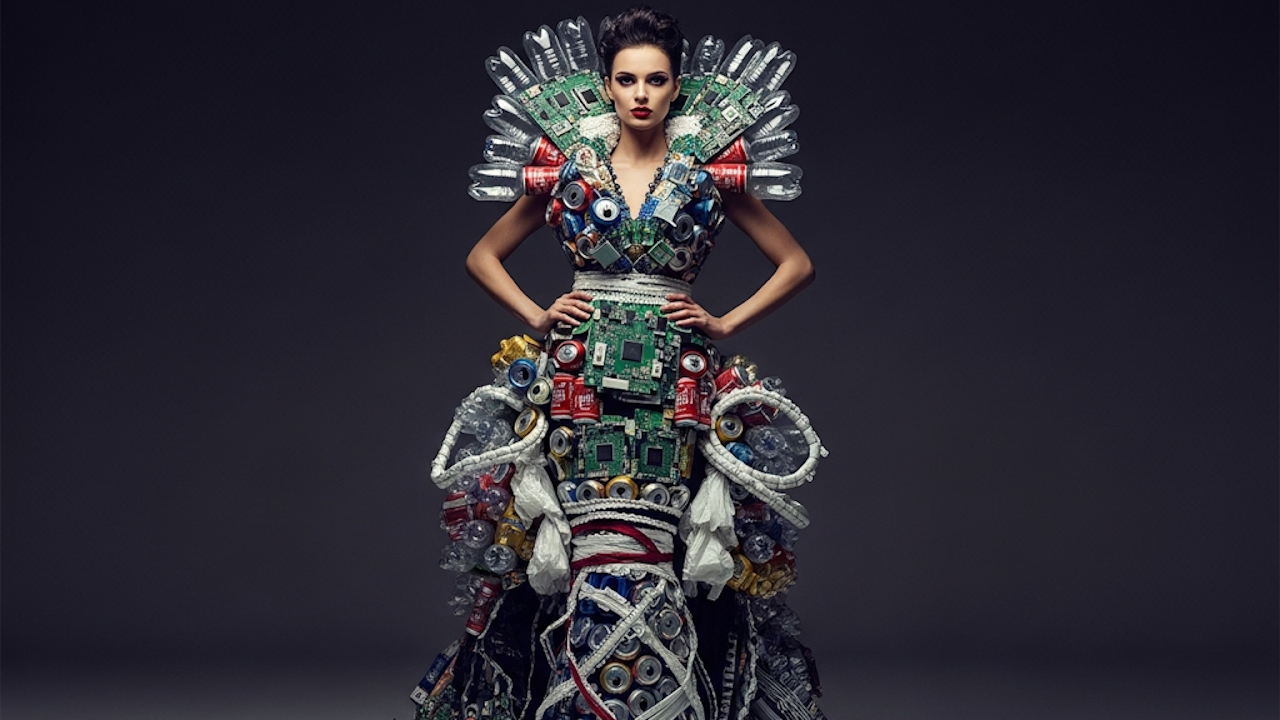
In the glittering world of high fashion, where silk chiffon and hand-beaded embellishments have long reigned supreme, a quiet revolution is underway. Designers are no longer sourcing pristine bolts of fabric from distant mills or exotic looms. Instead, they raid landfills, salvage yards, and forgotten closets to craft garments that rival the most luxurious couture creations. This is upcycled couture, the practice of transforming discarded materials into elevated, one-of-a-kind pieces that command attention on runways and in elite wardrobes. Far from mere recycling, upcycling elevates waste, breathing new life into what society has deemed worthless and proving that true luxury can emerge from the very items we once threw away.
The term upcycling itself emerged in the late 1990s amid growing awareness of environmental damage from mass production, but its roots stretch much deeper into human ingenuity. What began as necessity has evolved into a sophisticated artistic movement that challenges the fashion industry’s throwaway culture. Today, upcycled couture stands at the intersection of creativity, sustainability, and cultural critique, offering a compelling alternative to the excesses of fast fashion.
The fashion industry faces an environmental reckoning that can no longer be ignored. Each year, it generates approximately 92 million tonnes of textile waste, a figure projected to climb toward 134 million tonnes by 2030. Much of this waste ends up in landfills or incinerators, with less than one percent successfully recycled into new fibers. The sector accounts for roughly 10 percent of global carbon emissions, surpassing the combined output of international aviation and maritime shipping. Water consumption is equally staggering, with the industry using enough annually to fill 86 million Olympic-sized swimming pools. Producing a single pair of jeans requires around 2,000 gallons of water, while a cotton shirt demands about 700 gallons. Microplastics shed from synthetic garments during washing add another layer of harm, polluting oceans and entering food chains. These statistics paint a dire picture, yet they also highlight why upcycling has gained such traction among forward-thinking designers. By diverting materials from waste streams, upcycled couture directly reduces landfill contributions, lowers the demand for virgin resources, and cuts associated emissions.
Historically, repurposing clothing was less a choice than a survival strategy. In pre-industrial societies, fabrics were precious commodities, mended, altered, and passed down through generations. During the Victorian era, even haute couture clients commissioned couturiers like Elise Kreutzer to repurpose expensive gowns repeatedly, extending their lifespans for decades. World wars brought government campaigns such as Britain’s “make-do-and-mend” initiative, encouraging citizens to transform old uniforms, parachutes, and bed linens into new garments. Postwar periods in places like East Germany saw women ingeniously patchwork military surplus into everyday wear. The rise of ready-to-wear manufacturing in the mid-20th century shifted attitudes toward disposability, but the 1970s punk scene revived DIY customization as rebellion. It was not until the environmental movement of the 1990s that the modern concept of upcycling took shape, gaining momentum in the 2000s as climate concerns intensified. Luxury houses began experimenting with deadstock fabrics and vintage pieces, setting the stage for today’s full embrace of trash as treasure.
The process of creating upcycled couture demands both technical skill and imaginative vision. Designers begin by sourcing materials from diverse origins: post-consumer waste such as worn denim jeans, discarded T-shirts, and household linens; industrial leftovers including deadstock fabrics and beading scraps; and unconventional items like ocean plastics, marine debris, retired lifejackets, or even fly-tipped furniture upholstery. Deconstruction is the foundational step, involving careful disassembly with seam rippers, scissors, and meticulous sorting by fiber type, color, and quality. Once broken down, materials undergo preparation, washing, stripping dyes if needed, bleaching, or natural dyeing to refresh their appearance. Reconstruction follows, where patchwork techniques, splicing, and layering create new silhouettes. Embellishments such as hand-embroidery, beadwork, or printed motifs add couture-level refinement. No two pieces are identical, which imbues each garment with inherent uniqueness and storytelling value.
This approach contrasts sharply with traditional couture, which relies on new materials and precise replication. Upcycled pieces celebrate imperfections, turning frayed edges into design features or mismatched seams into artistic statements. The labor intensity is high, requiring hours of handwork that elevate costs but also justify premium pricing through exclusivity and ethical credentials.
A growing roster of visionary designers has propelled upcycled couture into the spotlight. Iris van Herpen, known for her tech-infused creations, debuted the “Earth-Rise” collection featuring kinetic sculptures crafted from upcycled marine debris in partnership with the environmental nonprofit Parley for the Oceans. Her work demonstrates how discarded ocean plastics can become ethereal, sculptural gowns that move with the wearer like living art. Viktor and Rolf embraced similar innovation in their “The New Royals” line, patchworking stately dresses, coats, and sashes from polyester, paste jewels, and biodegradable deadstock faux fur, then accenting them with reinvigorated Swarovski crystals. At Jean Paul Gaultier, guest designer Chitose Abe of Sacai transformed vintage Levi’s into voluminous paneled skirts paired with archival jacket replicas, while John Galliano incorporated antique Delft blue fabrics into majestic gowns and spliced denim with waders and Loden coats.
Swiss designer Kevin Germanier has emerged as a leading figure, earning acclaim for converting beading waste, plastic threads, shoe bases, and fabric scraps into elegant, sophisticated womenswear. His 100 percent upcycled collections blend haute couture techniques with zero-waste principles, proving that sustainability need not sacrifice glamour. In Chile, Cris Miranda shapes upcycled silks into contemporary kimonos that earned finalist status in the Redress Design Award. Hong Kong-based Tiger Chung reimagines discarded sofas into supple leather-like coats, tackling some of the most challenging waste streams. Parisian brand 1/OFF specializes in reworking pre-loved luxury vintage from houses like Chanel, Burberry, and Hermès, collaborating with couture artisans to produce eternal, one-of-a-kind garments. Emerging labels such as Yaku, founded by Central Saint Martins graduate Yaku Stapleton, create high-concept nylon jackets and puffers stuffed with recycled bedding. London’s Conner Ives crafts dresses from upcycled T-shirts, while ELV Denim in Britain pioneers timeless jeans from 100 percent repurposed denim sourced from UK warehouses, with scraps turned into accessories like hair scrunchies.
These creators are not operating in isolation. Established houses have incorporated upcycled elements into runway presentations, signaling broader industry acceptance. Collaborations with retailers like The Outnet have expanded access, allowing upcycled denim collections to reach wider audiences. The result is a democratizing effect: what was once niche experimentation now influences mainstream trends, inspiring consumers to view their closets as resource libraries rather than disposal bins.
Upcycled couture’s influence extends beyond the catwalk. It fosters a circular economy model in which garments are designed for longevity, repair, and eventual transformation. Brands like All the Wild Roses rescue leftover fabrics to produce bohemian dresses, while Christy Dawn repurposes residual materials into vintage-inspired silhouettes. These efforts reduce overproduction, a problem exacerbated by the fact that 30 percent of all clothes produced globally are never sold. By emphasizing craftsmanship and narrative, upcycled pieces encourage mindful consumption. Wearers become stewards of stories embedded in every patch and seam, shifting fashion from transient trend to lasting heirloom.
Yet the movement faces significant hurdles. Sourcing consistent, high-quality materials remains unpredictable, as waste streams vary in volume, condition, and composition. Labor demands drive up production costs, making pieces less accessible despite their environmental benefits. Scaling operations while maintaining artisanal integrity proves difficult; what works for small runs may falter at industrial levels. Consumer perception poses another barrier. Some buyers still associate “trash” origins with lower quality, requiring education to appreciate the superior value of upcycled items. Critics argue that without systemic changes, upcycling risks becoming a greenwashing tactic for brands that continue overproducing elsewhere. Government support, clearer regulations on textile waste, and investment in infrastructure could accelerate progress, but progress depends on collective will.
Looking ahead, the future of upcycled couture appears bright. Advances in technology, such as AI-assisted pattern optimization and improved sorting systems, promise to streamline processes. Growing consumer demand for transparency and ethics is pushing more labels toward circular practices. As climate pressures mount, upcycling may transition from innovative fringe to industry standard. Imagine collections where every thread traces back to a specific discarded item, each garment carrying verifiable provenance through blockchain or digital passports. Educational initiatives, from school programs teaching basic alterations to designer residencies focused on waste streams, will cultivate the next generation of creators.
In essence, upcycled couture is more than a stylistic choice; it is a philosophical stance against waste and disposability. It redefines luxury not as excess but as resourcefulness, creativity, and responsibility. By turning trash into high fashion, these designers remind us that beauty can arise from constraint and that the most compelling garments often carry the deepest messages. As the industry grapples with its environmental footprint, upcycled couture offers a hopeful path forward, one stitch, one patch, and one transformed garment at a time. Consumers, too, hold power: by choosing upcycled pieces, supporting repair services, and rethinking their own wardrobes, they participate in this transformation. The runway has spoken. The question now is whether the rest of us will listen and act.