

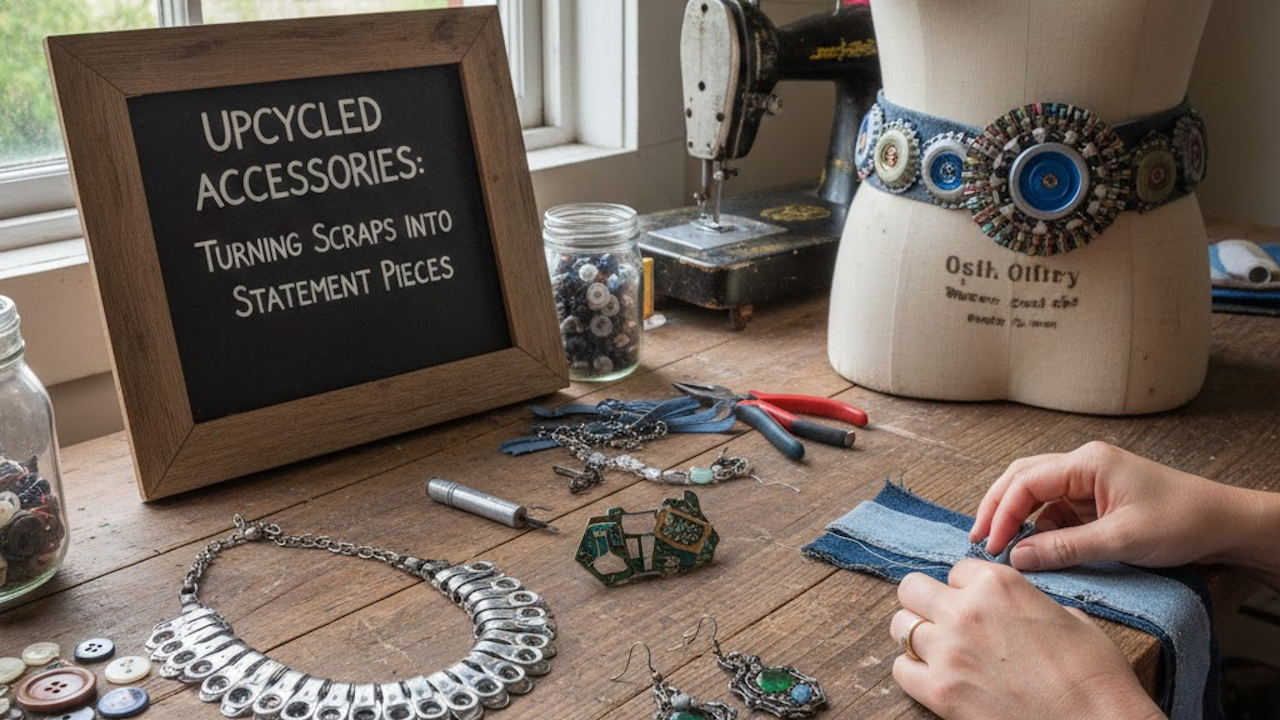
In an era defined by fast fashion and disposable culture, a quiet revolution is taking place in closets, workshops, and creative studios around the world. People are looking at the scraps that once seemed worthless and seeing potential instead. Upcycled accessories represent more than a trend. They embody a practical response to overconsumption, a celebration of individuality, and a reminder that beauty often hides in the overlooked. From discarded leather offcuts transformed into bold cuffs to broken jewelry reborn as sculptural earrings, these pieces prove that statement style does not require new materials or big budgets. It requires vision, patience, and a willingness to reimagine what already exists.
Upcycling differs from simple recycling. Recycling typically breaks materials down to their basic components so they can be remade into something new, often of lower quality. Upcycling keeps the original material largely intact and elevates it. A frayed silk scarf becomes the lining of a clutch. A collection of mismatched buttons becomes the centerpiece of a necklace. The goal is not merely to divert waste from landfills but to create objects that feel intentional, personal, and desirable. When done well, an upcycled accessory does not look like a craft project born of necessity. It looks like a deliberate fashion choice.
The environmental case for upcycling is straightforward and compelling. The fashion industry ranks among the largest polluters on the planet. It consumes vast quantities of water, generates significant carbon emissions, and produces mountains of textile waste each year. Accessories form a substantial part of that waste stream. Belts, bags, jewelry, hats, and scarves are frequently discarded because a clasp breaks, a color falls out of favor, or a trend shifts. By giving these items new life, makers reduce demand for virgin resources and keep usable materials in circulation longer. Even small scale efforts matter. One person’s decision to turn old denim into a crossbody bag may seem minor, yet collective action multiplies the impact.
Beyond the ecological benefits, upcycled accessories offer economic and creative advantages. High quality materials such as genuine leather, sterling silver findings, or silk fabric can be expensive when purchased new. Scraps and thrifted pieces often cost little or nothing. This accessibility lowers the barrier to entry for designers and hobbyists alike. More importantly, working with existing materials forces creative problem solving. Constraints spark invention. A limited color palette or an irregular shape can lead to unexpected silhouettes and combinations that would never arise from a blank sketchbook and unlimited supplies.
Common source materials for upcycled accessories are surprisingly varied. Fabric scraps remain the most accessible starting point. Cotton, linen, wool, silk, and synthetic blends all appear in household remnants, thrift store clothing, and manufacturing offcuts. Denim is particularly popular because of its durability and the way it ages. Leather and suede from old jackets, bags, or furniture provide structure and a sense of luxury. Metal components such as broken chains, vintage buckles, and hardware from discarded furniture or machinery add industrial edge. Jewelry makers frequently harvest beads, stones, and findings from broken necklaces and earrings. Even non traditional materials find their place. Bottle caps, circuit boards, bicycle inner tubes, and vinyl records have all been transformed into wearable art.
Techniques for turning these materials into finished pieces range from simple hand sewing to more specialized metalwork and resin casting. Basic sewing skills open the door to fabric based accessories such as scrunchies, headbands, pouches, and soft jewelry. Adding interfacing or fusible web gives lightweight fabrics more body. For leather, simple tools like a rotary punch, needles designed for thick material, and strong thread allow the creation of cuffs, key fobs, and bag charms. Jewelry techniques include wire wrapping, beading, and soldering for those with the equipment and experience. Resin can encapsulate small scraps, dried flowers, or fragments of fabric to create pendants and earrings with a polished, modern finish. Dyeing and painting offer further possibilities. Natural dyes from plants or food waste can refresh faded fabrics, while fabric markers and acrylic paints allow for custom surface design.
Statement pieces often succeed because they play with scale, texture, and unexpected combinations. Oversized earrings made from layered fabric scraps or hammered metal discs command attention without relying on precious materials. A necklace that incorporates a single dramatic element, such as a vintage brooch or a carved wooden fragment, draws the eye and invites conversation. Belts and bag straps made from braided fabric or linked leather strips add visual interest to simple outfits. Hats and headpieces constructed from felted wool scraps or woven plastic packaging demonstrate that even functional accessories can become sculptural. The key is intention. Random assemblage rarely produces a cohesive look. Successful makers select materials that share a common palette, texture, or theme and then refine the composition until it feels resolved.
Consider a few concrete approaches that illustrate the process. One popular project involves transforming an old leather belt into a cuff bracelet. The maker cuts a section of the belt to wrist length, punches holes for a snap or rivet closure, and optionally adds decorative stitching or metal studs. The result is a sturdy, masculine or unisex piece that carries the history of its original use in the form of wear marks and creases. Another approach uses silk scarves or ties. Cutting the fabric into strips, twisting or braiding them, and securing the ends creates lightweight necklaces or bracelets with rich color and drape. For a more structured piece, fabric scraps can be sewn into small pouches, stuffed lightly, and attached to earring findings to form soft, dimensional shapes. Metal workers might collect mismatched keys, flatten them with a hammer, drill holes, and link them into a chunky chain. Each of these methods begins with material that might otherwise be discarded and ends with something wearable and distinctive.
Beginners often worry that their early attempts will look amateurish. This concern is valid but temporary. Skill develops through repetition. Starting with simple projects builds confidence and technical ability. Choosing high quality scraps helps. A well made leather remnant or a piece of tightly woven wool will elevate even basic construction. Attention to finishing details separates polished work from the unfinished. Clean edges, secure attachments, and consistent stitching or soldering make a substantial difference. Photography and styling also matter. Presenting an upcycled accessory against a neutral background or on a mannequin helps the viewer focus on the design rather than its origins.
Inspiration can be found in many places. Historical examples of adaptive reuse appear throughout fashion history. During periods of scarcity, people have always remade clothing and accessories from what was available. Contemporary designers and independent makers share their processes on social platforms and in workshops, offering both technical guidance and aesthetic direction. Museums and galleries occasionally feature exhibitions of upcycled or recycled fashion, providing high level examples of what is possible when creativity meets constraint. Local thrift stores, fabric remnant bins, and even sidewalks after storms can supply unexpected treasures. The practice of foraging for materials becomes part of the creative ritual.
Challenges do exist. Not every scrap is suitable for every purpose. Some fabrics fray excessively. Certain plastics degrade over time or release unwanted chemicals when heated. Metal components may contain alloys that cause skin reactions. Research and testing are essential. Durability is another consideration. An accessory that falls apart after a few wears fails its purpose. Reinforcing stress points, choosing appropriate findings, and understanding the properties of each material help ensure longevity. Finally, the question of authenticity arises. Some consumers remain skeptical of upcycled goods, associating them with lower quality or lack of polish. Transparent storytelling about the source materials and the making process can overcome this hesitation. When a piece carries a clear narrative of transformation, it often becomes more valuable in the eyes of the buyer.
The market for upcycled accessories continues to grow. Independent makers sell through online marketplaces, craft fairs, and small boutiques. Larger brands have begun incorporating upcycled elements into their collections, sometimes in limited runs that highlight sustainability efforts. Educational programs and community workshops teach the necessary skills, expanding the number of people who can participate. As awareness of environmental issues increases, demand for alternatives to conventional production is likely to rise. Upcycled accessories sit at a useful intersection of ethics, aesthetics, and accessibility.
Looking ahead, the practice will evolve with available materials and technologies. Digital tools such as laser cutters and 3D printers allow precise modification of found objects. New adhesives and coatings expand the range of materials that can be joined successfully. Collaborative projects that combine the skills of sewers, jewelers, and metalworkers produce hybrid pieces that no single discipline could achieve alone. At the same time, the simplest approaches will remain relevant. A carefully chosen button sewn onto a plain cuff or a length of chain rescued from a broken necklace and worn as a bracelet requires no advanced equipment, only the decision to see potential where others see waste.
Ultimately, upcycled accessories invite a shift in perspective. They ask us to slow down, look closely at the objects that surround us, and consider their remaining usefulness. In doing so, they challenge the assumption that new is always better and that style must be purchased rather than made. Each finished piece carries evidence of its previous life in the form of texture, color variation, or subtle wear. That history becomes part of its character. When worn, the accessory does more than complete an outfit. It signals a set of values: resourcefulness, creativity, and respect for the materials that already exist in the world.
The next time a worn belt, a faded scarf, or a tangle of broken jewelry appears ready for the trash, pause. Hold the object. Examine its strengths. Imagine what it might become. With a few tools, some basic techniques, and a clear idea, those scraps can transform into statement pieces that feel both personal and purposeful. In a culture that often prioritizes the new and the disposable, the quiet act of upcycling offers a different path. It turns limitation into invention and waste into wearability. The results speak for themselves: bold, thoughtful accessories that carry stories worth telling.