

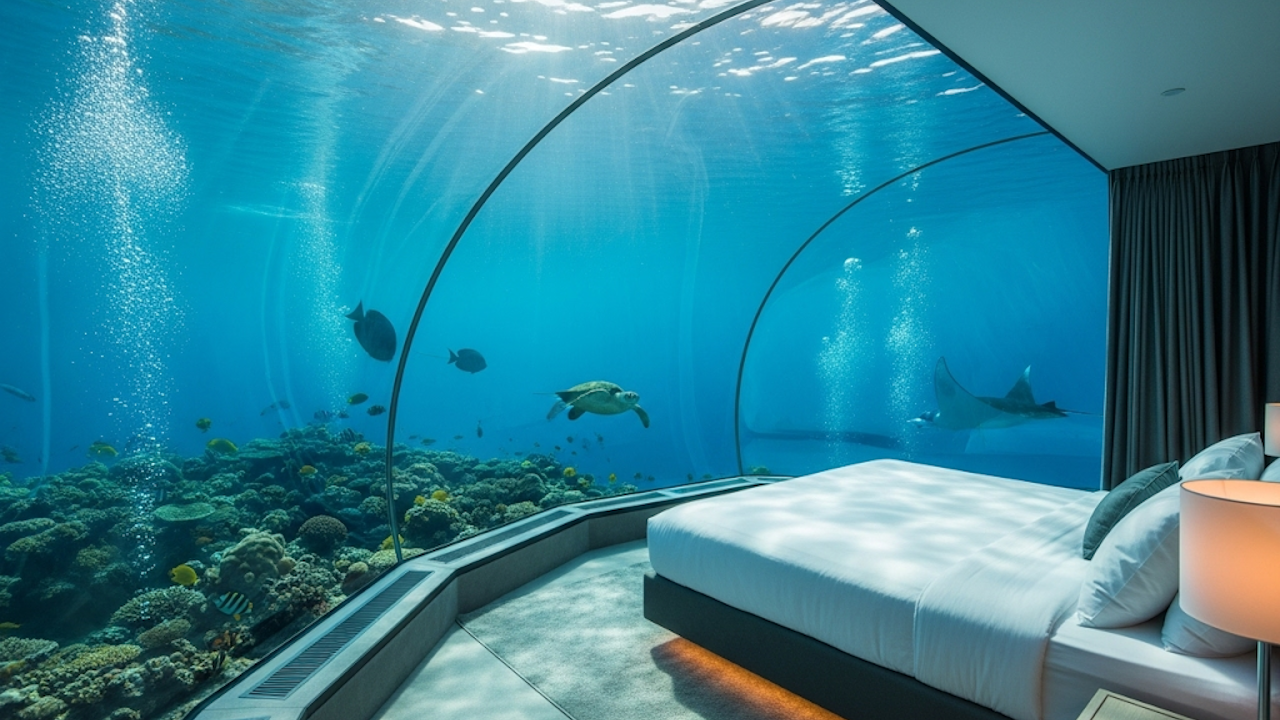
The ocean has long captivated humanity with its mysteries, its vastness, and its promise of adventure just beyond the surface. Yet few experiences capture that allure quite like the chance to descend below the waves and call it home for a night. Underwater hotels represent the pinnacle of immersive travel, where luxury meets the raw beauty of marine life. Guests awaken not to city skylights or mountain vistas but to the gentle sway of coral gardens, the darting silhouettes of reef fish, and the occasional graceful arc of a shark gliding past reinforced glass walls. These structures blend cutting edge engineering with a deep respect for the sea, offering a rare opportunity to live, even briefly, as part of the underwater world. What was once the realm of science fiction and deep sea research labs has evolved into accessible, albeit exclusive, hospitality. From the crystal lagoons of the Maldives to the mangrove fringes of Florida, underwater accommodations redefine what it means to have a room with a view.
The concept of dwelling beneath the waves traces its roots to human curiosity about the ocean depths. Early experiments in underwater living emerged from scientific necessity rather than leisure. In the mid twentieth century, aquanauts and marine biologists pioneered habitats designed for prolonged submersion. These initial efforts focused on research, testing human endurance under pressure and studying marine ecosystems at close range. The transition to hospitality began in earnest during the 1980s, when practical engineering made it feasible to create safe, pressurized spaces accessible to non divers. The breakthrough came with structures that maintained surface level air pressure inside, eliminating the need for complex decompression protocols that define traditional scuba diving. This one atmosphere design became the foundation for modern underwater hotels, allowing guests to breathe normally while surrounded by seawater.
The first true underwater hotel opened its doors in 1986 in Key Largo, Florida. Known as Jules Undersea Lodge, it originated as a research laboratory before being repurposed for public stays. Nestled in a shallow mangrove lagoon rather than the open ocean, the lodge sits about 30 feet below the surface. Guests must scuba dive or snorkel to enter through an open hatch at the base, emerging into a dry, air filled interior. The facility features two bedrooms, a common area, and even basic amenities like Wi Fi and hot showers. It remains operational today as both an educational experience and a novel overnight stay. Visitors often describe the sensation of isolation and wonder, with fish and manatees visible through large viewing ports. Jules Undersea Lodge set the stage for what followed, proving that underwater lodging could be safe, comfortable, and commercially viable.
By the early 2000s, the idea gained momentum in tropical destinations where coral reefs provided natural spectacle. The Maldives, with its pristine atolls and biodiverse waters, became a natural epicenter. In 2005, the country introduced the world to Ithaa Undersea Restaurant, a fully submerged dining venue that offered 180 degree views of the Indian Ocean. Though not a hotel, it demonstrated the technical feasibility of large scale acrylic windows and sealed construction in a high salinity environment. This paved the way for sleeping accommodations. In 2013, Tanzania debuted its own innovation at the Manta Resort on Pemba Island near Zanzibar. The Underwater Room there is a three level structure moored just offshore. The lowest level houses the bedroom, fully submerged and encircled by clear panels that frame the house reef. Above it sits a living area at surface level, and a rooftop deck perfect for stargazing. Access requires a short boat ride, emphasizing privacy and seclusion. The room accommodates two guests and has hosted celebrities drawn to its intimate, otherworldly setting.
The true milestone in luxury underwater hospitality arrived in 2018 with the opening of The Muraka at Conrad Maldives Rangali Island. Often hailed as the worlds first fully underwater hotel residence, The Muraka is a two story villa submerged more than 16 feet below the surface. The lower level serves as the primary bedroom suite, featuring a king size bed positioned beneath a curved acrylic dome that offers panoramic views of the surrounding reef. Upstairs, an overwater section includes a living room, dining area, and private terrace. Construction required meticulous planning. The 600 ton underwater module was prefabricated in Singapore, transported by ship, and lowered into place using massive cranes before being anchored to the seafloor with steel piles. The entire process accounted for tidal forces, wave action, and potential storms. Inside, the suite feels like a high end apartment, complete with a private butler, personal chef, and amenities such as a glass enclosed bathroom where guests can watch marine life while bathing. Rates routinely exceed tens of thousands of dollars per night, positioning The Muraka as an ultra exclusive experience reserved for those seeking unparalleled opulence.
Engineering an underwater hotel demands solutions to formidable challenges. Water pressure increases with depth, exerting tremendous force on any structure. At 16 feet, the pressure is manageable but still requires robust materials. Most hotels employ thick acrylic panels, sometimes several inches thick, engineered to withstand hydrostatic loads while remaining optically clear. These windows are bonded to steel or concrete frames using specialized sealants that resist corrosion from saltwater. The structures themselves are typically built as one atmosphere environments, meaning internal air pressure matches sea level conditions. This design prevents flooding and eliminates the physiological risks associated with compressed air habitats. Anchoring systems vary by location. In the Maldives, concrete pilings driven into the seabed provide stability against currents. In floating designs like the Manta Resort, buoyancy and mooring cables allow gentle movement with the waves without compromising integrity.
Maintenance presents another layer of complexity. Underwater windows accumulate algae and marine growth, necessitating regular cleaning by divers. Air filtration systems must handle humidity and carbon dioxide levels in enclosed spaces. Emergency protocols include backup power generators, redundant life support, and rapid evacuation procedures. Environmental impact receives careful consideration. Many properties partner with marine conservation organizations to monitor reef health and contribute to restoration projects. The Muraka, for instance, incorporates lighting that minimizes disruption to nocturnal sea life. Sustainable practices extend to waste management, with advanced treatment systems ensuring no pollution reaches the ocean.
Beyond the Maldives and Tanzania, other destinations have embraced the trend. In Australia, Reefsuites on the Great Barrier Reef offer a different flavor of submersion. These accommodations form part of a larger pontoon complex moored far offshore. Guests arrive by cruise, snorkel the reef during the day, and retire to private underwater rooms with floor to ceiling glass walls. The experience combines adventure with comfort, including guided tours and observatory access. Prices start lower than Maldives counterparts, making it more approachable for families or couples. In Singapore, the Equarius Ocean Suites at Resorts World Sentosa provide views into a massive oceanarium rather than open sea. The suites overlook habitats teeming with thousands of fish, creating a controlled yet mesmerizing spectacle. For urban explorers, the InterContinental Shanghai Wonderland features submerged floors built into an abandoned quarry. Its underwater view suites blend city convenience with aquatic immersion, complete with an underwater restaurant and pool.
Each property delivers a unique guest experience. At The Muraka, the silence of the depths contrasts with the occasional muffled sounds of the ocean, fostering a meditative calm. Couples often report feeling transported to another planet, with private dining arranged so that reef sharks and rays provide live entertainment. In the Manta Resort, the isolation amplifies romance; guests can swim directly from the structure into the reef during daylight hours. Jules Undersea Lodge appeals to adventure seekers who relish the dive entry and the educational component. Staff deliver pizza through an airlock, adding a touch of whimsy to the stay. Common themes emerge across reviews: a profound sense of awe at marine biodiversity, the thrill of disconnection from the surface world, and a renewed appreciation for ocean conservation.
Despite the enchantment, underwater hotels face practical hurdles. High construction costs limit supply, driving premium pricing that places them out of reach for most travelers. Accessibility poses issues for those with mobility concerns or claustrophobia. Weather dependency affects some locations, with rough seas occasionally delaying transfers. Environmental risks, including coral bleaching from climate change, threaten the very ecosystems that draw visitors. Operators counter these by investing in green technologies and education programs that highlight the fragility of reefs.
Looking ahead, the future of underwater hotels appears promising yet measured. Concepts like the long discussed Poseidon Undersea Resort in Fiji envision expansive complexes with multiple suites, restaurants, and even conference facilities, all at one atmosphere pressure. Movable designs, such as those proposed by Planet Ocean Underwater Hotels, aim to create relocatable structures that can shift locations to avoid environmental stress or follow seasonal marine migrations. Advances in materials science, including self cleaning glass and energy efficient systems powered by ocean currents, could lower costs and expand availability. Some visionaries dream of deeper installations, perhaps 100 feet or more, where bioluminescent creatures replace daylight views. Yet progress depends on balancing innovation with sustainability. Regulatory approvals for seabed construction remain stringent, and public demand must align with ecological safeguards.
Underwater hotels do more than provide novelty lodging. They serve as gateways to understanding the ocean planet that covers most of our world. By placing humans directly within marine habitats, they foster empathy for creatures often glimpsed only in documentaries. A night spent beneath the waves can inspire lifelong commitment to preservation. As technology evolves and awareness grows, these submerged sanctuaries may become more common, democratizing an experience once reserved for the daring few. For now, they remain bucket list destinations, promising not just sleep but a profound awakening to the beauty that lies hidden below the surface.
The allure endures because it taps into something primal: the desire to explore the unknown while surrounded by comfort. Whether in a floating pod off Tanzania or a palatial villa in the Maldives, the sensation of drifting off to the rhythm of the currents, with the sea as both cradle and companion, creates memories that last a lifetime. Underwater hotels remind us that the most extraordinary journeys often begin by going deeper, quite literally, into the heart of nature itself. As more travelers seek meaningful escapes from ordinary routines, these aquatic wonders stand ready to welcome them into a realm where the boundaries between human and ocean blur in the most magical way.