

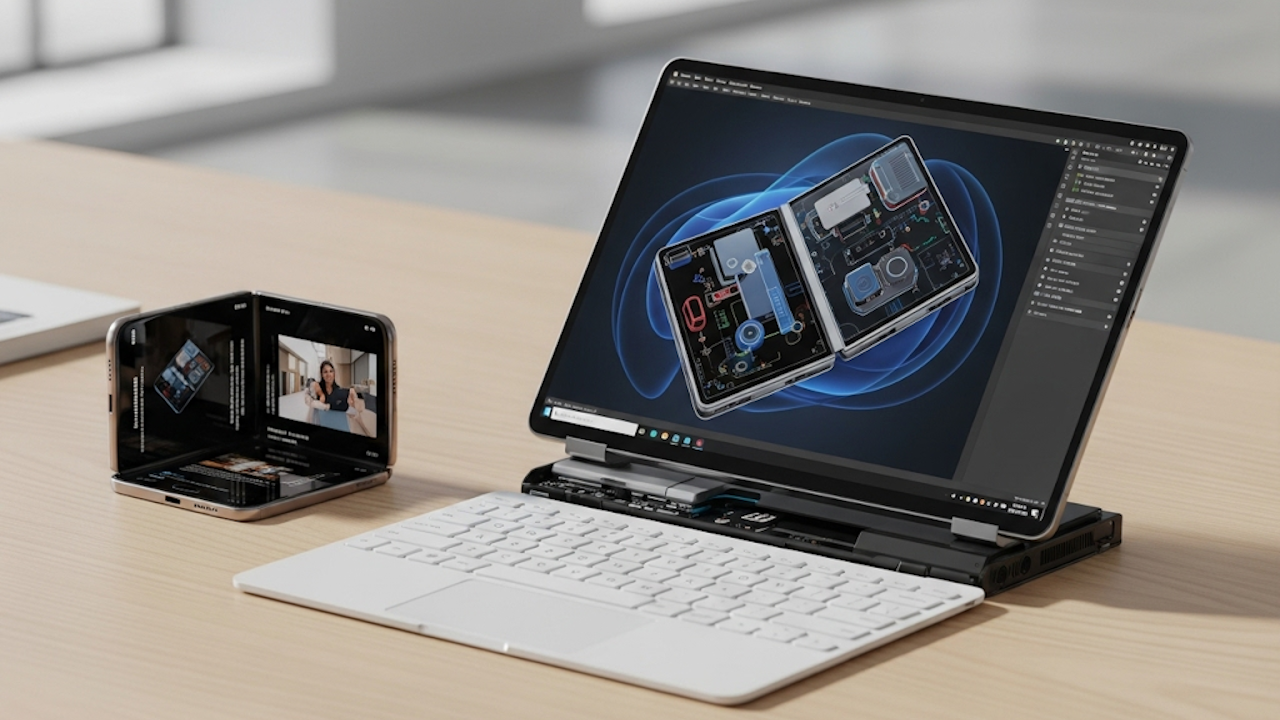
Foldable technology has transformed how we interact with portable devices. What began as an experimental concept in smartphones has now extended into the realm of laptops, promising a new era of versatile computing. This shift represents more than just a design tweak. It redefines portability, productivity, and the very form factor of personal computers. As flexible displays mature, manufacturers are pushing foldable tech from pocket sized gadgets to full scale workhorses. The result is a category of laptops that can collapse into compact tablets or expand into expansive workspaces without sacrificing power or durability.
The story of foldable tech traces back decades, but it gained real momentum in the smartphone sector. Early prototypes from companies like Nokia in the late 2000s hinted at flexible screens, though they remained conceptual. By 2018, the first commercial foldable phone, the Royole FlexPai, hit the market with a flexible OLED display that folded like a book. It was bulky and expensive, but it proved the concept viable. Samsung followed in 2019 with the Galaxy Fold, refining the hinge and display technology despite initial durability concerns. Over the next few years, rivals like Huawei, Motorola, and Google entered the fray with models such as the Mate X series, Razr flip designs, and Pixel Fold. By 2026, foldable smartphones have become mainstream. Creases are minimized, hinges endure hundreds of thousands of folds, and battery life rivals traditional slabs. These devices now offer seamless transitions between phone and mini tablet modes, appealing to users who value multitasking on the go.
Yet smartphones, while successful, have limits. Their screens top out around eight inches when unfolded, which works for media and light productivity but falls short for serious work. Professionals juggling spreadsheets, design software, or multiple windows crave larger canvases. Traditional laptops provide that space but sacrifice portability. A 16 inch laptop is powerful but hardly slips into a small bag. This gap created the perfect opportunity for foldable tech to evolve beyond phones. Laptops with flexible displays could deliver tablet like compactness when folded and laptop like real estate when open. The transition also aligns with broader trends: remote and hybrid work demand devices that adapt to varied environments, from coffee shops to airplanes. AI powered features further amplify the appeal, as software can now optimize layouts for folding screens dynamically.
The leap to laptops began in earnest around 2020 with early concepts from Lenovo and Asus. Lenovo’s ThinkPad X1 Fold debuted as the world’s first foldable PC, featuring a 13 inch OLED screen that folded in half. It used a durable multi link hinge and supported both laptop and tablet modes with an optional keyboard. Asus responded with the Zenbook 17 Fold, boasting a larger 17 inch display that unfolded into a expansive workspace or folded into a more portable form. These devices marked a pivotal moment. They proved that foldable displays could scale up while maintaining the reliability expected of business grade hardware. By 2025 and into 2026, refinements have accelerated. The Lenovo ThinkPad X1 Fold 16, for instance, offers a 16.3 inch folding HDR OLED panel with higher resolution and improved brightness. It weighs less than predecessors, incorporates better thermal management, and runs on modern processors that handle demanding tasks without throttling.
Huawei has also made significant strides in this space. Its MateBook Fold models, including the Ultimate Design variant, integrate foldable screens into premium laptops powered by its own ecosystem. These devices emphasize seamless integration with HarmonyOS, allowing the folded state to function as a compact productivity tool while the unfolded mode supports advanced multitasking. Samsung has explored similar territory through Galaxy Book prototypes, though its primary focus remains on phones. Other players like Microsoft have contributed concepts, such as early Surface Neo ideas, though commercial execution has leaned toward partners like Lenovo.
What makes these foldable laptops technically impressive? At the core is the flexible OLED display. Manufacturers use ultra thin glass or polymer substrates layered with organic light emitting materials that bend without cracking. Advanced adhesives and protective coatings reduce visible creases to near invisibility under normal use. Hinges have evolved from simple pivots to sophisticated multi axis mechanisms that distribute stress evenly. Many now claim endurance ratings exceeding 200,000 folds, far surpassing daily needs over years of ownership. Durability testing includes military grade standards for drops, dust, and temperature extremes.
Power and performance present unique challenges. Folded designs constrain internal space for batteries and cooling. Engineers address this with efficient chipsets from Intel, AMD, and Qualcomm, often paired with AI accelerators for tasks like real time screen optimization. Battery placement splits across halves in some models to balance weight. Passive cooling or slim fans maintain performance without adding bulk. Connectivity remains robust, with USB C ports, optional Thunderbolt support, and even 5G in select variants for true mobility.
The advantages for users are compelling. A foldable laptop can serve as a 16 inch workstation during meetings or travel, then fold down to tablet size for note taking or media consumption. This versatility boosts productivity. Writers can spread research across the full screen while keeping references open. Designers gain precise control with stylus input on the flexible surface. Students benefit from a device that fits in a backpack yet expands for group projects. Entertainment shines too. Unfolded, the screen delivers immersive viewing without the bezels of dual monitor setups. Software ecosystems have caught up. Windows 11 and successors include native support for foldable postures, with features like automatic window snapping and virtual keyboard adaptation. Third party apps increasingly optimize for variable aspect ratios.
Market data underscores the potential. The foldable laptop segment, valued at around 1.2 billion dollars in 2024, is projected to reach 13.7 billion by 2033, growing at over 30 percent annually. Driving factors include falling production costs as display yields improve and broader adoption in enterprise settings. Businesses value the reduced footprint for travel while maintaining desktop level capabilities. Early adopters in creative fields and tech professions have provided positive feedback, citing the wow factor alongside practical gains.
Of course, challenges persist. Price remains a barrier. Entry level foldable laptops start well above standard ultrabooks, often exceeding two thousand dollars due to specialized components. Weight, while improved, can still exceed one and a half pounds in folded form for larger models. Some users report minor creases in bright light or after heavy use, though this diminishes with each generation. Software optimization is not universal. Older applications may not reflow perfectly on folded screens, leading to awkward layouts. Battery life varies. Larger displays consume more power, though efficient processors and adaptive brightness help achieve eight to twelve hours in mixed use.
Despite these hurdles, innovation continues at a rapid pace. CES 2026 showcased concepts like trifold displays and rollable screens that could extend laptop capabilities even further. Imagine a device that rolls out to 20 inches or folds into thirds for ultimate compactness. Lenovo’s Legion Go Fold concept hints at gaming applications, where flexible screens adapt to handheld or docked modes. AI integration promises smarter adaptations. Future models might automatically adjust brightness, layout, and even power modes based on how the device is folded. Integration with augmented reality glasses could create hybrid experiences, projecting virtual extensions beyond the physical screen.
Environmental considerations also favor foldables. By consolidating multiple devices into one, they reduce e waste. Modular designs in some prototypes allow screen or hinge replacements, extending lifespan. Repairability improves as manufacturers standardize parts.
Looking ahead, foldable laptops could disrupt traditional categories. They blur lines between tablets, laptops, and even desktops. As costs decline and ecosystems mature, mainstream adoption seems inevitable. Students might carry one device through college. Professionals could replace bulky briefcases with slim foldables. The technology encourages rethinking workflows. Instead of fixed orientations, users adapt devices to tasks. This fluidity aligns with modern lifestyles that demand flexibility.
In conclusion, foldable tech has journeyed far from its smartphone origins. Extending to laptops unlocks new dimensions of portability and power. While early models were novelties, 2026 offerings from leaders like Lenovo, Asus, and Huawei demonstrate practical maturity. They combine cutting edge displays with reliable performance, addressing real user needs in an increasingly mobile world. As refinements continue and barriers fall, foldable laptops stand poised to become the standard for next generation computing. The future is flexible, and it is unfolding now.