

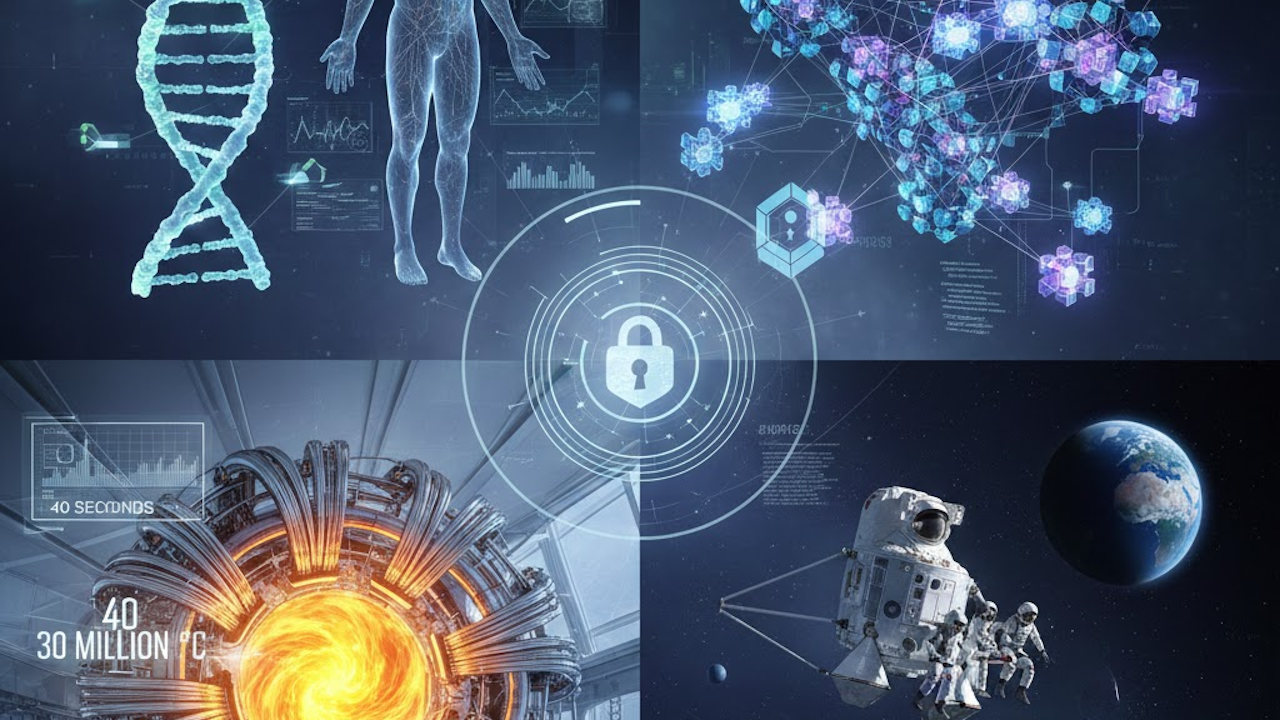
2026 has proven to be a remarkable year for scientific progress. Researchers across disciplines have delivered advances that push the boundaries of human knowledge and offer practical solutions to longstanding challenges in health, energy, space exploration, and fundamental physics. From synthetic life forms to refined gene therapies and new glimpses into the cosmos, these developments signal accelerating innovation. This article explores the most significant breakthroughs, their underlying science, and their potential implications.
Revolutionary Advances in Biotechnology and Medicine
One of the most exciting areas in 2026 centers on biology and medicine, where gene editing, cell therapies, and synthetic biology have moved from experimental stages toward real world applications.
A standout achievement is the announcement of SpudCells, the first synthetic cell capable of feeding, growing, replicating, dividing, and undergoing selection using entirely human designed components. This breakthrough demonstrates that scientists can now construct basic living systems from scratch, opening avenues for custom microorganisms that could produce medicines, biofuels, or even perform environmental cleanup.
Gene editing technologies continue to mature rapidly. The first base edited human embryo was reported, showcasing unprecedented precision in modifying genetic code without the broader risks associated with earlier CRISPR methods. This development, while raising ethical questions, holds promise for preventing hereditary diseases before birth. Complementary progress includes lab grown human eggs and sperm from reprogrammed adult cells, advancing infertility treatments and reproductive science.
In clinical applications, gene therapies have expanded. The Breakthrough Prize recognized work on therapies for inherited blindness (Leber congenital amaurosis), sickle cell disease, and beta thalassemia. CRISPR based treatments for these conditions have shown curative potential, with one time interventions providing lasting relief for patients worldwide. New CAR T cell therapies targeting glioblastoma have achieved long term tumor control in preclinical models by attacking both cancer cells and supportive macrophages.
Alzheimer’s research received a boost with positive Phase 1 results for an immunotherapy that protects the brain in early stage patients. Other highlights include a single dose gene editing treatment that dramatically reduced attacks in hereditary angioedema patients and permanent editing of liver genes to lower cholesterol. Retatrutide, a new weight loss drug, achieved body weight reductions approaching those of bariatric surgery in trials.
Cancer treatments have also advanced. A new combination therapy for multiple myeloma significantly improved progression free survival when used earlier in treatment. Precision drugs for lung cancers showed remarkable long term results. Personalized mRNA cancer vaccines, tailored to individual tumor mutations, progressed to later stage trials for pancreatic cancer and melanoma.
These medical breakthroughs build on decades of foundational research in genetics and immunology, translating into therapies that address root causes rather than just symptoms.
Progress in Physics and Fundamental Science
Fundamental physics saw notable refinements in 2026. The Muon g 2 collaborations at CERN, Brookhaven, and Fermilab received recognition for precise measurements of the muon’s anomalous magnetic moment. These results hint at physics beyond the Standard Model, potentially involving new particles or forces.
A Special Breakthrough Prize went to David J. Gross for his foundational work on quantum chromodynamics, solidifying our understanding of the strong nuclear force. In mathematics, Frank Merle was honored for advances in the theory of solitons and nonlinear waves, with applications across physics and engineering.
Materials science delivered practical innovations. Scientists addressed challenges in solid state batteries by understanding how lithium dendrites interact with ceramics, paving the way for safer, longer lasting energy storage. Sodium ion batteries gained traction as a cheaper, more abundant alternative to lithium based systems for grid storage and electric vehicles.
Quantum computing made strides with error correction improvements achieving up to 800 times better logical versus physical error rates. Sub 1 nanometer logic transistors were demonstrated, pushing semiconductor limits further.
Astronomy, Space Exploration, and Planetary Science
Space science flourished in 2026. The Vera C. Rubin Observatory began operations, capturing unprecedented wide field images of the southern sky and promising new discoveries in transient events, dark matter, and cosmology.
Astronomers identified unusually low density “super puff” exoplanets and the first gravitationally bound exoplanet detected via microlensing. Discoveries included potential clues to star formation triggered by magnetic field weakening and hints of runaway supermassive black holes. A record breaking pair of black holes and soft tissue preservation in ancient fossils also made headlines.
On the exploration front, NASA’s Perseverance rover reached a marathon distance on Mars. SpaceX advanced Starship testing with new versions, static fires, and plans for satellite deployments, supporting future Artemis missions and in orbit refueling capabilities crucial for lunar and deep space travel. Cryocoupler tests for cryogenic propellant transfer marked progress toward sustainable space operations.
Paleontology contributed insights with the earliest Antarctic dinosaur fossil confirmed and new species descriptions that refine evolutionary timelines.
Energy, Climate, and Environmental Technologies
The World Economic Forum’s Top 10 Emerging Technologies of 2026 highlighted solutions for sustainability. “Everything to grid” systems turn buildings, vehicles, and devices into active energy participants. Direct lithium extraction accelerates battery material supply with less environmental impact. Passive radiative cooling materials reduce energy needs for cooling without electricity. Technologies to destroy PFAS “forever chemicals” reached commercial scale.
Climate modeling benefited from AI integration, while studies examined Greenland ice sheet effects on ocean circulation. Renewable energy storage and grid resilience gained from new battery chemistries.
Broader Impacts and Future Outlook
2026 also featured advances in synthetic biology for psychedelics, magnetic influences on life’s origins, and novel sensors. AI assisted discoveries accelerated research across fields, from protein structures to materials design.
These breakthroughs are interconnected. Advances in computing and materials enable better telescopes and gene editing tools. Biological insights inform astrobiology searches for life elsewhere. Energy innovations support sustainable space missions.
Challenges remain. Ethical considerations around gene editing, equitable access to new therapies, responsible AI use, and environmental safeguards require ongoing attention. International collaboration will be essential to scale these technologies responsibly.
As 2026 unfolds, the pace of discovery shows no signs of slowing. These achievements not only deepen our understanding of the universe and ourselves but also equip humanity to tackle pressing global issues. The coming years will likely see many of these breakthroughs transition from laboratories and trials into everyday benefits, shaping a more innovative and resilient future.