

Thrifting has evolved from a niche hobby into a mainstream movement. Whether you are motivated by sustainability, a desire for unique fashion, or the thrill of the hunt, mastering the art of the thrift store requires more than just showing up. To consistently find high quality items at a fraction of their retail price, you need a combination of strategy, patience, and a keen eye for detail.
1. Timing and Location Strategy
The first rule of professional thrifting is knowing where and when to shop. Not all thrift stores are created equal, and your success often depends on the demographics of the neighborhood.
- Follow the Wealth: Shops located in affluent neighborhoods often receive donations of designer labels and high end household goods. While prices might be slightly higher than at a rural shop, the quality of the inventory usually justifies the cost.
- The Mid Week Advantage: Most people thrift on the weekends, which means the best items are picked over by Sunday afternoon. Aim to visit on Tuesday or Wednesday. This is typically when staff are putting out the new donations received over the weekend.
- Ask About Sale Cycles: Many stores use a color coded tag system. Every week, a specific color will be 50% off. Don’t be afraid to ask a staff member when the tag colors rotate so you can plan your visits accordingly.
2. Dress for the Occasion
Thrifting is an active sport. Dressing appropriately can significantly improve your experience, especially in stores that do not have fitting rooms.
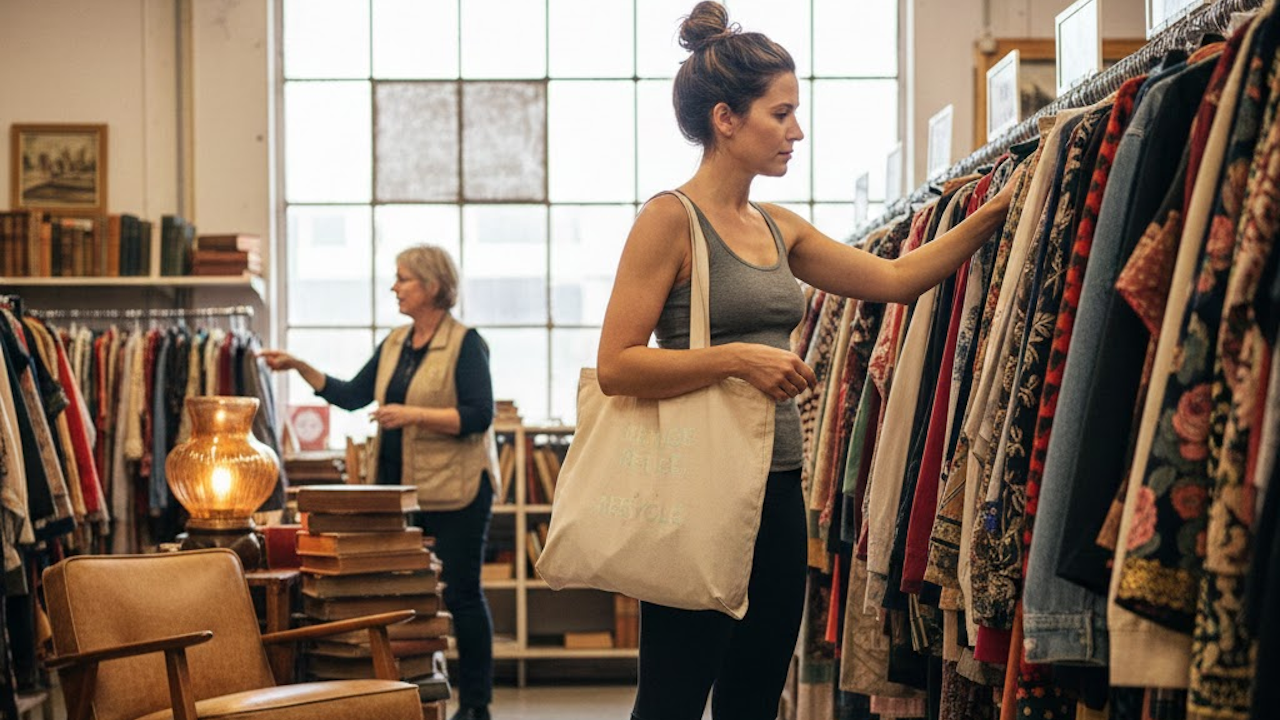
Since many shops have long lines for changing rooms or lack them entirely, wear “thrifting uniforms” such as leggings and a fitted tank top. This allows you to try on a coat or a dress over your clothes in front of a mirror without needing a private stall. Additionally, always wear comfortable shoes because you will likely be spending hours on your feet navigating crowded aisles.
3. The Systematic Scan
Walking into a massive warehouse style thrift store can be overwhelming. Pros avoid “rack fatigue” by using a systematic scanning technique.
The “Fabric First” Method
Instead of looking at every individual item, run your hand along the rack and look for high quality textures. Your eyes and hands will naturally stop on silk, wool, linen, or heavy denim. These materials are more durable and hold their value better than the synthetic “fast fashion” fabrics that clutter most racks.
Check Every Section
Do not limit yourself to your specific size or gender section. Vintage sizing is notoriously inconsistent. A “Large” from the 1970s might fit like a modern “Small.” Furthermore, the men’s section is a goldmine for oversized blazers, high quality cotton t shirts, and sturdy leather belts.
4. Inspection is Non Negotiable
A “deal” is only a deal if the item is in good condition. Thrift store lighting is often dim or fluorescent, which can hide flaws. Before heading to the checkout, take your items to a window or a well lit area.
- Check the “High Wear” Areas: Look for pilling under the arms, stains on the collar, and thinning at the inner thighs of trousers.
- Test the Hardware: Zip and unzip every zipper. Check for missing buttons or loose threads. While a missing button is an easy fix, a broken zipper can be expensive and difficult to replace.
- The Smell Test: Some odors, like mothballs or heavy perfume, can be nearly impossible to remove even after multiple washes. If it smells deeply funky, leave it behind.
5. Curating Your Eye
To score the best deals, you must be able to recognize quality without relying on brand names. Sometimes the most valuable items are “unbranded” vintage pieces made with superior craftsmanship.
Look for Construction Cues
Check for “Made in” labels. Items made in Italy, France, or the USA often indicate older, more durable construction. Look for finished seams and patterns that line up at the side of the garment. In furniture, look for dovetail joints and solid wood rather than particle board or veneer.
The “One In, One Out” Rule
To avoid turning your home into a cluttered storage unit, practice a strict curation policy. Only buy items that you absolutely love or that fill a specific gap in your wardrobe. If you cannot think of three ways to style an item with things you already own, it should probably stay on the rack.
6. Building Relationships
Being a “pro” means being a regular. If you visit the same shops frequently, be kind to the employees. They are the ones who know when the furniture truck arrives or when a large estate donation is being processed. A friendly rapport can sometimes lead to “insider info” on upcoming secret sales or first dibs on items that haven’t hit the floor yet.
Thrifting is a marathon, not a sprint. You might leave empty handed five times in a row, but the sixth trip could yield a designer cashmere coat or a mid century modern lamp that makes the effort worthwhile.