

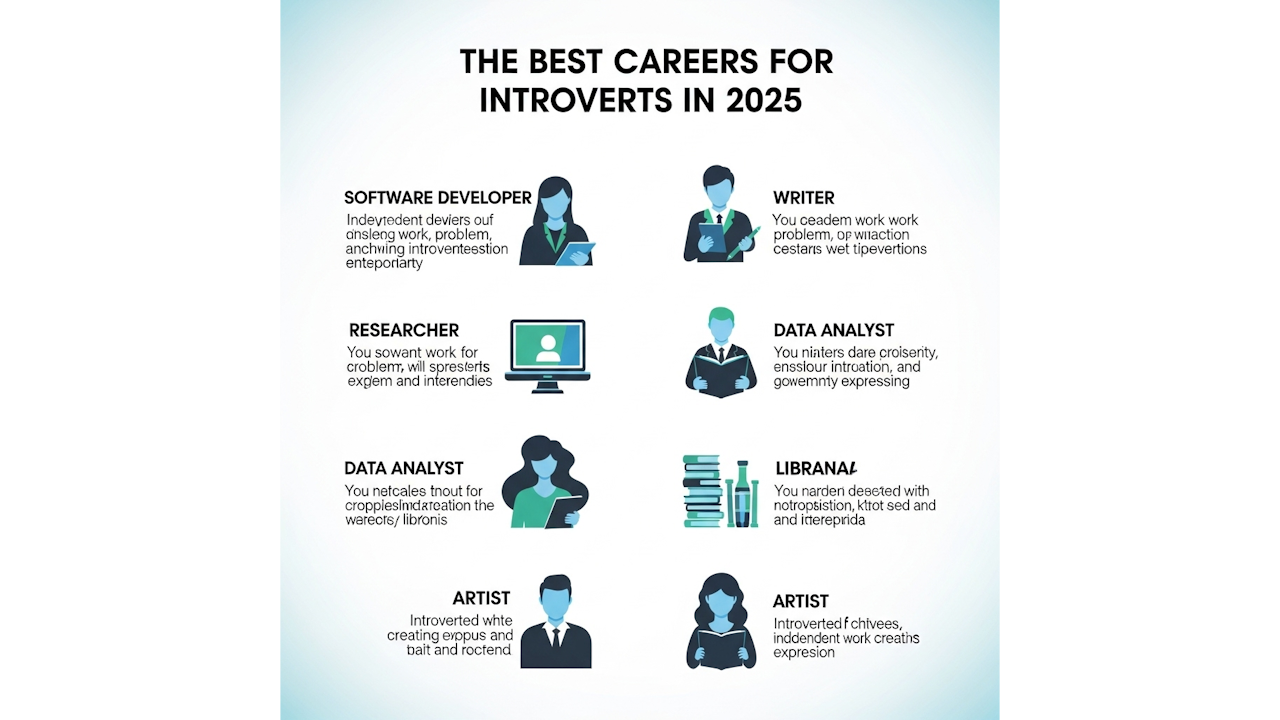
Introverts recharge in solitude and bring exceptional strengths to the workplace through their ability to concentrate deeply, analyze complex information, and produce thoughtful, high-quality work with minimal distractions. In 2025, these traits align perfectly with evolving job market demands. Remote and hybrid arrangements have become standard across many industries, reducing the need for constant in-person interactions. Artificial intelligence tools now handle repetitive tasks, freeing professionals to focus on strategic thinking and creative problem-solving that introverts often master. Data-driven decision-making and independent project work dominate tech, creative, and analytical fields, creating abundant opportunities where quiet focus yields strong results. Introverts no longer need to force extroverted behaviors to succeed. Instead, they can select roles that play to their natural preferences for autonomy and meaningful output. The careers highlighted here offer strong growth potential, competitive compensation, and environments that minimize draining social demands while maximizing individual contribution.
Software Developer
Software developers design, code, test, and maintain applications and systems that power businesses and daily life. This role suits introverts because it emphasizes solitary problem-solving, logical thinking, and long stretches of uninterrupted coding. Developers often work remotely or in quiet office setups, collaborating mainly through written tools like code reviews or project management software rather than frequent meetings. Key skills include proficiency in programming languages such as Python, Java, or JavaScript, along with debugging, version control systems like Git, and an understanding of software architecture. Most positions require a bachelor’s degree in computer science or a related field, though bootcamps and self-taught portfolios open doors for many. In the United States, the median annual salary reaches approximately 138,000 dollars, with top earners exceeding 200,000 dollars in specialized areas like artificial intelligence integration. Job growth remains robust at around 15 to 25 percent through the coming decade, driven by demand for custom software, mobile apps, and cloud solutions. In 2025, developers benefit from artificial intelligence assistants that speed up routine coding, allowing more time for innovative architecture work that rewards deep focus.
Data Scientist or Data Analyst
Data scientists and analysts collect, process, and interpret large datasets to uncover insights that guide business strategies. These positions appeal to introverts who enjoy independent analysis and pattern recognition without needing to facilitate group discussions. Much of the work involves running models, creating visualizations, and preparing reports in quiet settings, often remotely. Essential skills encompass statistical programming in Python or R, data visualization tools such as Tableau or Power BI, SQL querying, and machine learning basics. Entry typically requires a bachelor’s degree in statistics, mathematics, or computer science, with many advancing through master’s programs or certifications. Median salaries in the United States stand at about 112,000 dollars for data scientists and 85,000 dollars for analysts, with experienced professionals earning well over 150,000 dollars. Projected growth hits 34 percent, far above average, as organizations across sectors rely on data for efficiency and forecasting. By 2025, artificial intelligence enhances these roles by automating data cleaning, leaving introverts free to tackle complex interpretive challenges that value their meticulous attention to detail.
Cybersecurity Analyst
Cybersecurity analysts monitor networks, detect threats, and develop protection strategies to safeguard digital assets. Introverts thrive here because the work centers on solitary investigation, code analysis, and strategic planning rather than client-facing presentations. Many roles allow fully remote setups with flexible hours for deep concentration during off-peak times. Critical skills include knowledge of firewalls, encryption, penetration testing, and tools like Wireshark or Splunk, plus familiarity with compliance standards. A bachelor’s degree in information technology or cybersecurity is common, supplemented by certifications such as CompTIA Security+ or Certified Ethical Hacker. Median annual pay in the United States approaches 100,000 dollars or more, depending on specialization, with rapid advancement possible. Demand surges due to rising cyber threats, supporting strong growth projections near 30 percent. In 2025, analysts leverage artificial intelligence for initial threat scanning, focusing their expertise on nuanced human judgment calls that suit introverted strengths in patience and thoroughness.
Technical Writer
Technical writers create clear documentation, manuals, guides, and online help content for complex products and software. This career fits introverts perfectly through its emphasis on research, structured writing, and independent workflow without constant team brainstorming. Freelance or remote options abound, enabling work from preferred quiet spaces. Skills center on excellent grammar, audience analysis, information organization, and tools like MadCap Flare or Markdown. A bachelor’s degree in English, communications, or a technical field helps, though strong portfolios from experience suffice for many. United States median salary sits around 74,000 dollars, rising to over 100,000 dollars with expertise in specialized industries. Steady demand persists as technology evolves, with opportunities expanding in artificial intelligence documentation and user experience writing. The 2025 landscape favors introverts who excel at translating intricate concepts into accessible language without needing extroverted sales pitches.
Graphic Designer or UX Designer
Graphic designers and user experience designers craft visual interfaces, logos, websites, and digital products that enhance usability. Introverts excel because creation happens in focused studio-like environments, with feedback delivered asynchronously via digital prototypes. Remote freelance work is common, minimizing office politics. Required skills include mastery of Adobe Creative Suite or Figma, principles of design theory, color theory, and user testing methods. Many enter with a bachelor’s in graphic design or visual arts, though online courses and portfolios demonstrate readiness. Median salaries reach 61,000 dollars for graphic designers and higher for UX specialists at around 90,000 dollars in the United States. Growth continues as businesses prioritize digital presence and accessible interfaces. In 2025, artificial intelligence tools generate initial drafts, allowing designers to refine concepts creatively in solitude and deliver polished, intuitive results.
Accountant or Actuary
Accountants and actuaries manage financial records, analyze risks, and prepare reports or forecasts using mathematical models. These roles suit introverts through their focus on numbers, spreadsheets, and detailed review rather than client entertainment or networking events. Remote auditing and consulting options reduce interpersonal demands. Skills involve advanced Excel proficiency, financial software, statistical analysis, and regulatory knowledge. Accountants typically hold a bachelor’s in accounting and pursue Certified Public Accountant credentials, while actuaries need strong mathematics backgrounds and professional exams. Median pay stands at 81,000 dollars for accountants and 120,000 dollars or more for actuaries in the United States. Job growth for actuaries reaches about 22 percent due to complex risk modeling in insurance and finance. By 2025, artificial intelligence automates basic compliance checks, elevating the value of introverted precision in strategic financial planning.
Veterinarian
Veterinarians diagnose and treat animal health issues in clinics or research settings. This path attracts introverts who prefer interactions with animals over extensive human socializing, as much time involves solitary examination, surgery, and record-keeping. Some specialize in research or lab work for even greater independence. Skills demand scientific knowledge, empathy, surgical precision, and diagnostic technology use. Requirements include a Doctor of Veterinary Medicine degree after undergraduate studies in biology or animal science, plus licensing. United States median salary exceeds 119,000 dollars. Demand grows with pet ownership trends and veterinary advancements. In 2025, telemedicine for animal care expands remote consultation elements, allowing introverts to balance hands-on work with thoughtful analysis.
Librarian or Archivist
Librarians and archivists organize collections, conduct research, and curate information resources in libraries, museums, or digital repositories. Introverts find fulfillment in quiet cataloging, database management, and independent scholarly support with limited public service duties in specialized roles. Digital archiving now enables substantial remote components. Key skills encompass organization, research methods, database software, and information literacy instruction. A master’s in library science is standard for professional positions. Median salary in the United States hovers near 65,000 dollars. Opportunities remain stable amid digital transformation needs. The 2025 emphasis on open-access knowledge preservation rewards introverted attention to detail and systematic thinking.
Research Scientist in Computer or Information Fields
Research scientists in computer and information sciences develop new algorithms, test emerging technologies, and publish findings. This work aligns with introverted preferences for laboratory-style independence, hypothesis testing, and written reporting over team presentations. Many positions exist in universities or private research labs with hybrid flexibility. Skills include advanced programming, statistical modeling, experimental design, and domain expertise in artificial intelligence or data systems. A master’s or doctoral degree is typical. Median salaries surpass 169,000 dollars in high-autonomy roles. Growth projections reach 26 percent as innovation accelerates. In 2025, these scientists drive artificial intelligence breakthroughs, contributing through solitary experimentation that values their capacity for sustained focus.
Editor or Content Strategist
Editors and content strategists refine written materials, shape narratives, and plan publication strategies for media, websites, or corporations. Introverts succeed by immersing in solitary review cycles, fact-checking, and structural improvements with feedback handled via tracked changes. Remote freelance editing thrives. Abilities center on language mastery, attention to style guides, project organization, and digital content tools. A bachelor’s in journalism or English often suffices, with experience building credentials. Median pay approaches 60,000 to 75,000 dollars in the United States. Demand holds steady in digital media expansion. The 2025 shift toward quality over quantity in content creation highlights introverted strengths in thoughtful curation and error-free output.
Tips for Introverts Pursuing These Careers in 2025
Success begins with building a strong portfolio of independent projects that demonstrate deep expertise without relying on references from large teams. Online platforms allow discreet networking through written contributions in forums, LinkedIn posts, or GitHub repositories. Seek remote or hybrid listings explicitly, as they reduce energy drain from open-office dynamics. Continuous learning remains essential: short certifications in artificial intelligence tools or specialized software keep skills current while accommodating self-paced study. Set boundaries early by choosing employers that respect focused work blocks and asynchronous communication. Many introverts advance quickly once recognized for reliable, high-quality deliverables produced in solitude.
Introverts entering the workforce in 2025 hold a distinct advantage. The modern economy increasingly rewards precision, innovation, and independent execution over charisma. By selecting careers that match their natural inclinations, introverts achieve not only professional fulfillment but also sustainable work-life balance. Whether crafting code, analyzing data, or shaping visual experiences, these paths prove that quiet determination drives meaningful progress in today’s rapidly evolving professional landscape. Exploring personal interests alongside market data will guide each individual toward the role where their strengths create the greatest impact.