

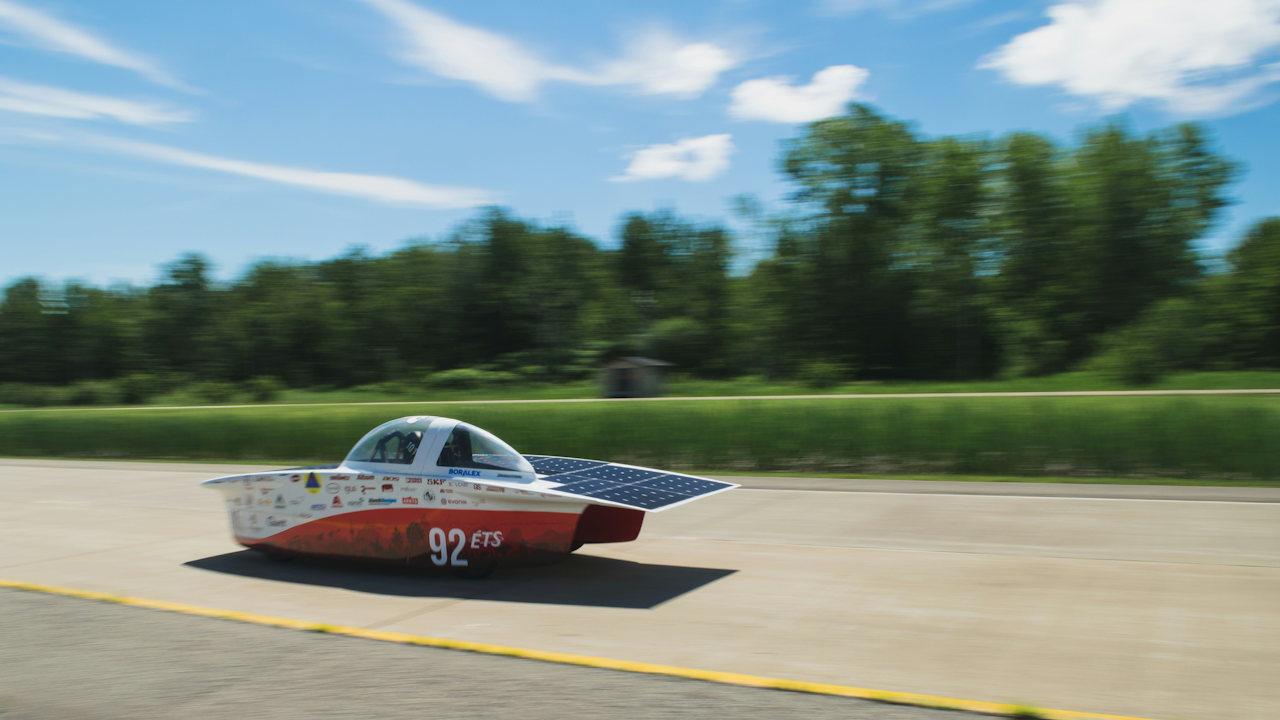
The idea of a car that drives itself using energy from the sun captivates the imagination. It promises freedom from gas stations and charging cables, lower operating costs, and a direct connection to clean renewable energy. Yet despite decades of prototypes, solar races, and bold startup claims, solar-powered cars remain rare on public roads. Are they a genuine step toward sustainable transportation or an expensive distraction from more viable electric vehicle solutions? This article explores the technology, real-world performance, challenges, and future potential.
How Solar-Powered Cars Work
Solar-powered cars, more accurately called solar electric vehicles or vehicles with integrated photovoltaics (VIPV), use solar panels built into the body to convert sunlight into electricity. This electricity charges the battery pack or powers the electric motors directly in some designs. Most modern attempts combine solar generation with a battery system similar to conventional electric vehicles, where solar provides supplemental charging rather than sole propulsion.
Photovoltaic cells on the roof, hood, and sometimes sides capture photons and generate direct current. Efficiency of commercial solar cells typically ranges from 15 to 25 percent for silicon-based panels, though specialized cells in racing vehicles can reach around 30 percent. The generated power depends heavily on sunlight intensity, panel orientation, temperature, and shading. In ideal conditions, a car might harvest several hundred watts to a kilowatt or more from its panels.
Batteries store excess energy for use at night or in low-light conditions. High-efficiency motors and ultra-lightweight designs help maximize the limited solar input. Unlike traditional cars, solar vehicles prioritize aerodynamics and minimal weight to stretch every watt.
A Brief History
Solar cars trace their roots to the 1950s and 1960s with early experiments, but gained prominence in the 1980s and 1990s through competitions. The World Solar Challenge in Australia, first held in 1987, pushes teams to build single-occupant vehicles that cross the continent on solar power alone. These events showcase extreme efficiency, with winning cars achieving energy consumption as low as 0.25 kWh per 100 km in some tests.
Notable early efforts include GM’s Sunraycer and university-built vehicles like those from the University of New South Wales. These demonstrated that solar power could sustain high speeds under perfect conditions but highlighted limitations for everyday use. Production attempts have been scarce. Most solar cars stayed in research, racing, or niche demonstration projects.
Current Developments and Real-World Examples
Several companies have attempted to bring solar cars to market. Aptera Motors stands out as one of the most prominent efforts in recent years. Their three-wheeled, two-seater vehicle features extensive solar coverage, claiming up to 40 miles of daily range from sunlight in sunny climates and a total range exceeding 400 miles on a full battery. Prototypes have demonstrated real-world solar gains during road trips, adding roughly 20 miles over 300 miles of varied driving. The company targets production in 2025 or later, emphasizing extreme efficiency around 100 watt-hours per mile.
Other efforts include the now-defunct Lightyear One, a Dutch project that aimed for a five-seater with significant solar contribution but faced bankruptcy after limited production. Hyundai offered solar roofs on hybrids like the Sonata, claiming 30 to 60 percent battery top-up potential under good conditions. Toyota’s bZ4X has an optional solar roof adding modest daily range, around 11 kilometers in optimal scenarios.
Racing and concept vehicles continue to advance the field. Teams achieve remarkable efficiency through lightweight composites, advanced aerodynamics, and high-performance cells. However, these designs often sacrifice practicality, such as passenger space, safety features for full-speed road use, or all-weather capability.
The Practical Case: Supplemental Benefits
Solar integration offers clear advantages as a supplement to plug-in charging. For commuters with predictable daily drives under 30 to 40 miles, solar could cover most needs in sunny regions, reducing grid electricity use and costs. Parked vehicles generate energy during the day, potentially providing thousands of miles annually without additional fuel.
This approach lowers lifetime emissions by displacing grid power, which may come from fossil fuels in many areas. It also provides a buffer against range anxiety and enables partial off-grid operation, useful in remote locations or during power outages. For fleets or vehicles that sit idle much of the time, such as delivery vans or shared cars, solar can improve overall economics.
Efficiency gains compound with better vehicle design. Ultra-aerodynamic shapes and low rolling resistance tires stretch solar contributions further than in conventional EVs. In ideal climates, owners might drive for months with minimal or no charging.
The Challenges: Why It Often Feels Like a Gimmick
Despite the appeal, significant barriers exist. Solar irradiance on Earth’s surface averages far less than peak values. A typical car roof offers limited surface area, often under 2 square meters of effective panel space after accounting for curves, windows, and structure. Even with high-efficiency panels, daily energy harvest in many locations falls between 1 and 3 kWh, translating to 5 to 20 miles of range depending on vehicle efficiency.
Weather dependency poses a major issue. Clouds, rain, snow, or urban shading drastically reduce output. Northern latitudes or regions with frequent overcast skies see minimal benefits for much of the year. Night driving, garages, and tunnels provide zero generation. Batteries must handle the full load during these periods, negating some solar advantages.
Cost remains prohibitive. High-efficiency automotive-grade panels and integration add thousands to the vehicle price. Durability concerns include degradation from vibration, impacts, hail, and UV exposure over years. Weight penalties from panels and reinforced structures can offset some efficiency gains. Safety standards for road vehicles demand crash protection that racing solar cars often ignore.
Real-world math illustrates the limits. A typical EV might consume 250 to 350 watt-hours per mile. Solar input struggles to overcome this for sustained highway speeds or with passengers and cargo. Full solar-only propulsion works mainly for slow, lightweight, single-occupant designs unsuitable for families or long trips.
Past projects like Lightyear highlighted these realities, with ambitious claims meeting financial and technical hurdles. Many analysts view onboard solar as a nice-to-have feature rather than a transformative technology.
Technical Deep Dive: Efficiency and Energy Balance
Consider peak solar input around 1000 watts per square meter under direct sun. A generously covered vehicle might capture 700 to 1000 watts at peak before efficiency losses. With 20 percent panel efficiency, system losses in charging and conversion, actual usable power drops significantly. Continuous cruising at highway speeds requires far more energy than solar can supply in real time.
Stationary charging fares better. A vehicle parked all day in full sun might accumulate enough for short commutes. Innovations like perovskite cells, flexible panels, and better energy management systems promise gradual improvements. However, fundamental physics of available surface area and solar constant set hard limits without breakthroughs in storage or vehicle efficiency.
Environmental and Economic Considerations
Solar cars align with decarbonization goals by reducing reliance on grid or fossil fuels. Yet their overall impact depends on manufacturing footprint, including rare materials in panels and batteries. If solar adds substantial cost without proportional range gains, adoption slows, limiting environmental benefits.
Economically, payback periods stretch long unless electricity prices rise sharply or incentives improve. For most consumers, a standard EV with home or workplace charging offers better value today. Solar shines more in specific niches: sunny climates, low-mileage users, or applications with long idle times.
The Future Outlook
Advancements could tip the balance. Higher-efficiency tandem cells, lighter materials, solid-state batteries, and improved vehicle-to-grid integration may increase viability. Standardized testing for vehicle-integrated photovoltaics and industry collaborations signal growing interest. Projections suggest solar-equipped vehicles could reach 10 percent market share in Europe by 2030 in optimistic scenarios.
Autonomous driving might favor solar designs by optimizing routes for sun exposure or parking strategically. Combined with falling battery costs and renewable grid power, solar could serve as a meaningful range extender.
Nevertheless, experts emphasize that reducing vehicle energy demand through better design matters more than adding panels. Ultra-efficient EVs without solar already achieve strong results.
Conclusion: A Valuable Tool, Not a Silver Bullet
Solar-powered cars sit between practical innovation and marketing gimmick. As a supplemental technology, they offer tangible benefits in energy independence, lower costs for certain users, and environmental gains. Real-world examples like Aptera prototypes prove solar can contribute meaningfully under right conditions. However, they fall short as a complete replacement for grid charging or traditional fuels due to physical limits on power generation.
The technology deserves continued development as part of a broader sustainable mobility toolkit. For everyday drivers, it currently functions best as an enhancement rather than the primary power source. As solar cell efficiency climbs and vehicles become lighter and smarter, the balance may shift toward greater practicality. Until then, solar cars represent an inspiring but imperfect step on the path to cleaner transportation. They remind us that true progress requires addressing energy fundamentals alongside exciting new features.