

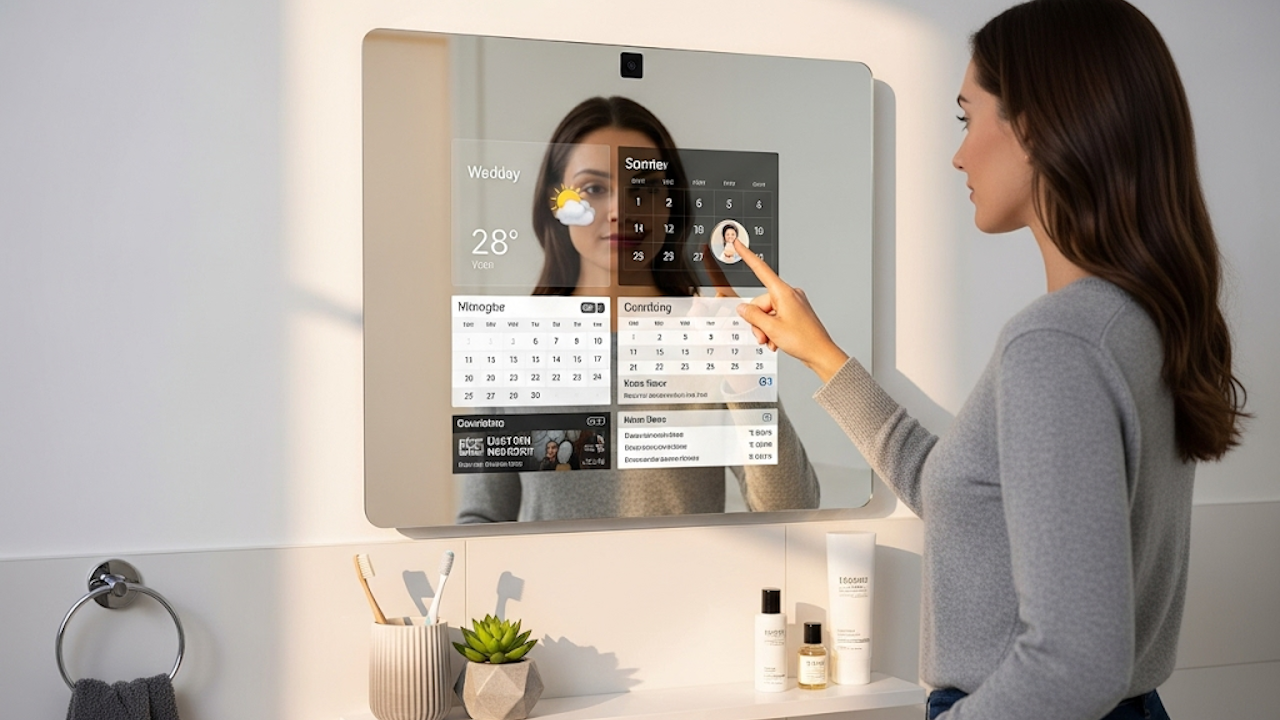
Smart mirrors represent a fascinating convergence of traditional reflective surfaces with modern digital technology. These innovative devices transform ordinary mirrors into interactive displays that blend functionality, aesthetics, and connectivity. In an era where homes are becoming increasingly intelligent, smart mirrors stand out as one of the most personal and intimate smart home devices. They turn everyday moments of self-reflection into opportunities for information, entertainment, health monitoring, and customization. This article explores the development, mechanics, applications, benefits, and prospects of smart mirrors in residential environments.
The concept of smart mirrors builds upon centuries-old use of mirrors for personal grooming and interior design. Early experiments with interactive mirrors date back to the late 20th century, when researchers began embedding displays behind two-way mirrors. However, practical consumer versions emerged in the 2010s, driven by advancements in touchscreen technology, voice recognition, and affordable computing components. Companies like Samsung, LG, and various startups introduced prototypes at tech expos, showcasing mirrors that could display weather, news, or fitness routines while still functioning as standard reflective surfaces.
Today, smart mirrors have evolved into sophisticated systems. A typical smart mirror consists of a high-resolution display panel layered behind a specialized reflective glass. This glass is partially reflective and partially transparent, allowing the screen to show through when activated while maintaining a mirror effect when the display is off. Integrated processors, cameras, microphones, speakers, and wireless connectivity modules enable interactivity. Many models run on operating systems similar to those found in tablets or smart TVs, supporting apps and cloud services.
The core technology relies on several key components. The display layer usually employs LCD or OLED panels for crisp visuals and energy efficiency. Capacitive touch sensors or gesture recognition cameras allow users to interact without physical contact, which proves useful in bathroom or vanity settings where hands might be wet. Artificial intelligence powers voice assistants like Alexa, Google Assistant, or custom implementations, enabling hands-free operation. Sensors for ambient light adjust brightness automatically to prevent glare or ensure visibility in varying conditions. Cameras with facial recognition can personalize experiences, such as loading user-specific profiles for fitness tracking or skincare advice.
Connectivity forms another pillar of smart mirror functionality. Most models link to home Wi-Fi networks, integrating with broader smart home ecosystems. Users can sync the mirror with smartphones, wearables, or other devices to pull data on calendars, traffic, or health metrics. Some advanced versions incorporate Internet of Things protocols like Zigbee or Z-Wave to control connected lights, thermostats, or speakers directly from the mirror interface.
In home environments, smart mirrors find diverse applications across different rooms. In bathrooms, they serve as enhanced vanities. Users can overlay digital makeup tutorials, adjust virtual lighting to simulate different times of day, or receive step-by-step skincare routines based on skin analysis from built-in cameras. Voice commands might trigger reminders for medication or display water consumption trackers. For families, these mirrors can show children’s height charts that update over time or deliver morning briefings with news summaries and weather forecasts.
Bedrooms and dressing areas benefit from smart mirrors as virtual wardrobes. Integrated cameras capture the user’s outfit, allowing digital overlays of different clothing items or color variations. This feature helps with outfit planning and reduces decision fatigue. Fashion enthusiasts appreciate the ability to virtually try on accessories or receive style suggestions based on body type and preferences. Some models connect to online shopping platforms, enabling seamless purchases of recommended items.
Home gyms have embraced smart mirrors as interactive fitness coaches. Brands like Mirror and Tonal have popularized full-body workout displays that guide users through exercises with real-time form correction via computer vision. These mirrors track repetitions, heart rate (when paired with compatible wearables), and progress over sessions. Users follow instructor-led classes or customized routines, with the mirror surface still available for checking posture between sets. This setup creates an immersive experience comparable to a personal trainer without the ongoing cost.
Living rooms and entryways utilize smart mirrors for ambient information displays. When not in active use, they can show family photos, artwork, or calming visuals while retaining reflective properties. Guests might appreciate a quick weather update or calendar overview upon entering the home. In larger installations, multiple smart mirrors can coordinate to create unified home dashboards, sharing information across spaces.
Health and wellness represent growing areas for smart mirror adoption. Beyond fitness, these devices monitor vital signs through contactless sensors or camera-based analysis. Some prototypes measure heart rate variability or detect skin conditions. Mental health features include guided meditation sessions with breathwork visualizations or mood-tracking journals. For aging individuals, smart mirrors offer medication reminders, fall detection alerts, or video calling capabilities with family members.
The benefits of smart mirrors extend across convenience, efficiency, and personalization. They consolidate multiple devices into one elegant unit, reducing clutter in living spaces. Energy-conscious users appreciate models with low-power modes that dim or turn off displays when unoccupied. Customization options allow families to create multiple user profiles, ensuring each person sees relevant content. Children might view educational content or reminders, while adults access professional schedules.
Aesthetic integration stands out as a major advantage. Unlike bulky smart displays, smart mirrors blend seamlessly into traditional decor. Frameless designs or customizable frames match various interior styles, from modern minimalist to classic ornate. The reflective surface maintains its primary function even during power outages or software issues, providing reliability that purely digital screens lack.
Despite these strengths, challenges persist in widespread adoption. Cost remains a barrier, with high-end models priced from several hundred to several thousand dollars. Installation often requires professional help, especially for recessed or wired versions. Privacy concerns arise due to built-in cameras and microphones, prompting needs for robust security features like physical shutters or clear opt-in permissions. Software updates and compatibility issues can frustrate users if manufacturers discontinue support.
Technical limitations also exist. Display quality under bright lighting conditions sometimes struggles compared to dedicated monitors. Battery-powered portable versions are rare due to power demands, limiting mobility. Voice recognition accuracy varies in noisy environments or with accents. Moreover, the learning curve for less tech-savvy users might deter adoption in multigenerational households.
Looking ahead, the future of smart mirrors appears promising. Advancements in flexible displays could lead to curved or portable mirror solutions. Integration with augmented reality will enhance virtual try-on experiences and interactive overlays. Artificial intelligence improvements will enable more sophisticated personalization, such as adaptive lighting suggestions based on circadian rhythms or emotional state detection for wellness interventions.
Sustainability efforts may drive development of energy-efficient components and recyclable materials. Open-source platforms could emerge, allowing hobbyists to build custom smart mirrors from standard components. As 5G and edge computing mature, real-time processing for complex tasks like advanced gesture recognition will become standard without relying heavily on cloud resources.
In healthcare contexts, smart mirrors might evolve into diagnostic tools, partnering with telehealth services for remote consultations. Educational applications could transform them into interactive learning stations for students of all ages. The hospitality industry already experiments with smart mirrors in hotel rooms, suggesting potential crossover innovations for residential use.
Smart mirrors exemplify how technology can enhance rather than replace everyday objects. They respect the human need for reflection while adding layers of interactivity that enrich daily routines. As costs decrease and capabilities expand, these devices will likely become commonplace in modern homes, redefining personal spaces as truly intelligent environments.
Homeowners considering smart mirrors should evaluate their specific needs and technical comfort level. Starting with a single unit in a high-use area like a bathroom allows gradual integration. Compatibility with existing smart home setups ensures smoother experiences. Reading user reviews and comparing features from multiple manufacturers helps in making informed decisions.
Ultimately, smart mirrors bridge the physical and digital worlds in a uniquely intimate way. They reflect not only our appearances but also our evolving relationship with technology in domestic settings. As this field matures, the interactive home reflections they provide will continue to inspire innovation and improve quality of life for users worldwide.