

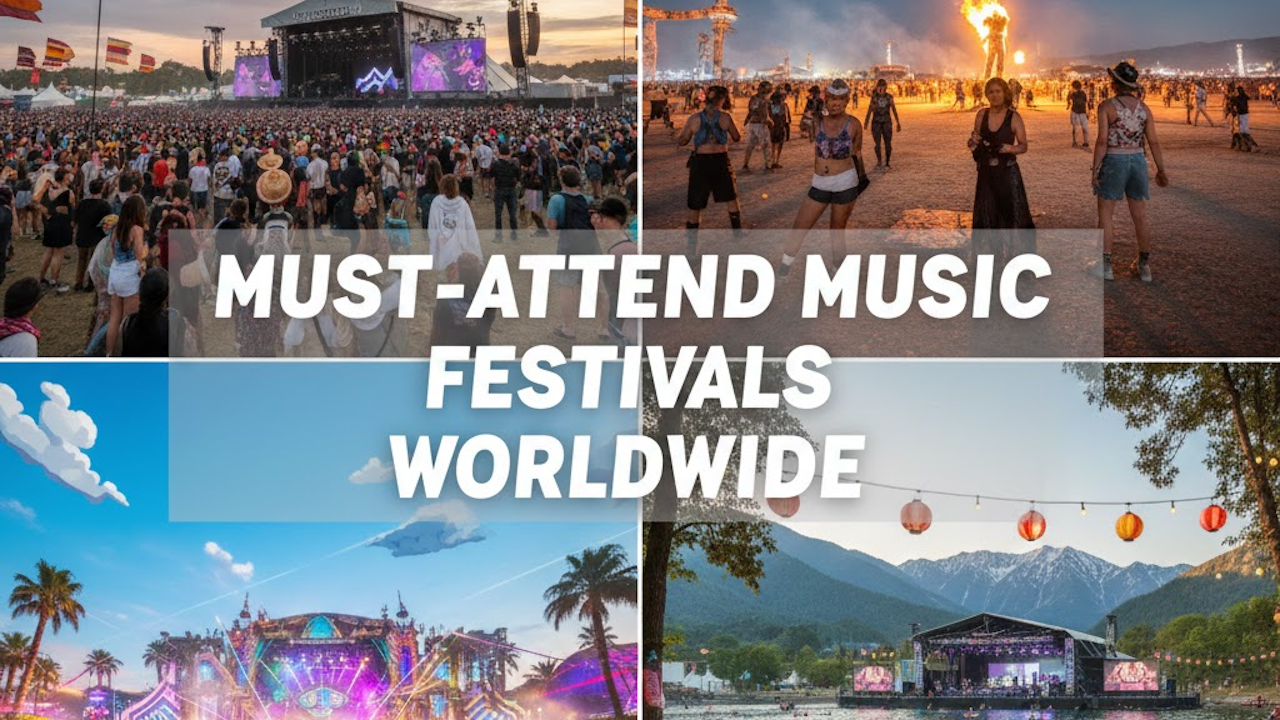
Music festivals represent far more than stacked lineups and loud sound systems. They function as temporary cities built on rhythm, where strangers become friends, genres collide, and memories form against backdrops ranging from desert horizons to mountain peaks and island shores. Across continents, these events draw millions annually, fueling local economies while offering attendees transformative experiences that blend music with culture, nature, and community. Whether you crave thundering EDM drops, soul-stirring jazz improvisations, rock anthems under open skies, or eclectic global sounds, a world of must-attend festivals awaits. Planning around them requires foresight because tickets often vanish months ahead, accommodations fill quickly, and each event carries its own rhythm and practical demands. This guide highlights standout festivals that consistently rank among the most essential, drawing from their scale, atmosphere, history, and unique appeal.
Europe: Where Festival Culture Reaches Legendary Heights
Europe hosts some of the planet’s most celebrated gatherings, many set in breathtaking locations that turn the trip itself into part of the adventure. From fairy-tale stages to urban islands and lakeside elegance, these events cater to every taste while emphasizing sustainability and inclusivity.
Tomorrowland in Boom, Belgium, stands as the pinnacle of electronic dance music spectacles. Launched in 2005, it has grown into a global phenomenon renowned for its theatrical main stage that transforms yearly into elaborate fantasy worlds complete with pyrotechnics, massive LED screens, and storybook elements. Roughly 400,000 people attend across two weekends in July, creating one of the most international crowds anywhere, with visitors arriving from more than 200 countries. The atmosphere pulses with unity as thousands sing along to anthems under confetti showers and laser displays. Multiple stages offer everything from hardstyle and techno to mainstream EDM, while the surrounding Belgian countryside provides a serene contrast to the high-energy nights. First-time visitors should prepare for high ticket demand and consider travel packages that include lodging, as nearby hotels and flights book rapidly. The event rewards those who embrace the full production value and the sense of collective euphoria that defines it.
Sziget Festival on Óbuda Island in Budapest, Hungary, earns its nickname “the Island of Freedom” through a week-long explosion of music, arts, and culture each August. Attracting 400,000 to 500,000 visitors, it features over 200 daily performances across dozens of stages spanning rock, pop, electronic, metal, jazz, and world music. Beyond the music, attendees wander through theater performances, circus acts, exhibitions, and food villages offering international cuisines. The compact island layout encourages exploration, and many extend their stay to enjoy Budapest’s thermal baths and historic sites during daylight hours. Sziget appeals especially to those seeking a balanced festival vacation rather than nonstop partying, with strong emphasis on diversity and a welcoming vibe that draws Europeans, Australians, and North Americans alike. Practical planning involves securing island camping or nearby apartments early, as the event doubles as a major summer destination.
Primavera Sound in Barcelona, Spain, delivers a meticulously curated experience in early June across multiple venues including the Parc del Fòrum by the Mediterranean Sea. Known for adventurous bookings that mix indie, pop, electronic, and legacy acts, the festival creates an intimate yet expansive feel with strong production values and thoughtful scheduling that avoids overwhelming overlaps. Its seaside location allows for daytime beach recovery between sets, and the city’s vibrant food and nightlife scene extends the festival energy. Non-campers particularly appreciate the hotel and apartment options combined with excellent public transport. The event has built a reputation for restoring faith in live music through its attention to detail and diverse, high-quality lineups that often feature both rising talents and established icons.
The Montreux Jazz Festival along Lake Geneva in Switzerland offers a sophisticated contrast with its focus on jazz, blues, soul, and rock across two weeks in July. Founded in 1967, it has hosted legends while expanding to embrace broader sounds without losing its refined character. Performances unfold in elegant indoor halls and outdoor stages with stunning lake and mountain views, creating an atmosphere that feels both intimate and grand. Food stalls highlight Swiss and international flavors, and the surrounding town invites strolls between shows. This festival suits music purists and couples seeking a cultured getaway, with options for single-day tickets making it accessible for shorter visits. Its long history and scenic setting make it a bucket-list choice for those who value musical depth alongside visual beauty.
Glastonbury Festival at Worthy Farm in Somerset, England, remains one of the most iconic names in the world despite its occasional breaks. Renowned for its vast scale, eclectic programming across rock, pop, electronic, folk, and more, plus strong commitments to activism, arts, and environmental causes, it creates a sprawling wonderland of stages, villages, and hidden corners. The festival traditionally occurs in late June, but 2026 marks a scheduled fallow year with no event, allowing the farmland to recover; the next edition returns in June 2027. Past editions have drawn well over 200,000 attendees and featured unforgettable moments that define generations. Its magic lies in the unexpected discoveries and the sense of shared adventure across muddy fields or sunny meadows. Veterans often describe it as a pilgrimage, while newcomers marvel at the sheer creativity on display.
Additional European standouts include Sónar in Barcelona for cutting-edge electronic music and digital art, and Dekmantel near Amsterdam for discerning house and techno enthusiasts who appreciate club-level sound systems in natural woodland settings.
North America: Desert Dreams, Urban Energy, and Cultural Deep Dives
North American festivals range from polished desert productions to gritty urban parks and deeply rooted cultural celebrations, each reflecting the continent’s musical diversity.
The Coachella Valley Music and Arts Festival in Indio, California, has defined modern festival culture since its launch in 1999. Spread across two weekends in April on the polo fields of the Coachella Valley, it combines major headliners with rising artists across pop, hip-hop, rock, electronic, and indie genres. Elaborate art installations, a giant Ferris wheel, and high-fashion attendee creativity turn the grounds into a visual spectacle, especially at sunset when golden light bathes the desert landscape. The event attracts international visitors and media attention, creating a pop-culture moment each year. Attendees often pair music with nearby Palm Springs escapes or Joshua Tree adventures. Tickets and lodging require early booking, and the dry heat demands constant hydration and sun protection. Its blend of spectacle and substance keeps it at the top of many lists.
Lollapalooza in Chicago’s Grant Park delivers an urban counterpart each late July or early August with eight stages overlooking Lake Michigan. Founded in the 1990s as a touring alternative rock event, it evolved into a multi-genre powerhouse featuring everything from mainstream pop to underground electronic at Perry’s Stage. The city setting allows easy access to restaurants and nightlife after the gates close, while Kidzapalooza provides family-friendly programming. The festival balances big names with discovery opportunities and maintains strong production despite its downtown location. It appeals to a wide demographic, from longtime fans revisiting 1990s nostalgia to younger crowds chasing current hits.
Electric Daisy Carnival (EDC) in Las Vegas transforms the Las Vegas Motor Speedway into a neon wonderland each May. Famous for its massive production values, carnival-inspired theming, and nonstop electronic music across multiple stages, EDC creates an immersive all-night experience with fireworks, LED art, and a sense of playful escapism. The event draws dedicated ravers from around the world and emphasizes safety and community through its “PLUR” ethos. While the desert nights can turn cool, the energy inside stays electric. Planning involves preparing for long hours on your feet and considering shuttle or rideshare logistics from the Strip.
New Orleans Jazz & Heritage Festival, held over two weekends in late April and early May, immerses visitors in the birthplace of jazz and a broader celebration of Louisiana culture. Multiple stages showcase traditional jazz, brass bands, blues, gospel, zydeco, and contemporary acts alongside world-class food stalls serving crawfish, gumbo, beignets, and more. The fairgrounds atmosphere encourages wandering between sets while soaking in local traditions. It stands out for its authentic regional flavor and intergenerational appeal, making it essential for anyone interested in American roots music and culinary heritage.
Other notable North American options include Summerfest in Milwaukee, often called the world’s largest by duration with its 11-day run and numerous stages, and Austin City Limits in Texas for its strong indie and mainstream mix in a park setting.
South America: Massive Scale and Passionate Crowds
Rock in Rio, primarily in Rio de Janeiro, Brazil, exemplifies South American festival grandeur. Launched in 1985, it has become a cultural institution with editions also held in Lisbon. The Brazilian event features enormous stages, pyrotechnics, and lineups that mix international superstars with local heroes across rock, pop, and electronic genres. Attendance often reaches hundreds of thousands per edition, creating an electric atmosphere fueled by passionate crowds and the vibrant energy of Rio. The festival frequently incorporates social and environmental initiatives, adding depth beyond entertainment. Visitors benefit from combining the event with exploration of Rio’s beaches and landmarks, though advance planning for accommodations and transportation proves essential given the scale.
Lollapalooza editions in Chile, Argentina, and Brazil further strengthen the continent’s festival scene with high-production multi-genre programming tailored to local tastes while featuring global artists.
Asia: Precision, Nature, and Discovery
Fuji Rock Festival in Niigata Prefecture, Japan, offers one of Asia’s premier experiences each late July at a former ski resort in the mountains. Renowned for exceptional organization, spotless grounds, and a strong environmental ethos, it features multiple stages including one accessible by cable car with panoramic views. Lineups blend international rock and electronic acts with Japanese artists, while on-site onsen (hot springs) provide perfect post-festival recovery. The event attracts a respectful, enthusiastic crowd and maintains a family-friendly yet exciting vibe. Its mountain setting delivers cooler temperatures and fresh air compared to many lowland festivals, enhancing the overall escape. Attendees often describe it as one of the cleanest and most efficiently run large-scale events globally.
Additional Asian highlights include Ultra Japan for electronic music fans and the Java Jazz Festival in Jakarta for sophisticated jazz programming.
Africa and the Middle East: Vibrant Fusion and Record-Breaking Scale
Mawazine Festival in Rabat, Morocco, ranks among the world’s largest by attendance, drawing 2.5 to 2.8 million visitors across multiple days with a powerful mix of international superstars and regional talent. Held annually in late spring or early summer, it promotes cultural exchange and tolerance through music while transforming the city into a lively crossroads. Free or low-cost access at many stages contributes to its massive reach and diverse crowd. The event showcases Arab, African, and Western sounds alongside street food and cultural activities, creating an immersive introduction to Moroccan hospitality and musical heritage.
Other notable mentions in the region include Afro Nation events celebrating afrobeats and R&B with strong community focus, and boutique electronic gatherings such as MOGA in Morocco’s Essaouira.
Planning Your Global Festival Adventure
Successful festival travel hinges on preparation tailored to each destination. Begin by monitoring official websites and trusted ticketing platforms for lineup announcements and on-sale dates, as popular events sell out fast. Factor in total costs including tickets, flights, lodging, food, and local transport. Camping offers immersion and savings at many European and American festivals, while hotel or apartment stays suit those preferring comfort or shorter visits. Pack strategically: sturdy footwear for long days, weather-appropriate layers, reusable water bottles, ear protection, portable chargers, and any medications. Research visa requirements, currency, and local customs well in advance. Sustainability matters; many festivals now emphasize recycling, reduced plastics, and carbon-offset options. Connect with online communities and forums for insider tips on crowds, best viewing spots, and recovery strategies. Finally, build flexibility into itineraries, as weather, transportation delays, or spontaneous discoveries can shape the experience as much as the scheduled performances.
Music festivals worldwide continue to evolve, incorporating new technologies, diverse voices, and greater attention to environmental and social responsibility. They remain powerful reminders of music’s ability to unite people across borders and backgrounds. Whether you start with the high-production glamour of Tomorrowland or Coachella, the cultural depth of New Orleans Jazz Fest or Montreux, or the mountain serenity of Fuji Rock, each event offers something irreplaceable. Start planning your journey today, and prepare for the kind of memories that last a lifetime. The world’s stages are waiting.