

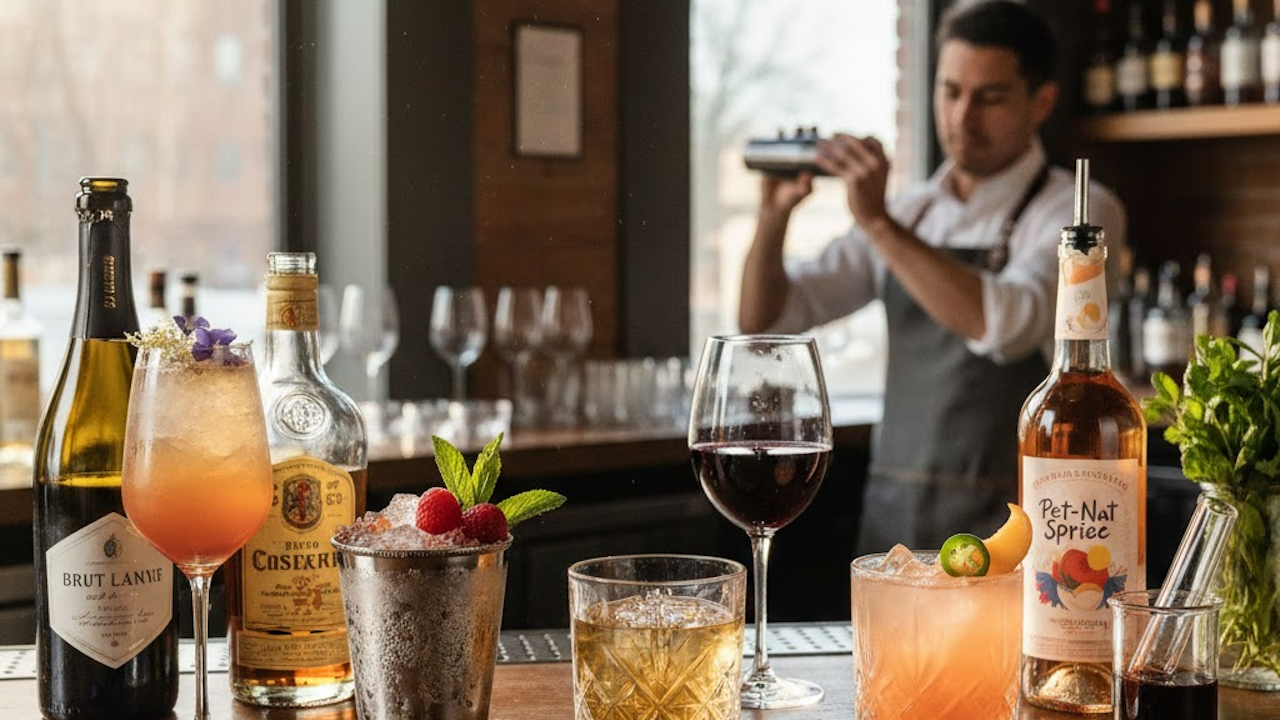
Wine has long held a place of honor at the table, poured neat into glasses and paired with meals in ways that feel timeless. Yet in recent years a different story has unfolded behind the bar. Bartenders and drinkers alike have begun treating wine not as a finished product but as a versatile base ingredient, one capable of anchoring cocktails that feel lighter, more aromatic, and often more approachable than their spirit-heavy counterparts. The result is a wave of wine cocktails that are quietly reshaping menus from neighborhood wine bars to high-end cocktail lounges.
These drinks are not a sudden invention. Sangria has cooled Spanish summers for generations. The spritz has been a northern Italian ritual for decades. Champagne has starred in celebratory mixes for more than a century. What feels new is the breadth of experimentation and the deliberate positioning of wine cocktails as sophisticated, low-to-mid ABV options that fit contemporary tastes for balance, seasonality, and restraint.
The appeal starts with texture and structure. Wine brings acidity, residual sugar, tannin, and bubbles in combinations that spirits alone rarely match. A crisp white can deliver the bright backbone that lemon juice usually provides. A lightly tannic red can stand in for bitters or vermouth. Sparkling wine supplies lift and effervescence without the need for soda water or tonic. When these elements meet spirits, liqueurs, fresh produce, or herbal infusions, the resulting drinks often feel more complex yet less aggressive on the palate.
Classic foundations remain relevant and continue to inspire. The Aperol Spritz, built on Prosecco, Aperol, and a splash of soda, has become a global shorthand for easy elegance. Its success opened the door for variations that swap in different amari, local sparkling wines, or seasonal fruit. The French 75, with its combination of gin, lemon, sugar, and Champagne, still appears on many lists, sometimes reimagined with mezcal or aged brandy. Kir Royale, once a simple mix of crème de cassis and Champagne, now shows up with house-made berry syrups or rare sparkling wines. Even the humble wine spritzer has evolved, moving beyond basic white wine and soda into carefully proportioned drinks that highlight specific grape varieties and aromatic garnishes.
Innovation has accelerated as bartenders treat wine with the same curiosity once reserved for rare spirits. Natural wines, orange wines, pét-nats, and skin-contact whites have entered the mixology toolkit. Their cloudy textures, oxidative notes, and funky aromatics create drinks that feel alive and unpredictable. A cloudy pét-nat might replace Champagne in a flip or a sour, adding a soft mouthfeel and subtle yeast character. An amber wine with tea-like tannins can form the base of a stirred drink that sits somewhere between a Manhattan and a vermouth cocktail. Some bars now offer wine-forward versions of classic templates: a Negroni built on fortified wine instead of gin, a Martini that leans heavily on fino sherry, or a highball that uses carbonated wine in place of soda.
Seasonality drives much of the creativity. In warmer months, light whites and rosés dominate. Think of a Verdejo highball with cucumber and mint, or a rosé cocktail brightened with watermelon and a touch of chili. Autumn brings richer reds and fortified wines into play. A lightly mulled red wine cocktail finished with orange peel and star anise can feel both comforting and refined. Winter lists often feature sparkling wine mixed with richer liqueurs or spiced syrups, while spring menus lean into floral notes and early-season herbs. Regional produce shapes these drinks as well. In coastal areas, wine cocktails might incorporate local citrus or foraged herbs. Inland bars might highlight orchard fruits or native berries that pair naturally with the wines of the region.
The practical advantages for bars are clear. Wine cocktails often cost less to produce than spirit-heavy drinks while still commanding premium prices. They encourage guests to linger and order a second or third round without the rapid intoxication that stronger cocktails can produce. For staff, the category offers a way to showcase the wine list in a new format, moving bottles that might otherwise sit unnoticed. Guests who feel intimidated by a long wine list often find wine cocktails more accessible; the familiar format of a mixed drink lowers the barrier while still introducing them to interesting grapes and regions.
Technique matters. Many successful wine cocktails rely on careful temperature control and gentle handling. Sparkling wine should be added last and stirred or poured with restraint so the bubbles survive. Still wines benefit from chilling and, in some cases, a brief period of aeration or even light dilution to open their aromatics. Some bartenders freeze wine into cubes or granitas to chill a drink without watering it down. Others create wine reductions or shrubs that concentrate flavor while adding acidity and sweetness. Infusions are another avenue: wine steeped with herbs, spices, or fruit can become a house ingredient that appears across several drinks on a menu.
Home enthusiasts have followed the professional lead. Recipes once confined to bar manuals now circulate widely, adapted for kitchen tools and supermarket ingredients. A simple formula of sparkling wine, a citrus element, and a flavored syrup can yield dozens of variations. Still wines pair well with amaro, herbal liqueurs, or fresh juices. The key is balance. Because wine already contains acidity and sometimes residual sugar, additional citrus or sweetener must be measured carefully. Over-acidifying a wine cocktail can make it sharp and thin; too much sweetness can mask the wine’s character entirely.
The cultural shift is equally interesting. Wine cocktails occupy a middle ground between the pure wine experience and the high-octane cocktail. They attract drinkers who want complexity without heaviness, and they give wine lovers a playful way to engage with their favorite bottles. In cities where natural wine bars and cocktail dens once occupied separate social spheres, the two worlds have begun to overlap. Menus increasingly list both natural wine by the glass and inventive wine-based cocktails side by side, reflecting a broader blurring of categories.
Not every experiment succeeds. Some wine cocktails taste muddy when the wine’s tannins clash with other bitter elements. Others lose their identity when too many strong flavors overwhelm the grape character. The best examples respect the wine while elevating it. They use the wine’s existing qualities as a foundation rather than trying to disguise them. A great wine cocktail should still taste, in some essential way, of wine.
Looking forward, the category shows no sign of slowing. As drinkers continue to seek lower-alcohol options and as climate and agricultural shifts change the wines available, bartenders will keep adapting. New grape varieties, alternative packaging such as canned sparkling wine, and growing interest in low-intervention production all feed the creative pipeline. Wine cocktails have moved beyond novelty status. They have become a permanent and evolving part of the modern bar landscape, offering both familiarity and surprise in equal measure.
The next time you sit down at a bar, consider ordering one. You might find a drink that feels both classic and newly invented, rooted in tradition yet open to whatever the season and the cellar can provide. In that glass sits a quiet revolution, one that has already begun to change how we think about wine and how we mix it.