

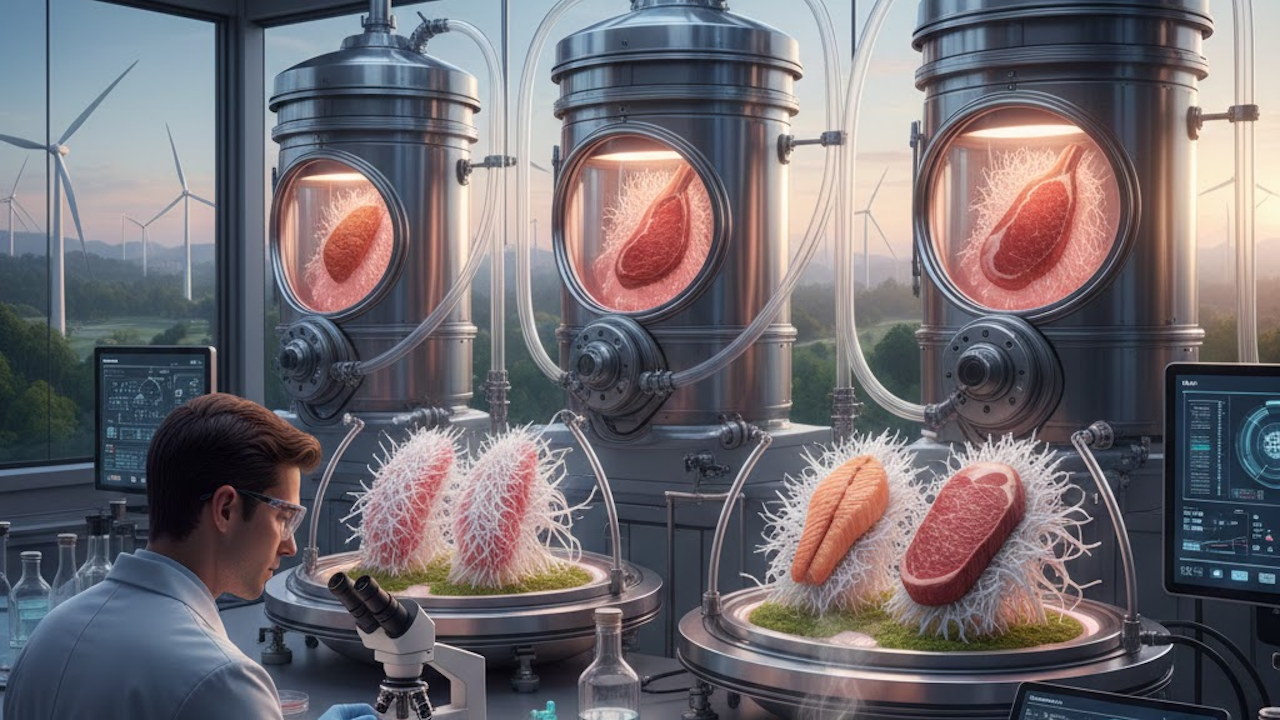
The way humanity produces and consumes meat stands at a turning point. Traditional livestock farming has fed billions for centuries, but it faces mounting pressure from a growing global population, environmental limits, and ethical concerns. Enter lab-grown food, also known as cultivated meat or cell-cultured meat. This technology grows real animal cells in controlled environments to produce meat without raising and slaughtering animals. Proponents call it a sustainable solution that could reshape food systems. Skeptics raise questions about cost, safety, and acceptance. Whatever the view, lab-grown meat has moved from science fiction to early commercial reality.
The Origins of Cultivated Meat
The concept of growing meat in a laboratory traces back decades, but tangible progress accelerated in the early 21st century. In 2013, Dutch scientist Mark Post unveiled the world’s first lab-grown beef burger in London. The patty, created from bovine muscle stem cells, cost around 250,000 euros to produce. Tasters described its texture as similar to conventional meat, though it lacked fat and full flavor. The event marked a proof of concept that captured global attention.
Post’s work built on tissue engineering techniques originally developed for medical applications, such as regenerative medicine. Researchers take a small biopsy of cells from a living animal, often without harm. These cells, typically muscle or fat precursors, are placed in bioreactors filled with nutrient-rich media. The cells multiply and differentiate into tissues that mimic conventional meat. Early versions required animal-derived serum, but advances now explore plant-based or synthetic alternatives to reduce costs and ethical issues.
Since that landmark 2013 tasting, the field has expanded rapidly. Hundreds of companies worldwide entered the space. Investment surged, peaking at nearly one billion dollars in a single year around 2021. By the mid-2020s, the number of active companies reached over 140, though economic pressures led to consolidation. Some prominent players closed, while others like Mosa Meat, Aleph Farms, and Vow continued advancing.
How Lab-Grown Meat Is Produced
The process begins with cell selection. Scientists isolate stem cells or myosatellite cells capable of rapid division. These are cultured in a growth medium containing amino acids, vitamins, sugars, and growth factors. Bioreactors provide the ideal conditions: controlled temperature, pH, and oxygen levels. As cells proliferate, scaffolds or other structures help them organize into three-dimensional tissues, including muscle fibers and fat deposits for better texture and taste.
Scaling production involves larger bioreactors, some exceeding 20,000 liters in capacity, as demonstrated by companies like Vow in Australia. Innovations focus on reducing reliance on expensive inputs. For instance, researchers experiment with co-culture systems using microorganisms to recycle nutrients and minimize waste. The goal is food-grade production that matches or exceeds the efficiency of traditional farming.
Unlike plant-based alternatives that imitate meat, cultivated meat consists of actual animal cells. It offers the potential for identical nutritional profiles, including proteins, vitamins, and minerals, while allowing customization, such as higher omega-3 content or reduced saturated fat.
Environmental and Ethical Advantages
Conventional meat production carries significant costs. Livestock accounts for substantial greenhouse gas emissions, particularly methane from cattle. It requires vast amounts of land for grazing and feed crops, contributes to deforestation, and consumes large volumes of water. Cultivated meat promises dramatic reductions: studies suggest up to 99 percent less land use and 90 percent less water in some scenarios, along with lower overall emissions when powered by renewable energy.
Animal welfare stands as another core benefit. Billions of animals are slaughtered annually for food. Lab-grown meat eliminates the need for industrial-scale farming, reducing suffering, disease risks, and antibiotic overuse. A single cell sample can theoretically yield tons of meat, multiplying production without repeated animal involvement.
Public health angles also emerge. Controlled environments may lower contamination risks from pathogens like E. coli or salmonella compared to slaughterhouses. Tailored nutrition could address dietary needs more precisely.
Current Landscape and Commercial Progress
By 2026, cultivated meat has achieved several regulatory milestones. Singapore approved the first products in 2020, followed by the United States in 2023 with approvals for cultivated chicken from companies like Upside Foods and GOOD Meat. Israel, Australia, New Zealand, and others followed with clearances for various items, including beef and seafood. In the US, products appeared in select restaurants, though grocery store availability remained limited.
Key players include Mosa Meat in the Netherlands, focusing on beef and recently securing government support for international expansion. Aleph Farms pursues hybrid products blending cultivated cells with plant materials for steaks. Vow scales production in large facilities and gained approvals across multiple markets. Seafood innovators like Wildtype work on cultivated salmon.
Production costs have fallen sharply. Early prototypes were prohibitively expensive, but estimates suggest paths to around 10 euros per kilogram by the end of the decade through cheaper media, higher cell densities, and efficient scaling. Some companies target pet food first as a lower-barrier entry point.
Challenges on the Path Forward
Despite progress, hurdles remain substantial. Energy consumption in bioreactors is high, potentially offsetting some environmental gains unless renewable sources dominate. Achieving consistent taste, texture, and color at scale requires ongoing refinement, particularly for structured cuts like steaks rather than ground products.
Regulatory landscapes vary. While some nations embrace innovation, others impose restrictions. In the United States, several states enacted bans or pauses on cultivated meat sales, citing concerns for traditional agriculture, consumer confusion, and economic impacts on farmers. Labeling debates continue, with terms like “cell-cultivated” emerging as standards.
Public perception poses another barrier. Some consumers express unease about “Frankenstein food” or question long-term safety. Education and transparent communication will prove essential. Supply chain development, from growth media to bioreactor manufacturing, needs massive investment.
Funding tightened after the initial boom. Total investments dropped significantly by 2025, forcing focus on viable business models. Companies prioritize cost reduction and partnerships with established meat producers like Cargill or Tyson.
Broader Implications for Lab-Grown Food
Cultivated meat represents one facet of cellular agriculture. Similar techniques apply to seafood, dairy, and even leather. Precision fermentation produces proteins and ingredients without animals. Together, these technologies could diversify protein sources and enhance food security, especially in regions with limited arable land or vulnerability to climate disruptions.
Global demand for meat is projected to rise sharply by 2050. Cultivated options could help close the gap sustainably. Market projections vary widely, but optimistic estimates place the sector’s potential in the hundreds of billions of dollars. Hybrid products, combining cultivated cells with plant-based elements, may bridge the transition.
Looking Ahead
Lab-grown food has arrived, though widespread adoption will unfold gradually. Early products target niche markets and restaurants, building consumer familiarity. As costs decline and infrastructure expands, prices could approach parity with conventional meat. Continued research into serum-free media, efficient scaffolding, and automation will accelerate this timeline.
Governments play a pivotal role through supportive regulations, research funding, and clear labeling. International collaboration can harmonize standards and facilitate trade. For traditional farmers, opportunities exist in supplying cells or transitioning to complementary roles in a diversified system.
The future of meat need not abandon tradition entirely but can evolve with innovation. Cultivated meat offers a way to enjoy familiar flavors and nutrition while addressing pressing global challenges. It promises fewer emissions, less land pressure, and reduced animal suffering, all while feeding more people.
Challenges persist, and success is not guaranteed. Yet the trajectory is clear: from a single expensive burger in 2013 to regulatory approvals and pilot sales in the 2020s. Lab-grown food signals a new chapter in humanity’s relationship with meat. The future is here, and it is being grown, one cell at a time. As production scales and barriers fall, this technology could become a staple on tables worldwide, reshaping diets, economies, and the planet for generations to come.