

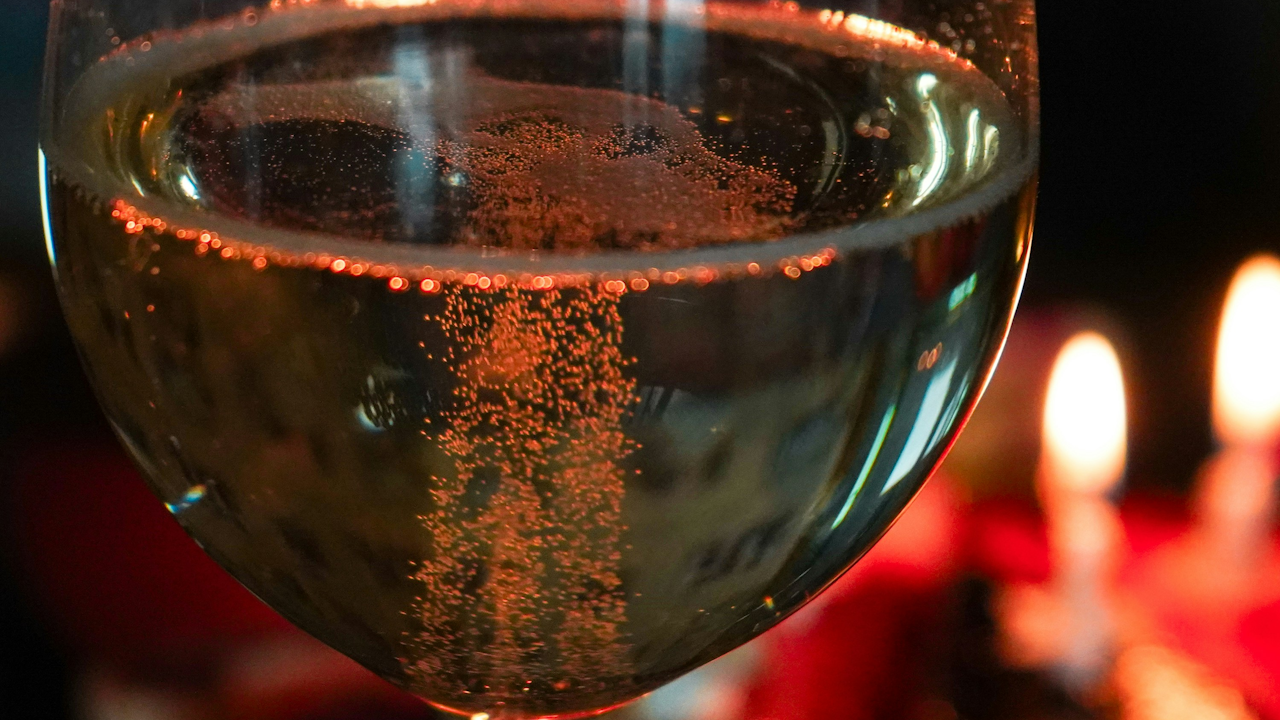
Sparkling wine stands apart from still wine because of its lively effervescence. Those rising streams of tiny bubbles create visual appeal, a gentle tickle on the tongue, and aromatic lift that carries delicate fruit and yeast-derived notes to the nose. The bubbles are not added for show. They result from carbon dioxide gas produced naturally by yeast during fermentation and then trapped under pressure inside the bottle or tank.
This controlled capture of gas turns an ordinary base wine into something special. Different production methods create different bubble profiles, from the fine, persistent beads of high-quality Champagne to the frothier, fruit-forward sparkle of Prosecco. Understanding the science and craftsmanship behind the bubbles reveals why some sparkling wines feel elegant and creamy while others taste bright and refreshing. It also explains how temperature, glassware, and serving technique dramatically affect the experience in your glass.
The Science Behind the Bubbles
All wine begins with alcoholic fermentation. Yeast consumes grape sugars and converts them into ethanol and carbon dioxide according to the simplified reaction: one molecule of glucose yields two molecules of ethanol and two molecules of carbon dioxide. In still wine production the carbon dioxide escapes into the air during fermentation. Sparkling wine captures that gas instead.
Most sparkling wines undergo two fermentations. The first creates a dry base wine. Winemakers then trigger a second fermentation by adding a small amount of sugar and yeast. The yeast consumes the new sugar, produces additional alcohol (roughly 1.3 percent more), and releases fresh carbon dioxide. Because the container is sealed, the gas cannot escape. It dissolves into the wine under rising pressure.
Henry’s Law governs this dissolution. The amount of gas that dissolves in a liquid is directly proportional to the partial pressure of that gas above the liquid. In a sealed bottle or tank the pressure climbs to five or six atmospheres or more in traditional-method wines. At this pressure the wine can hold about 10 to 12 grams of carbon dioxide per liter. When the bottle is opened the pressure drops suddenly to one atmosphere. The wine becomes supersaturated and the excess gas comes out of solution as visible bubbles.
Bubbles do not form spontaneously throughout the liquid. Nucleation requires sites where gas molecules can collect. In sparkling wine these sites include microscopic imperfections or scratches on the inside of the glass, tiny air pockets trapped in cellulose fibers or other particles, and crystals or yeast remnants suspended in the wine. Proteins released during yeast autolysis help stabilize the bubbles, allowing them to grow larger before bursting and contributing to a creamy “mousse” on the surface.
Once formed, bubbles grow by diffusion as more dissolved carbon dioxide enters them. They rise because they are less dense than the surrounding liquid. A single flute of Champagne can contain hundreds of thousands to over a million bubbles depending on pouring technique. A standard 750-milliliter bottle releases roughly five to six liters of carbon dioxide gas overall. About 80 percent escapes through direct diffusion while the rest forms the visible streams of bubbles.
Several factors influence bubble size and persistence. Higher pressure and slower release during production tend to produce smaller, more refined bubbles. Cooler serving temperatures increase carbon dioxide solubility and slow the rate of release, resulting in finer, longer-lasting streams. Proteins and other surface-active compounds in the wine stabilize small bubbles and create a more persistent foam. Rough or etched glass surfaces provide more nucleation sites, which can produce a steady stream of smaller bubbles. Conversely, detergent residue on glasses acts as a surfactant that pops bubbles quickly.
The method of production strongly affects bubble character. Wines that undergo long lees aging and high pressure often display delicate, persistent beads and a creamy texture. Wines made with faster, lower-pressure methods frequently show larger, more energetic bubbles that rise quickly and dissipate sooner.
A Brief History of Sparkling Wine and Its Bubbles
Sparkling wine emerged from a combination of climate, accident, and ingenuity. In the cool Champagne region of northern France, fermentation sometimes halted during harsh winters before all the sugar was consumed. When spring arrived, residual yeast awakened and resumed fermentation inside bottles that had already been sealed. The new carbon dioxide had nowhere to go and dissolved under pressure, creating bubbles. Early bottles were weak and frequently exploded, earning the wine a reputation as unstable and even dangerous.
By the late seventeenth and early eighteenth centuries, English merchants and scientists experimented with stronger bottles and cork stoppers. They discovered that adding a small amount of sugar before bottling encouraged a controlled secondary fermentation. In France, the Benedictine monk Dom Pérignon worked at the Abbey of Hautvillers to improve blending, pressing, and stability. Although popular legend credits him with inventing Champagne, historical evidence shows he initially tried to eliminate bubbles rather than embrace them. Over time the region refined techniques to harness the effervescence reliably.
The traditional method of secondary fermentation in the bottle became the gold standard for quality sparkling wine. In the early twentieth century, Italian winemaker Federico Martinotti and later Eugène Charmat developed the tank method, moving secondary fermentation into large pressurized vessels. This approach proved faster and less expensive, opening sparkling wine to broader markets. Today both methods coexist alongside simpler carbonation techniques and ancestral styles that return to earlier, less interventionist practices.
The Traditional Method: Bubbles Born in the Bottle
The traditional method, also called méthode champenoise or méthode traditionnelle, produces the finest and most complex sparkling wines. Every step from base wine to final cork influences the bubbles.
Winemakers begin with early-harvested grapes that retain high acidity. After pressing, the juice ferments into a dry still base wine. Multiple base wines are blended into a cuvée chosen for balance, structure, and aging potential.
Next comes tirage. A mixture of sugar (typically around 24 grams per liter), selected yeast strains capable of fermenting under pressure, and sometimes a riddling aid is added to the cuvée. The wine is bottled and sealed with a crown cap. The bottles are stacked in cool cellars where the second fermentation proceeds slowly over several weeks or months. Carbon dioxide builds pressure to five or six atmospheres or higher. The yeast eventually dies and settles as lees.
The wine then ages on these lees. During autolysis the dead yeast cells break down and release amino acids, proteins, and other compounds that contribute toasty, bready, and nutty flavors. These same compounds help stabilize bubbles and improve mouthfeel. Minimum aging requirements vary: fifteen months total for Champagne, nine months for Cava, with many producers extending far longer for greater complexity.
After aging, the bottles undergo riddling, or remuage. They are gradually turned and tilted from horizontal to vertical so the lees collect in the neck. This step can be performed by hand over weeks or accelerated with mechanical gyropalettes that complete the process in days.
Disgorging removes the sediment. The neck of the inverted bottle is frozen in a brine solution or with liquid nitrogen, forming an ice plug that traps the lees. When the crown cap is removed, internal pressure ejects the plug cleanly. Some wine and gas are lost, so the bottle is topped up with a dosage liqueur: a mixture of still wine and sugar (or concentrated grape must). The amount of sugar determines the final sweetness level, from bone-dry brut nature to sweeter doux styles.
A natural cork and wire cage (muselet) are applied to withstand the remaining pressure. The finished wine rests briefly before release. The entire process is labor-intensive and time-consuming, which is why traditional-method wines command higher prices. The reward is refined bubbles, layered flavor, and excellent aging potential.
The Tank Method: Efficient Bubbles on a Larger Scale
The tank method, often called Charmat or Martinotti, moves secondary fermentation out of individual bottles and into large sealed stainless-steel tanks. This approach dominates production of Prosecco and many other value-driven sparkling wines.
Base wines are blended and transferred to a pressurized tank along with sugar and yeast. Secondary fermentation occurs under controlled pressure, typically reaching two to four atmospheres. Because the volume is large, fermentation finishes faster, often in weeks rather than months. The wine is then chilled, filtered to remove yeast, and dosed with a small amount of sugar syrup before being bottled under counter-pressure to preserve the carbonation.
The tank method offers several advantages. It is less expensive and faster, allowing producers to capture fresh, primary fruit and floral aromas without the toasty notes that come from long lees aging. It suits aromatic grape varieties such as Glera used for Prosecco. The resulting bubbles tend to be larger and more exuberant, creating a frothy mousse that feels lively and refreshing rather than creamy and persistent.
Some tank-method wines receive short lees contact for added texture, but most emphasize youthful fruit. The lower pressure and quicker production mean bubbles generally dissipate faster than those in traditional-method wines, though careful serving still yields an enjoyable sparkle.
Other Ways to Create Bubbles
Several additional techniques exist. The transfer method follows the traditional process through secondary fermentation in the bottle. Afterward the wine is transferred under pressure into a tank, filtered, dosed, and rebottled. This method is useful for unusual bottle sizes or when producers want to avoid the labor of riddling every bottle. Bubble quality remains close to traditional-method standards.
The ancestral method, also known as pétillant naturel or pét-nat, is one of the oldest approaches. Winemakers bottle the wine before primary fermentation is complete, allowing it to finish inside the bottle. No tirage is added and there is usually no disgorging or dosage. The wine remains cloudy with yeast sediment and shows variable, sometimes rustic bubbles at lower pressure. These wines appeal to fans of natural wine for their authenticity and unpredictability.
The continuous method, developed in Russia and used by a few large producers, feeds yeast continuously through a series of pressurized tanks. Yeast attaches to supports inside the tanks, and the wine clarifies as it moves through the system. The process is efficient but uncommon outside specific commercial contexts.
Forced carbonation is the simplest and least expensive technique. Still wine is chilled and injected with carbon dioxide gas in a pressurized tank, exactly like making soda. No secondary fermentation occurs. The bubbles are typically large, aggressive, and short-lived. Regulations in many regions require such wines to be labeled as carbonated rather than sparkling if the gas did not come from fermentation.
What Determines Bubble Quality
Bubble quality depends on production method, carbon dioxide concentration, nucleation conditions, and serving practices. Traditional-method wines generally deliver smaller, more persistent bubbles because the gas dissolves slowly under high pressure and stabilizing compounds develop during lees aging. Tank-method wines often show larger, quicker-rising bubbles that create immediate froth but fade faster.
Higher carbon dioxide levels produce more vigorous effervescence, yet excessive gas can feel prickly rather than pleasant. The density of nucleation sites influences size: more sites tend to create smaller individual bubbles. Proteins and polysaccharides from autolysis or grape skins improve foam stability and mouthfeel.
Glassware and technique matter enormously. Tall, narrow flutes concentrate the visual display of bubbles and direct aromas upward. Tulip-shaped glasses offer a balance of bubble preservation and aromatic space. Wide coupes allow rapid warming and quick loss of carbon dioxide. Gentle pouring down the side of the glass minimizes agitation and preserves dissolved gas. Overly vigorous pouring or warm wine causes rapid outgassing and fewer bubbles overall. Clean glasses free of detergent residue are essential; soap films destroy foam stability within seconds.
Regional Styles and Their Bubbles
Different regions emphasize different methods and therefore different bubble expressions. Champagne relies exclusively on the traditional method with long lees aging, producing complex wines with fine, persistent beads and toasty depth. Cava from Spain follows a similar traditional process but often uses local grape varieties and slightly shorter aging, delivering excellent value with refined sparkle. Italian Franciacorta and Trento also employ the traditional method and compete directly with Champagne in style and quality.
Prosecco from Italy’s Veneto region is produced primarily by the tank method. The resulting wines are aromatic, floral, and fruit-driven with lively but larger bubbles that suit casual enjoyment and cocktails. Lambrusco from Emilia-Romagna offers red sparkling wines made by tank or ancestral methods, showing bright berry flavors and energetic fizz.
Crémant wines from various French regions outside Champagne use the traditional method and offer a more affordable alternative with similar bubble refinement. Pétillant naturel wines appear across France, Italy, and beyond, showcasing the ancestral method’s rustic charm and variable effervescence. German Sekt spans a wide range from simple tank-produced versions to serious traditional-method bottlings.
Terroir and grape choice influence the base wine’s acidity and flavor, which in turn support the bubbles, but the production method remains the primary driver of effervescence character.
Preserving and Enjoying the Bubbles
Proper serving maximizes pleasure. Chill the bottle to around 8 to 12 degrees Celsius. Warmer wine releases gas too quickly and tastes flat; excessively cold wine mutes aromas. Remove the foil and loosen the cage while keeping a thumb on the cork. Hold the bottle at a 45-degree angle and twist the bottle, not the cork, for a controlled opening with minimal loss of gas.
Pour slowly down the side of a tilted glass to preserve dissolved carbon dioxide. Avoid splashing or filling too quickly. Once poured, the bubbles continue to rise and release aromas. Drink at a moderate pace; the experience evolves as the wine warms slightly and the mousse settles.
Store unopened bottles in a cool, dark place. Most sparkling wines are best enjoyed young, though vintage traditional-method wines can improve with additional bottle age. Once opened, a sparkling wine loses its bubbles within hours even with a stopper, so finish the bottle or use it promptly in cooking or cocktails.
Conclusion
The bubbles in sparkling wine represent a remarkable intersection of biology, chemistry, and human skill. Yeast produces carbon dioxide during a carefully managed second fermentation. Pressure keeps that gas dissolved until the moment the bottle opens. Different methods, from the labor-intensive traditional process to efficient tank fermentation, create a spectrum of styles and bubble textures. Science explains why nucleation sites, proteins, temperature, and glassware all matter. History shows how accident and innovation turned a potential flaw into one of the world’s most celebrated wine categories.
Whether you prefer the refined, long-lasting beads of a well-aged Champagne, the bright froth of Prosecco, or the natural unpredictability of a pét-nat, the bubbles are never accidental in modern production. They are the deliberate result of trapping nature’s own gas and presenting it at its most delightful. The next time you watch a stream of bubbles rise in your glass, remember the journey they took from grape sugars through yeast, pressure, and patience. That understanding makes every sip more rewarding. Raise your glass and enjoy the sparkle.