

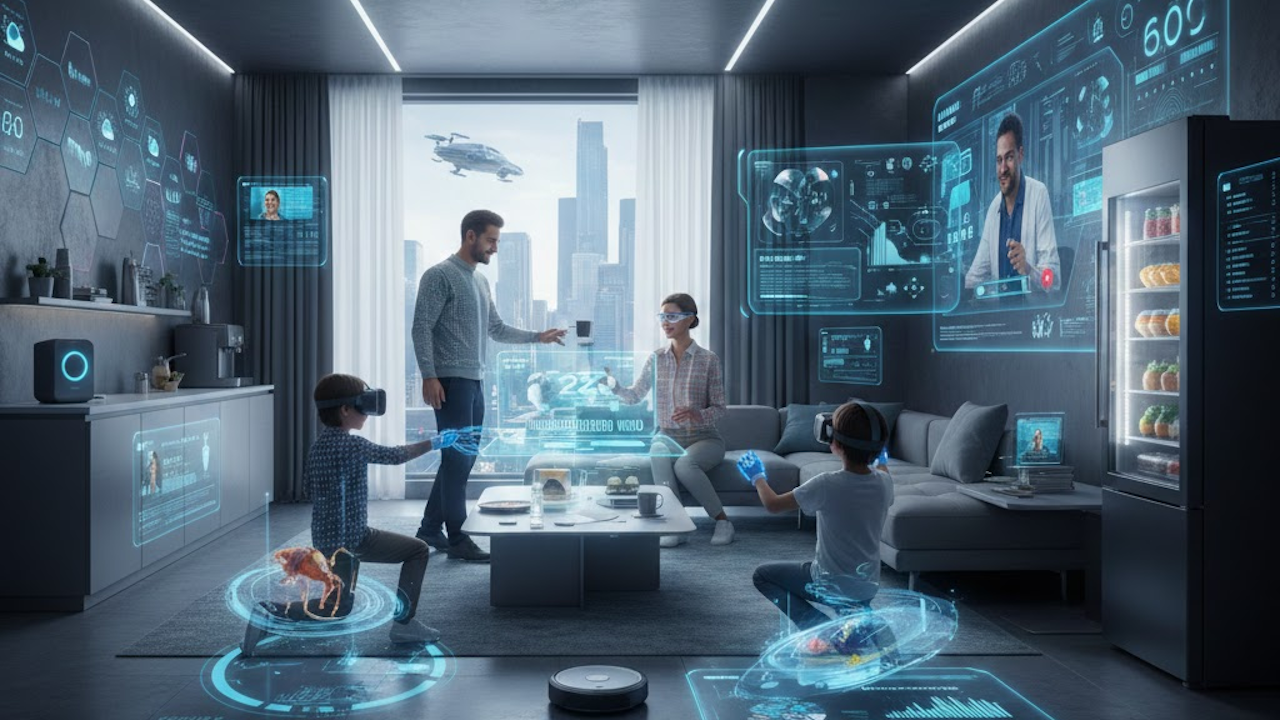
By 2026, smart technology no longer feels like a set of tools you occasionally use. It feels more like an invisible operating system quietly shaping daily life. From the moment people wake up to the moment they fall asleep, algorithms, sensors, and connected devices guide decisions, automate routines, and influence behavior. While this shift promises convenience and efficiency, it also raises important questions about control, dependence, and personal agency.
The day often begins before a person is fully awake. Smart alarms analyze sleep cycles using data from wearables or mattress sensors and choose the optimal moment to wake someone. Lighting systems adjust brightness and color temperature to match circadian rhythms, while thermostats preheat rooms based on weather forecasts and personal preferences. These systems do not just react. They predict. Over time, they learn patterns so well that manual adjustments become rare.
Health is one of the areas most transformed by smart technology. Wearables continuously track heart rate, sleep quality, physical activity, and stress indicators. In 2026, many devices also monitor blood oxygen levels, hydration trends, and early warning signs of illness. Artificial intelligence analyzes this data and provides recommendations, sometimes nudging users to take a walk, drink water, or schedule a medical checkup. For some, these nudges feel supportive. For others, they feel intrusive, especially when insurance providers or employers gain access to aggregated health metrics.
Work life is equally shaped by smart systems. Remote and hybrid work environments rely on AI driven scheduling tools that coordinate meetings across time zones and optimize calendars. Productivity software tracks focus time, keyboard activity, and task completion rates. Virtual assistants summarize meetings, draft emails, and even suggest strategic decisions based on historical performance data. While these tools reduce busywork, they also blur the line between human judgment and machine recommendation. Employees may follow algorithmic guidance even when it conflicts with intuition, simply because the system appears objective.
Transportation in 2026 further demonstrates how deeply smart tech runs everyday life. Navigation apps do more than provide directions. They dynamically reroute traffic across entire cities, balancing congestion like a digital air traffic controller for cars. Electric vehicles schedule their own charging during low cost energy windows, often without the driver noticing. In some regions, semi autonomous driving features handle most of the commute, allowing drivers to disengage mentally while the system manages speed, spacing, and lane changes.
At home, smart ecosystems orchestrate countless small decisions. Refrigerators track food inventory and suggest grocery orders. Voice assistants manage shopping lists, reminders, and household rules. Security systems use facial recognition to distinguish between family members, guests, and strangers. These technologies save time, but they also normalize constant monitoring. The home becomes both a sanctuary and a data collection hub.
Entertainment and media consumption are perhaps where smart technology exerts the strongest influence. Recommendation algorithms decide what people watch, read, and listen to next. By 2026, these systems are remarkably precise, shaping not just taste but mood and worldview. Short form content platforms adapt in real time to facial expressions and engagement signals, subtly steering attention. While users enjoy highly personalized experiences, they are also more insulated from perspectives that challenge their existing beliefs.
Financial decisions are increasingly automated as well. Smart banking apps categorize spending, forecast expenses, and move money between accounts to optimize savings. Investment platforms use AI to rebalance portfolios based on risk tolerance and market trends. For many people, these systems manage finances with minimal oversight. The danger lies in opacity. When users do not fully understand how decisions are made, trust becomes fragile.
Despite all this automation, smart tech in 2026 does not fully replace human choice. It reframes it. People choose the systems they rely on, the permissions they grant, and the boundaries they set. The challenge is that opting out often comes with friction. Manual alternatives are slower, less convenient, and sometimes more expensive.
Ultimately, smart technology runs life in 2026 not by force, but by persuasion. It offers ease, speed, and optimization in exchange for data and influence. The balance between benefit and dependence depends on awareness. Those who understand how these systems work can use them as powerful allies. Those who do not may find their routines, preferences, and decisions quietly shaped by code they never see.