

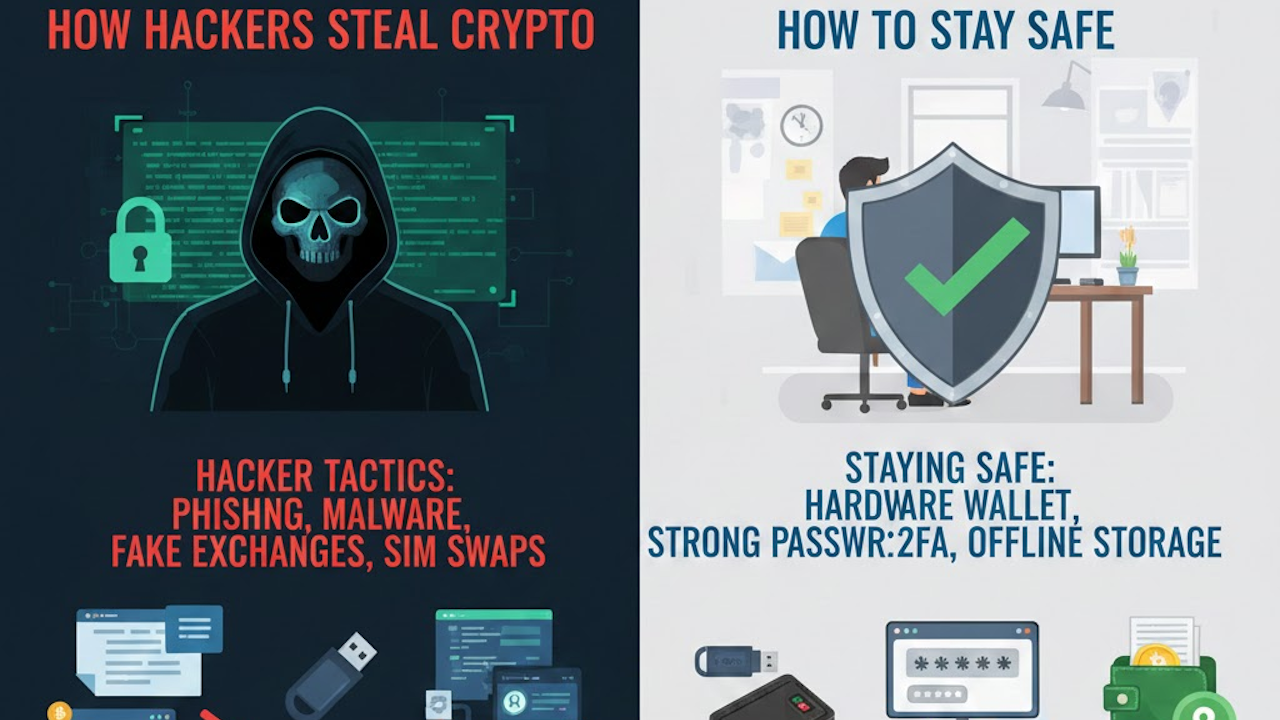
Cryptocurrency has transformed the financial landscape, offering decentralized control over assets and the potential for significant gains. However, this innovation comes with substantial risks. In 2025, hackers stole more than $3.4 billion in cryptocurrency, marking a record high driven by sophisticated attacks and large-scale breaches. This figure represents a concentration of thefts in fewer but more impactful incidents, with North Korean-linked groups alone accounting for $2.02 billion. The appeal of crypto to criminals lies in its pseudonymous nature, irreversible transactions, and the high value of digital assets. Once stolen, funds are often laundered through mixers or moved across borders, making recovery nearly impossible.
Hackers employ a variety of tactics to target individuals, exchanges, and protocols. These range from digital exploits to real-world coercion. Understanding these methods at a high level is crucial for users to recognize threats. Equally important are the preventive measures that can safeguard holdings. This article explores the primary ways hackers steal crypto and provides practical, high-level strategies to stay protected. By adopting a proactive mindset, users can significantly reduce their exposure in an ecosystem where threats evolve rapidly.
Common Methods Hackers Use to Steal Crypto
Hackers have refined their approaches over the years, blending traditional cybercrime techniques with crypto-specific vulnerabilities. Below, we outline the most prevalent methods, drawing from recent incidents and trends observed in 2025 and early 2026.
Phishing and Social Engineering Attacks
One of the oldest tricks in the hacker’s playbook involves deceiving users into revealing sensitive information. Phishing attacks often masquerade as legitimate communications from exchanges or wallet providers. For instance, attackers send emails or messages urging users to click links that lead to fake websites designed to capture login credentials or private keys. In 2025, a major exchange fell victim to such an attack when a team member’s device was compromised, resulting in the theft of millions.
Social engineering extends beyond digital lures. SIM swapping, where hackers convince telecom providers to transfer a victim’s phone number to a new device, allows them to intercept two-factor authentication codes. This method has been used to bypass security on accounts holding large crypto balances. Additionally, impersonation scams involve fraudsters posing as support staff or influencers to trick users into sharing seed phrases, the 12-24 word codes that grant full access to wallets.
Malware and Infostealers
Malicious software remains a cornerstone of crypto theft. Infostealers like RedLine or Agent Tesla infiltrate devices to capture keystrokes, screenshots, or clipboard data. Clipboard hijackers, for example, monitor when a user copies a wallet address and silently replace it with the attacker’s own, redirecting transfers. These tools often spread through infected downloads, fake apps, or compromised browser extensions targeting popular wallets like MetaMask or Phantom.
In 2025, hackers rigged at least 18 popular JavaScript code packages to steal crypto, affecting developers and users who unwittingly incorporated the tainted code. Malware can also exploit cloud storage breaches, where poorly secured backups of private keys are accessed. Once installed, these programs run silently, harvesting data over time and transmitting it to remote servers controlled by criminals.
Exchange and Protocol Hacks
Centralized exchanges and decentralized finance (DeFi) protocols are prime targets due to the vast amounts of crypto they hold. Hackers exploit vulnerabilities such as private key leaks in hot wallets, which are online storage systems connected to the internet for quick access. In one of the largest incidents of 2025, a single exchange lost hundreds of millions due to such a leak.
DeFi hacks often involve smart contract flaws, like reentrancy vulnerabilities where attackers manipulate transaction orders to drain funds repeatedly before the system updates balances. State-sponsored groups, particularly from North Korea, have targeted these platforms with advanced persistent threats, stealing billions through coordinated exploits. Cryptojacking, another variant, hijacks computing power to mine crypto without the owner’s knowledge, though it steals resources rather than direct funds.
Physical and Coercive Tactics
Not all thefts are purely digital. “Wrench attacks” involve real-world violence, such as home invasions or kidnappings, to force victims to hand over access to their wallets. These have increased as hackers target high-net-worth individuals identified through social media or data leaks. In 2025, reports highlighted a rise in such incidents, blending cyber reconnaissance with physical coercion.
Scams also play a role, with fraudsters using AI to create convincing deepfakes or automated calls to extract information. Pig butchering schemes, where victims are groomed over time into investing in fake platforms, resulted in billions lost globally.
Supply Chain and Ecosystem Vulnerabilities
Attacks on the broader ecosystem include compromising code repositories or third-party services. For example, hackers have abused platforms like Discord to deliver malware that alters clipboard contents on paste. In gaming and NFT spaces, exploits in blockchain projects led to thefts of millions in tokens. These methods highlight how interconnected the crypto world is, where a vulnerability in one area can cascade across others.
The Impact of These Thefts
The consequences extend beyond financial loss. Victims face emotional distress, legal hurdles in recovery, and eroded trust in the ecosystem. In 2025, individual investors lost $713 million to targeted scams, often through a mix of digital and traditional tricks. Regulators in regions like the UK have noted the lack of protections for crypto holders, amplifying risks. As crypto adoption grows, so does the incentive for hackers, making education and vigilance essential.
How to Stay Safe: Best Practices for Protecting Your Crypto
While no system is foolproof, combining secure habits with robust tools can mitigate most threats. The focus should be on prevention, assuming that attacks are inevitable and designing defenses accordingly. Here are comprehensive strategies based on expert recommendations from 2025 and 2026.
Choose Secure Storage Solutions
The foundation of crypto safety is proper storage. Hardware wallets, such as Ledger or Trezor, keep private keys offline, protecting them from online threats. These devices require physical confirmation for transactions, adding a layer against remote hacks. For long-term holdings, use cold storage, where assets are kept disconnected from the internet.
Avoid keeping large amounts on exchanges unless actively trading, as they are centralized targets. Instead, use multiple wallets for different purposes: one for savings, another for daily transactions or airdrops, and separate ones for high-risk activities like testing new protocols. This compartmentalization limits damage if one wallet is compromised.
Implement Strong Authentication and Hygiene
Enable two-factor authentication (2FA) on all accounts, preferring app-based methods over SMS to avoid SIM swapping. Use unique, complex passwords for each service and never reuse them. Regularly update wallet software, operating systems, and firmware to patch known vulnerabilities.
Practice digital hygiene: Avoid clicking suspicious links, downloading unverified files, or connecting to public Wi-Fi for crypto activities. Scan devices with reputable antivirus software to detect malware. Never store seed phrases digitally; write them on paper or metal backups and secure them offline.
Be Vigilant Against Scams and Social Threats
Always verify transaction details, especially addresses, before confirming. Revoke unnecessary approvals on DeFi platforms using tools that scan for lingering permissions. Limit sharing financial details online to avoid attracting physical threats.
For job offers or collaborations, scrutinize links and files. Educate yourself on common scams, like fake airdrops or investment schemes, and use blockchain explorers to check transaction histories.
Leverage Advanced Tools and Monitoring
Consider multi-signature wallets, which require multiple approvals for transactions, adding redundancy. Monitor accounts for unusual activity and set up alerts. For enterprises or high-value holders, employ comprehensive security audits and incident response plans.
In DeFi, follow patterns like checks-effects-interactions to avoid vulnerabilities, though this is more for developers. Tools like reentrancy guards can help, but always audit code before deployment.
Build a Culture of Security
Security is ongoing. Develop habits like labeling wallets clearly and separating testnet interactions from mainnet funds. Stay informed through reputable sources and communities. Remember, most hacks stem from granted permissions or overlooked details.
Conclusion
Crypto theft is a persistent challenge, with hackers adapting to new technologies like AI while exploiting timeless human errors. By understanding methods like phishing, malware, and exchange hacks, users can better anticipate risks. More importantly, implementing safeguards such as hardware wallets, strong authentication, and vigilant habits can protect assets effectively.
In 2026, as the ecosystem matures, expect regulations to enhance protections, but personal responsibility remains key. Treat crypto like any valuable asset: secure it diligently, and the rewards can outweigh the risks. Stay informed, stay cautious, and secure your future in this dynamic space.