

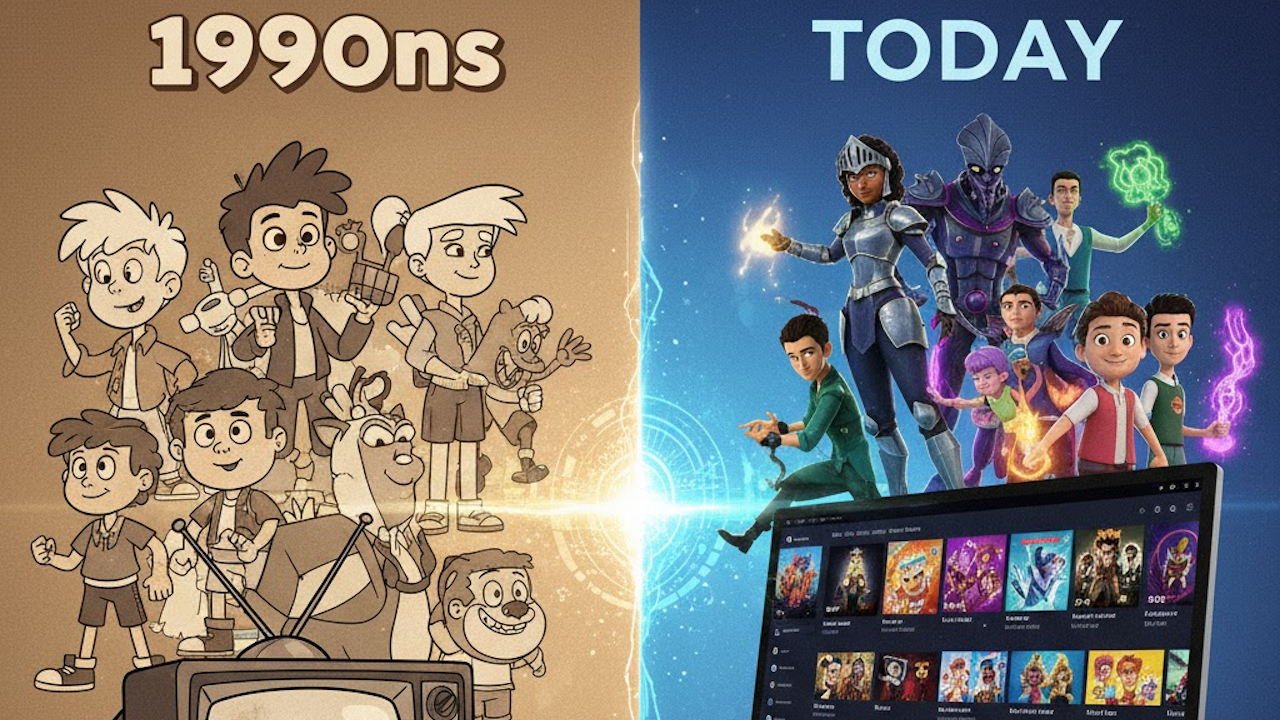
The 1990s stand out as a transformative decade for animation. Often called a renaissance period, it blended creativity, bold storytelling, and emerging technology. Saturday morning cartoons dominated children’s viewing, while prime-time shows attracted broader audiences. Iconic series like The Simpsons, Rugrats, Hey Arnold!, Dexter’s Laboratory, The Powerpuff Girls, and films such as The Lion King and Toy Story defined the era. Since then, cartoons have evolved dramatically in technology, style, themes, production methods, and distribution. These changes reflect shifts in audience expectations, industry economics, and cultural priorities.
Animation Technology: From Hand-Drawn to Digital Dominance
In the 1990s, traditional hand-drawn 2D animation remained the standard for many productions. Artists sketched frames on paper or cels, with studios like Disney refining processes through tools such as the Computer Animation Production System (CAPS). This hybrid approach sped up inking and coloring while preserving the fluid, expressive quality of hand-drawn work. Shows on networks like Nickelodeon and Cartoon Network often featured vibrant, exaggerated movements and detailed backgrounds that felt artisanal.
The late 1990s and early 2000s marked a pivotal shift toward computer-generated imagery (CGI) and 3D animation. Pixar’s Toy Story (1995) proved fully CGI features could succeed commercially and artistically. DreamWorks followed with Shrek (2001), which popularized a more irreverent, pop-culture-infused style. By the 2010s, 3D became the default for big-budget theatrical releases. Hand-drawn features grew rare; Disney’s last traditional 2D princess film was The Princess and the Frog (2009), and its final hand-drawn feature was Winnie the Pooh (2011).
Television animation adapted too. Digital ink and paint systems replaced physical cels, allowing faster revisions and consistent coloring. Flash animation and later software like Toon Boom enabled lower-cost production for TV series. Today, many shows blend 2D and 3D elements or use rigged digital puppets for efficiency. This shift reduced costs and timelines but sometimes led to critiques of a more uniform, less organic look compared to the varied 1990s styles.
Motion capture and advanced rendering further transformed the field. Techniques once experimental became standard, enabling realistic physics, complex environments, and seamless integration with live-action. Streaming demands accelerated adoption of these tools, as platforms required high volumes of content produced quickly.
Stylistic Evolution: Exaggeration to Simplification and Diversity
Nineties cartoons often embraced bold, exaggerated designs. Characters had squash-and-stretch physics, expressive faces, and distinctive silhouettes. Backgrounds were painterly or cartoonishly vibrant. Series like Ren & Stimpy or Rocko’s Modern Life pushed surreal, grotesque humor with fluid, rubbery animation. Even more mainstream fare featured angular lines in superhero shows or clean, appealing Disney aesthetics in features.
Modern cartoons frequently favor simplified, stylized designs. Lineless characters, flat colors, and minimalist shapes appear in shows influenced by Samurai Jack or Foster’s Home for Imaginary Friends. Influences from UPA shorts and international styles led to more abstract or graphic approaches. 3D shows often prioritize realistic textures and lighting, creating a polished but sometimes less whimsical feel.
Diversity in representation has increased noticeably. The 1990s made strides with shows featuring strong female leads or multicultural elements, but today’s cartoons more routinely depict varied body types, ethnicities, gender identities, and family structures. This reflects broader societal conversations and efforts to appeal to global audiences. Animation styles also draw from worldwide influences, with anime aesthetics blending into Western productions and vice versa.
Pacing and visual language changed too. Nineties episodes often had self-contained stories with room for gags and slower builds. Contemporary cartoons, shaped by shorter attention spans and binge-watching, tend toward faster pacing, rapid cuts, and layered references suited to rewatches and memes.
Themes and Storytelling: From Saturday Mornings to Complex Narratives
Nineties animation balanced entertainment with subtle lessons. Kids’ shows emphasized friendship, adventure, and problem-solving. Prime-time hits like The Simpsons and later South Park introduced sharp satire for adults. Networks expanded beyond toy commercials, allowing more creative freedom, though merchandising ties remained strong.
Today, storytelling has grown more serialized and emotionally layered. Shows like Adventure Time, Steven Universe, Gravity Falls, and The Owl House weave ongoing arcs, character development, and explorations of identity, mental health, and complex relationships. Themes once considered too mature for children’s programming now appear regularly. Adult animation thrives on platforms like Netflix and Hulu, with sophisticated series that rival live-action dramas.
Humor shifted from slapstick and absurdity to irony, meta-commentary, and internet-inspired wit. Juvenile elements persist in some family fare, but many productions aim for emotional depth and inclusivity. Global events and social issues influence plots more directly, fostering empathy and awareness.
Production, Distribution, and the Business of Cartoons
The 1990s relied on broadcast networks and syndication. Saturday mornings and after-school slots dictated content, with strict broadcast standards. Cable channels like Cartoon Network and Nickelodeon fostered dedicated animation cultures.
Streaming revolutionized access and creation. Platforms like Netflix, Disney+, and Max commission vast libraries of original content, enabling international co-productions and niche audiences. Viewers choose what to watch on demand, leading to more diverse offerings. However, this boom brought challenges: aggressive production schedules, cancellations for tax reasons, and content removals have created instability for creators.
Globalization expanded markets. Anime’s influence grew through streaming, while Western studios collaborate across borders. Independent animators use tools like Blender or web platforms to reach audiences directly, bypassing traditional gatekeepers.
Cultural Impact and Audience Engagement
Nineties cartoons shaped a generation’s nostalgia. Their imperfections and distinct voices fostered strong fan communities. Many adults today revisit them for comfort or cultural commentary.
Modern cartoons engage fans through social media, fan art, cosplay, and interactive experiences. Algorithms recommend content, while creators interact directly with audiences. This fosters deeper connections but can amplify controversies or pressure for representation. Merchandising and franchising remain powerful, with cartoons launching expansive universes across media.
Concerns persist about screen time, attention spans, and commercialization. Yet animation’s educational potential has expanded, with shows tackling STEM, emotional intelligence, and cultural literacy.
Looking Ahead
Cartoons have moved from limited broadcast slots to an always-available, multifaceted medium. Technology enables unprecedented visuals, while storytelling reflects a more interconnected, self-aware world. Challenges like industry volatility and homogenization of styles remain, but opportunities for creativity abound.
The core appeal endures: bringing imagination to life through moving drawings or models. From the hand-crafted charm of the 1990s to today’s digital frontiers, animation continues evolving while captivating audiences of all ages. Whether through nostalgic revivals or bold new visions, cartoons remain a vital part of cultural storytelling.