

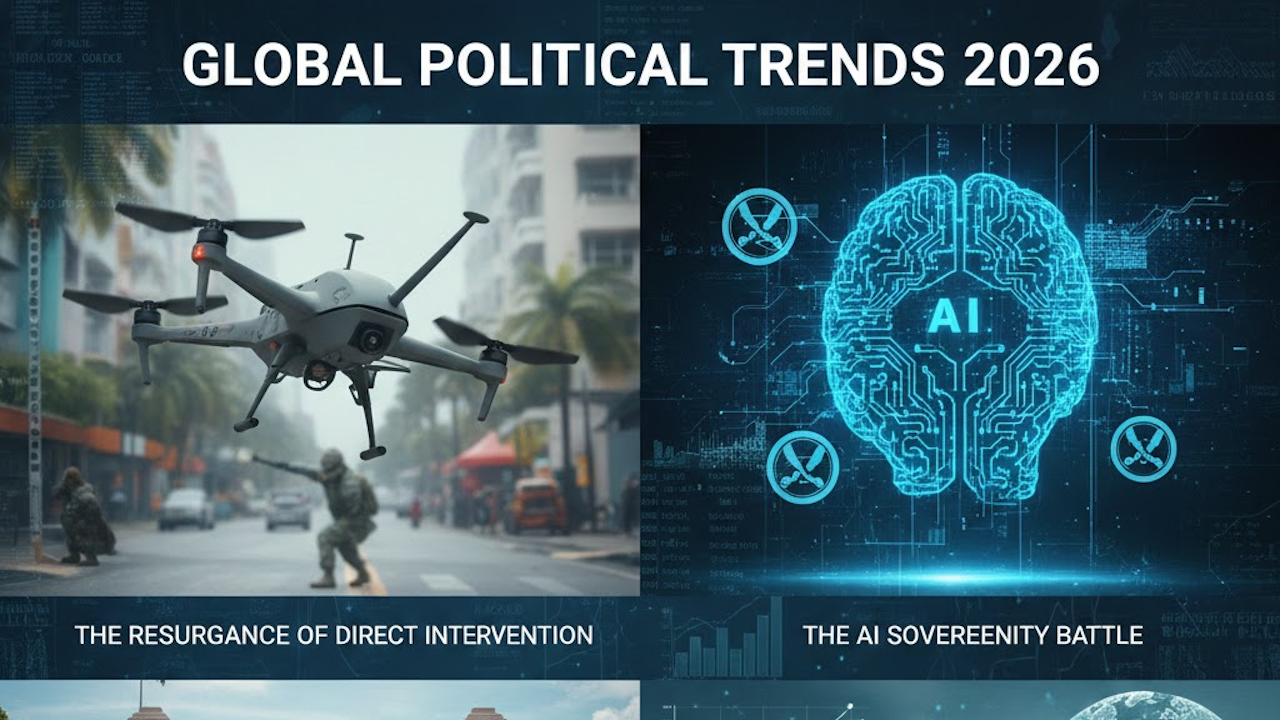
As we move through January 2026, the digital landscape is dominated by a rapid shift in global power dynamics and the rise of disruptive technologies. From the streets of Tehran to the halls of the World Economic Forum in Davos, political discourse is being reshaped by a new era of interventionism and economic nationalism.
The Resurgence of Direct Intervention
The most explosive topic trending across social media and news feeds this month is the sudden shift in United States foreign policy toward the Western Hemisphere. The capture of Venezuelan leader Nicolás Maduro by U.S. forces in early January has ignited a fierce global debate over sovereignty versus international security.
Supporters argue that this “muscular interventionism” is necessary to dismantle criminal regimes and secure regional energy resources. Conversely, critics and humanitarian organizations warn that such actions erode decades of international law. This event has sparked a “Third Nuclear Era” conversation online, as nations like Russia and China view these moves as a signals of a deteriorating global order where traditional borders no longer offer protection.
The AI Sovereignty Battle
Artificial Intelligence has moved from a Silicon Valley talking point to a core pillar of national security. Trending discussions are currently centered on “AI Poisoning” and the use of synthetic media in state level propaganda.
With the U.S. recently issuing a sweeping executive order to establish a national AI policy framework, a tension has emerged between federal control and state rights. Online policy forums are buzzing with the implications of this order, which seeks to unify AI regulation to compete with China’s surging industrial capacity. Meanwhile, the public is increasingly concerned about “AI Slop” low quality, AI generated content that is being used to memeify political events and distract from real world crises.
Green Protectionism and Trade Wars
The intersection of climate policy and trade is another hotbed of online activity. Tensions between the EU and China are reaching a boiling point over Chinese industrial overcapacity. While electric vehicles (EVs) were the initial flashpoint, the digital discourse has expanded to include:
- Wind turbine components
- Solar panel manufacturing
- Supply chains for critical minerals like lithium and cobalt
Canada’s recent decision to break with the U.S. on certain China tariffs has created a rift in North American trade relations, leading to trending debates about the end of the traditional “rules based” international order.
The Rise of “Safety Politics” on Campus
Domestically, a trend known as “Safety Politics” is dominating educational and social circles. This movement involves parents, donors, and legislators exerting more influence over campus security and curriculum decisions.
Fueled by social media communities, this trend has turned university campuses into symbolic battlegrounds for broader cultural issues, including:
- Immigration and Border Policy: Protests surrounding ICE and detention centers.
- Gender Identity: Ongoing debates regarding school policies and parental rights.
- Sustainability: Clashes over institutional investments in fossil fuels.
Looking Ahead
As world leaders gather in Davos for the World Economic Forum, the primary question being asked online is whether 2026 will be the year of “Uneasy Peaces” or the beginning of a broader fragmentation. With major elections scheduled in Portugal, Uganda, and Thailand later this year, the digital political sphere remains in a state of high alert.