

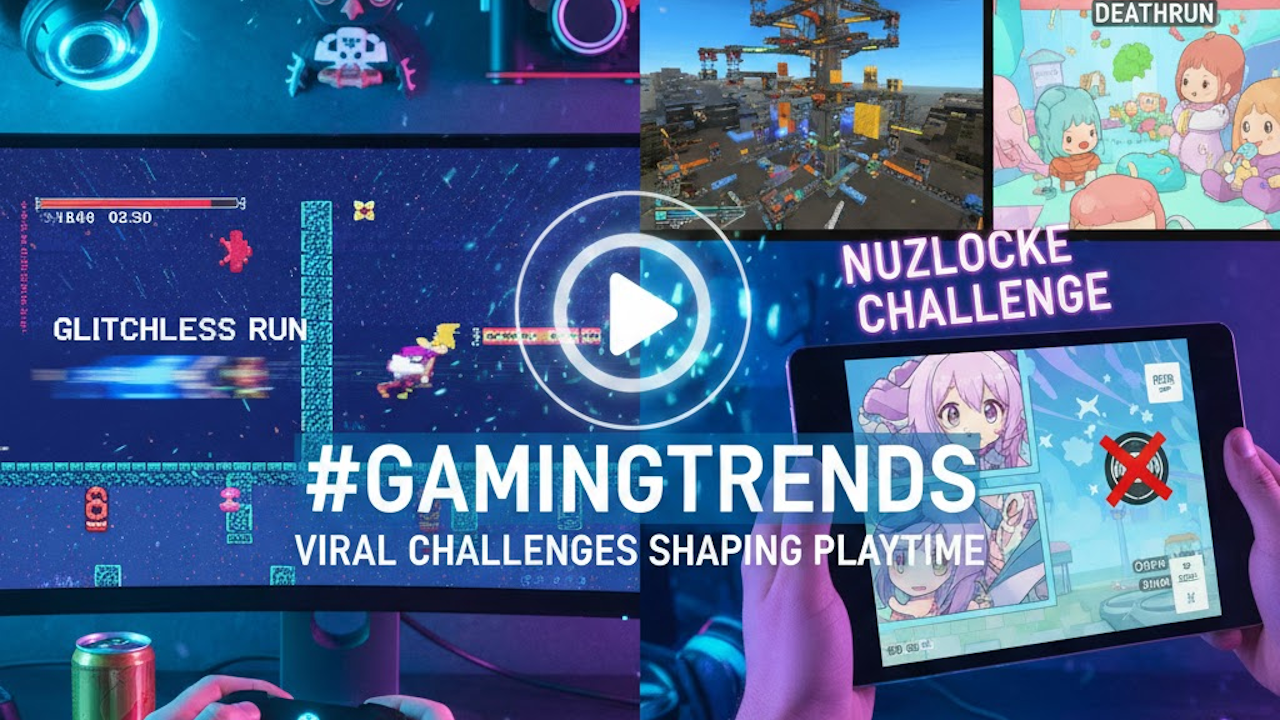
In the ever-evolving landscape of digital entertainment, the way we play has shifted from a solitary activity into a global, participatory spectacle. While big-budget releases often grab the headlines, the true heartbeat of modern gaming is found in the viral challenges that spread across social media platforms like TikTok, YouTube, and Discord. These community-driven trends do more than just entertain; they redefine game mechanics, breathe new life into classic titles, and forge deep social connections across continents.
The Social Media Catalyst
The rise of gaming challenges is inextricably linked to the dominance of short-form video content. In 2025, TikTok has solidified its role as the primary engine for game discovery, with gaming memes and challenges spreading 40% faster than on any other platform. When a creator uploads a video of themselves attempting a difficult feat, it sets off a chain reaction. This “copycat” culture encourages millions of players to download the same game just to see if they can beat the same challenge.
This phenomenon has birthed a new era of “participation play.” Gamers are no longer content with just reaching the end credits; they want to conquer self-imposed hurdles that prove their skill or creativity to an online audience.
From Speedrunning to Specialized Constraints
Viral challenges often start with a simple question: “What if I played this game differently?” This mindset has led to some of the most enduring trends in the industry.
The Evolution of Speedrunning
Speedrunning, the act of completing a game as fast as possible, was once a niche hobby for technical experts. Today, it is a mainstream entertainment pillar. Platforms like Twitch host marathons where players raise millions for charity while performing frame-perfect glitches. In 2025, “glitchless” and “blindfolded” runs have become particularly viral, as they emphasize raw skill and memory over technical exploits.
Self-Imposed Hardcore Modes
Perhaps the most famous example of a viral constraint is the Nuzlocke Challenge in Pokémon. This player-created rule set mandates that if a creature faints, it is considered “dead” and must be released. Additionally, players can only catch the first creature they encounter in each area. These rules transform a relatively easy children’s game into a high-stakes emotional thriller.
Similar “hardcore” trends have surfaced in games like Elden Ring or Minecraft, where players attempt “No-Hit” runs or “One-Chunk” survival challenges. These trends serve a dual purpose: they provide veteran players with a reason to return to familiar worlds, and they create high-drama content that is perfect for social media clips.
The Rise of “Hybrid-Casual” and UGC
The industry has also seen a shift in game design to accommodate these viral moments. Developers are increasingly leaning into User-Generated Content (UGC) and Hybrid-Casual models.
- Roblox and Minecraft: These platforms are no longer just games but ecosystems where players build their own challenges. A viral “Obby” (obstacle course) on Roblox can attract millions of players in a single weekend.
- Fortnite Creative: Epic Games has successfully turned its battle royale into a creative suite, where viral “Deathruns” or “Hide and Seek” maps often see more playtime than the core shooting mode.
- Engagement Metrics: Research shows that 90% of players report higher immersion when games provide challenges proportional to their skill, often facilitated by “Dynamic Difficulty” or community mods.
| Trend Type | Example | Impact |
| Skill-Based | No-Hit Boss Runs | Highlights mechanical mastery and patience. |
| Constraint-Based | Nuzlocke Challenge | Increases emotional stakes and replayability. |
| Social-Based | “Among Us” Roles | Focuses on psychological play and communication. |
| Creativity-Based | Minecraft Build-Offs | Encourages artistic expression within game engines. |
Impact on Well-being and Social Connection
While the competitive nature of viral challenges can be intense, they have also fostered a massive shift toward gaming as a “social third space.” Over 70% of players today claim to have met friends through gaming communities. These challenges provide a common language, a shared goal that transcends borders.
However, the “always-on” nature of viral trends has also raised concerns about digital well-being. The “Fear Of Missing Out” (FOMO) can drive players to spend excessive hours chasing the latest leaderboard rank or trying to replicate a viral clip. In response, 2025 has seen a rise in “cozy” gaming challenges, such as “Kindness Streaks” in games like Kind Words, where the goal is to support others rather than outplay them.
The Future of Play
As we look toward 2026, the integration of AI and Mixed Reality (MR) promises to take viral challenges even further. We are already seeing “Location-Based” challenges where players turn their real-world cities into game boards. The line between the digital world and the physical one is blurring, but the core motivation remains the same: the desire to test ourselves, share our victories, and connect with a global community.