

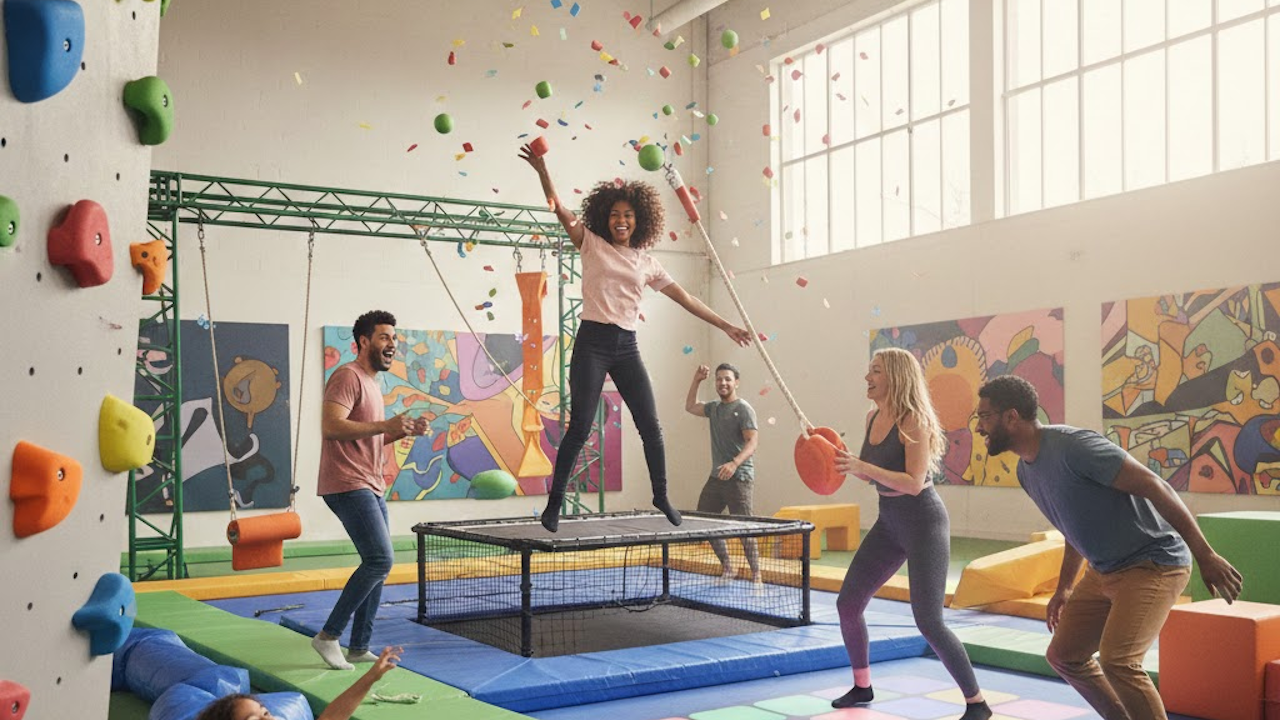
Most people approach exercise the same way they approach cleaning the house or filing taxes. It is something that must be done, preferably as quickly and efficiently as possible, so life can return to the enjoyable parts. The result is often a cycle of short-lived motivation followed by quiet abandonment. Yet there is another way to move the body, one that treats physical activity less like an obligation and more like the spontaneous games of childhood. When workouts feel like play, consistency becomes easier, stress drops, and the body still receives the strength, endurance, and mobility benefits it needs.
Play is not the opposite of seriousness. It is a different mode of seriousness, one driven by curiosity, laughter, and social connection rather than external targets. Children do not track heart-rate zones when they chase each other across a playground. They simply run until they are breathless, then invent a new rule and start again. Adults can reclaim that spirit without pretending to be eight years old. The key is choosing activities that contain built-in variety, social interaction, or imaginative elements so that the mind stays engaged while the body works.
One of the simplest places to begin is with games that nearly everyone already knows. Tag, in its many variations, remains one of the most effective full-body workouts available. Sprinting, changing direction, sudden stops, and bursts of acceleration challenge the cardiovascular system and the muscles of the legs and core far more thoroughly than a steady jog on a treadmill. Add a soft foam ball and the game becomes freeze tag or capture the flag. These sessions rarely feel like training because the focus stays on the other players rather than on personal performance metrics. A group of friends meeting once a week for an hour of park games can accumulate more high-intensity intervals than many structured interval programs, yet leave the park laughing instead of checking their watches.
Dance offers another direct route into playful movement. Zumba, hip-hop classes, swing, salsa, or simply turning on favorite music in the living room all demand coordination, rhythm, and continuous motion. Unlike treadmill running, dance rarely produces the same mental fatigue because the brain is occupied with steps, timing, and expression. Many people discover that forty-five minutes of energetic dancing elevates the heart rate into the same ranges as moderate cardio while also improving balance and joint mobility. Group dance classes add a social layer that further distracts from the sensation of effort. Even solo dancing at home can feel playful when the only rule is to keep moving until the playlist ends.
Team sports adapted for casual participation work in similar ways. Recreational basketball, pickup soccer, ultimate frisbee, or volleyball require constant decision-making, spatial awareness, and intermittent high effort. The competitive element, when kept friendly, supplies motivation without the pressure of formal leagues. Many cities now offer adult leagues that emphasize enjoyment over rankings. Players who show up primarily to socialize still leave with improved cardiovascular fitness, stronger legs, and better coordination. The playfulness comes from the shared goal of scoring or defending rather than from counting repetitions.
Outdoor adventure activities expand the idea of play beyond structured games. Hiking on varied terrain, scrambling over rocks, or following a trail that includes stream crossings and fallen logs engages the body in unpredictable ways that flat gym floors cannot match. The mind stays occupied with route-finding and scenery, so the physical effort feels secondary. Geocaching turns a walk into a treasure hunt. Disc golf combines walking with precision throwing. Even something as simple as exploring a new neighborhood on foot or bicycle can satisfy the same exploratory urge that once sent children into woods and vacant lots. These activities build endurance and leg strength while delivering fresh air and changing views that keep boredom at bay.
Animal-inspired movement practices offer a quieter form of play that still feels inventive. Crawling like a bear, hopping like a frog, or moving sideways like a crab challenge the body through positions rarely used in ordinary exercise. These movements improve shoulder stability, hip mobility, and core control while feeling more like improvisation than formal training. Many people find that a short session of animal locomotion at the start of a day leaves them more awake and loose than a conventional warm-up. Children do this instinctively; adults can reclaim it deliberately.
Martial arts and combat sports that emphasize playfulness rather than pure competition also belong on the list. Capoeira blends martial technique with dance and music, turning sparring into a continuous conversation of movement. Brazilian jiu-jitsu, when practiced with a focus on exploration rather than domination, becomes a physical puzzle that absorbs attention completely. Even light sparring with foam weapons or soft sticks can produce genuine cardiovascular work and coordination demands while remaining lighthearted. The playful framing reduces the intimidation that sometimes surrounds combat training and allows participants to stay longer in the learning zone.
Video games and technology have opened newer avenues. Dance games, rhythm games, and virtual-reality experiences that require physical movement can turn a living room into an interactive arena. Players who once sat for hours now find themselves stepping, ducking, and swinging with surprising intensity. Some of these systems track calories and movement patterns, yet the primary experience remains entertainment. The same principle applies to obstacle-course races or urban adventure events that treat the city itself as a playground of walls, stairs, and open spaces.
The benefits of approaching exercise as play extend beyond enjoyment. Research consistently shows that people adhere longer to activities they find intrinsically rewarding. When the activity itself supplies the reward, external motivation becomes less necessary. Playful workouts also tend to reduce perceived exertion. The same heart rate that feels punishing on a stationary bike can feel manageable during a lively game of ultimate frisbee because attention is directed outward. Mental health gains appear as well. Laughter, social contact, and the sense of freedom associated with play lower stress hormones and elevate mood more reliably than solitary, goal-oriented sessions for many individuals.
Practical tips help translate the idea into routine. First, lower the barrier to entry. Choose activities that require minimal equipment and can happen near home or in familiar parks. Second, invite others. Play multiplies when shared; even one consistent partner can transform a solitary session into something anticipatory. Third, protect the spirit of play by resisting the urge to over-optimize. Tracking every metric can shift the focus back toward performance and away from enjoyment. Fourth, allow for variation. A week that includes one dance session, one outdoor game, and one exploratory walk will feel fresher than three identical gym visits. Fifth, give permission for imperfection. Missing a catch, forgetting a step, or falling during a crawl is part of the process, not a failure.
Parents have a particular advantage. Joining children in their games provides ready-made play while modeling healthy movement. Adults without children can still borrow the same activities. Many community centers and recreation departments now run adult versions of games once reserved for schoolyards. The only real requirement is a willingness to look a little silly for the sake of feeling better.
Over time, the distinction between workout and play begins to blur. The body grows stronger and more capable, yet the experience retains the lightness that first made movement appealing. Energy levels rise, sleep improves, and the habit becomes self-reinforcing. People who once viewed exercise as a necessary evil start looking forward to the next session because it feels like time well spent rather than time sacrificed.
The modern world supplies endless reasons to remain still. Screens, desks, and cars conspire to keep bodies inactive. Reclaiming play is one of the most effective counters available. It requires no special talent, no expensive membership, and no rigid schedule. It only asks for a temporary suspension of adult seriousness and a willingness to move for the sake of the movement itself. When that shift occurs, fitness stops being a chore and becomes one of the more reliable sources of daily pleasure. The heart, the lungs, the muscles, and the mind all benefit, but the real reward is the rediscovery that moving the body can still feel like freedom.