

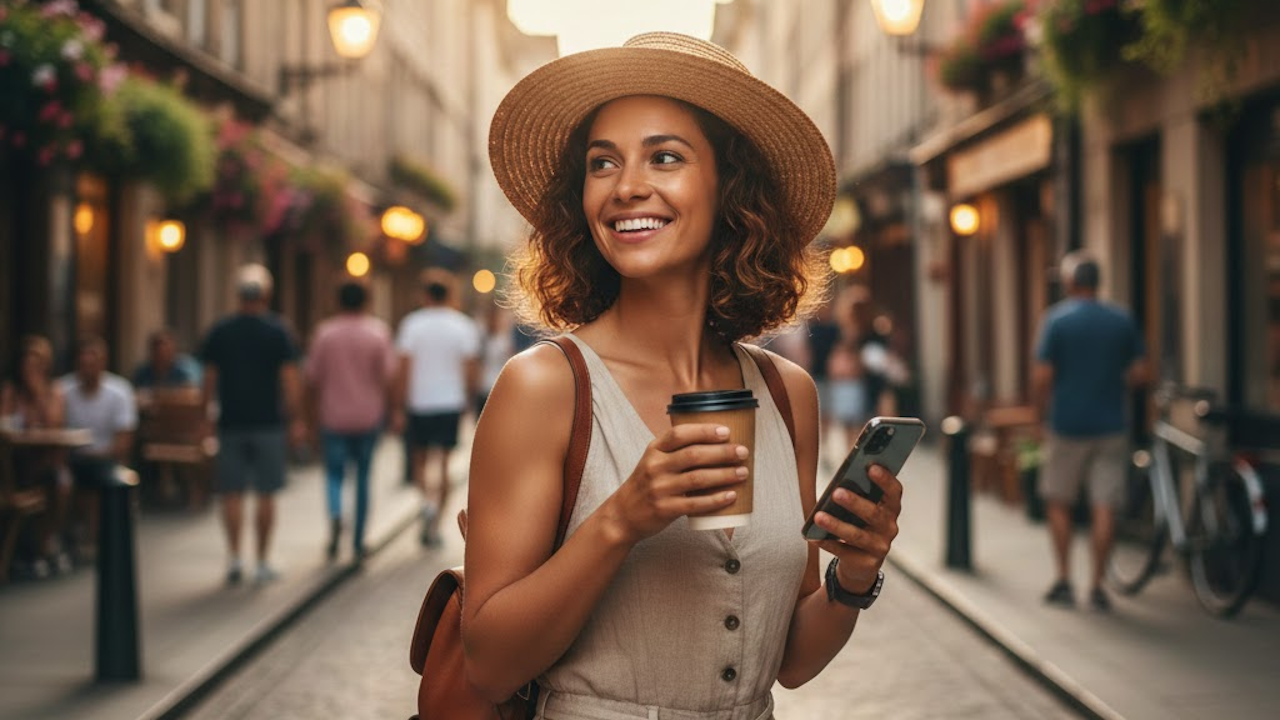
Solo travel has shifted from a niche choice to one of the most visible and rapidly growing patterns in modern tourism. What was once viewed as unusual, lonely or even risky is now celebrated across social media, booking platforms and travel magazines as an empowering and practical way to see the world. The rise is not accidental. It reflects deeper changes in how people work, form relationships, manage money and define personal freedom. Travelling alone has become the new trend because it answers a set of contemporary needs that group or couple travel often cannot.
The numbers tell part of the story. Booking sites report year-on-year increases in single-occupancy reservations. Hostels and boutique hotels design rooms and common spaces specifically for solo guests. Tour operators now offer “solo-friendly” departures with no single supplements. Younger travellers, particularly those in their twenties and thirties, list solo trips as a priority experience alongside career milestones. Older adults, especially women over fifty, form another fast-growing segment. The trend crosses age, gender and income brackets, yet the underlying drivers remain consistent.
Freedom sits at the centre of the appeal. When you travel alone you decide the pace, the budget, the itinerary and the spontaneous detours. There is no negotiation over restaurant choices, wake-up times or how long to linger in a museum. A sudden decision to take a side trip to a coastal village or to stay an extra night in a city requires only one person’s agreement. This autonomy feels especially valuable in an era of constant digital coordination and shared calendars. Many people spend their working lives managing group decisions. A solo trip offers a rare stretch of pure self-direction.
Personal growth follows closely behind freedom. Facing unfamiliar transport systems, language barriers and daily problem-solving builds confidence in a concentrated way. Travellers frequently describe moments of quiet competence: navigating a foreign train station, ordering a meal in a language they barely speak, or simply sitting alone in a café without distraction. These small victories accumulate. The result is often a clearer sense of capability that carries over into ordinary life. Solo travel also creates space for reflection that group trips rarely allow. Without the constant conversation of companions, thoughts surface more freely. Journals fill, ideas rearrange themselves, and priorities sometimes shift.
Social life does not disappear when you travel alone. It simply changes form. Solo travellers often report richer interactions with locals and with other independent travellers. Without the protective bubble of a familiar group, people tend to strike up conversations more readily. Shared tables in hostels, walking tours, cooking classes and local events become natural meeting points. Many lasting friendships and even romantic relationships begin this way. The difference is that the connections feel chosen rather than obligatory. You can engage deeply for an evening and then move on without complication. For introverts this controlled social intensity can feel more sustainable than continuous group dynamics.
Technology has removed many of the practical barriers that once made solo travel intimidating. Real-time translation apps, offline maps, ride-hailing services and review platforms reduce uncertainty. Safety tools such as location sharing, emergency contacts and women-only accommodation options give additional reassurance. Booking platforms now filter for solo travellers, highlighting properties with single rooms, communal spaces and strong security ratings. The same digital infrastructure that keeps people connected to home also makes it easier to stay informed and protected while abroad. As a result, destinations once considered challenging for individuals have opened up.
Economic factors play a supporting role. While single occupancy can cost more in some hotels, overall spending is often lower. One person eats one meal, takes one transport seat and buys one ticket. Many solo travellers choose slower travel styles, longer stays in fewer places, or budget accommodation that doubles as a social hub. Digital nomad visas and remote-work policies further support the trend. People can combine extended travel with continued income, turning what used to be a short holiday into a multi-month chapter of life. The ability to work from different time zones removes the old constraint of limited annual leave.
Cultural attitudes have shifted as well. The idea that happiness requires constant companionship has weakened. Popular culture now regularly portrays independent travellers as interesting rather than odd. Films, books and online content celebrate the solitary journey as a legitimate path to self-knowledge. At the same time, social expectations around partnership and family formation have loosened in many societies. People marry later, live alone longer, and feel less pressure to synchronise every major experience with a partner or group of friends. Solo travel fits naturally into this broader pattern of individual sequencing.
Women have been particularly visible in the growth of the trend. Safety concerns once kept many women from travelling alone. Improved infrastructure, greater awareness and dedicated resources have changed the calculation. Female solo travellers now form a substantial market segment, and their stories circulate widely, encouraging others. Men, too, report benefits that differ from the traditional group adventure narrative. Without the need to perform competence or competitiveness for companions, some men find they can travel more contemplatively and form different kinds of connections.
The pandemic accelerated the shift. After periods of restricted movement and forced proximity, many people emerged with a stronger desire for self-directed experiences. Group travel still carries associations of crowded spaces and shared risk. Solo itineraries allow tighter control over exposure and schedule. Even as restrictions lifted, the preference for independence lingered. Travel companies noticed the change in demand and adjusted their offerings accordingly.
Challenges remain, of course. Loneliness can appear, especially in the first days of a trip. Practical difficulties arise when luggage is heavy or when illness strikes. Safety requires ongoing awareness. Yet these obstacles are now widely discussed rather than hidden. Online communities share strategies for managing them. Travellers learn to build structure into their days, to join occasional group activities, and to maintain light contact with home. The existence of these support networks makes the difficulties feel manageable rather than prohibitive.
Looking ahead, the trend shows little sign of slowing. Climate awareness may push more people toward slower, deeper travel that suits solo pacing. Advances in remote work will continue to blur the line between holiday and lifestyle. Destinations will keep adapting, offering more single rooms, better public transport information and experiences designed for individuals. The stigma that once attached to travelling alone has largely dissolved. In its place stands a quiet consensus that doing things by yourself is not a second-best option but a valid and often superior one.
Solo travel succeeds because it aligns with the realities of contemporary life. It offers control in an unpredictable world, growth without constant performance, and connection without obligation. It turns the journey into a personal project rather than a negotiated compromise. For growing numbers of people, that combination has become not just appealing but essential. The empty seat next to you on the plane is no longer a sign of absence. It is a deliberate choice, and increasingly the preferred one.