

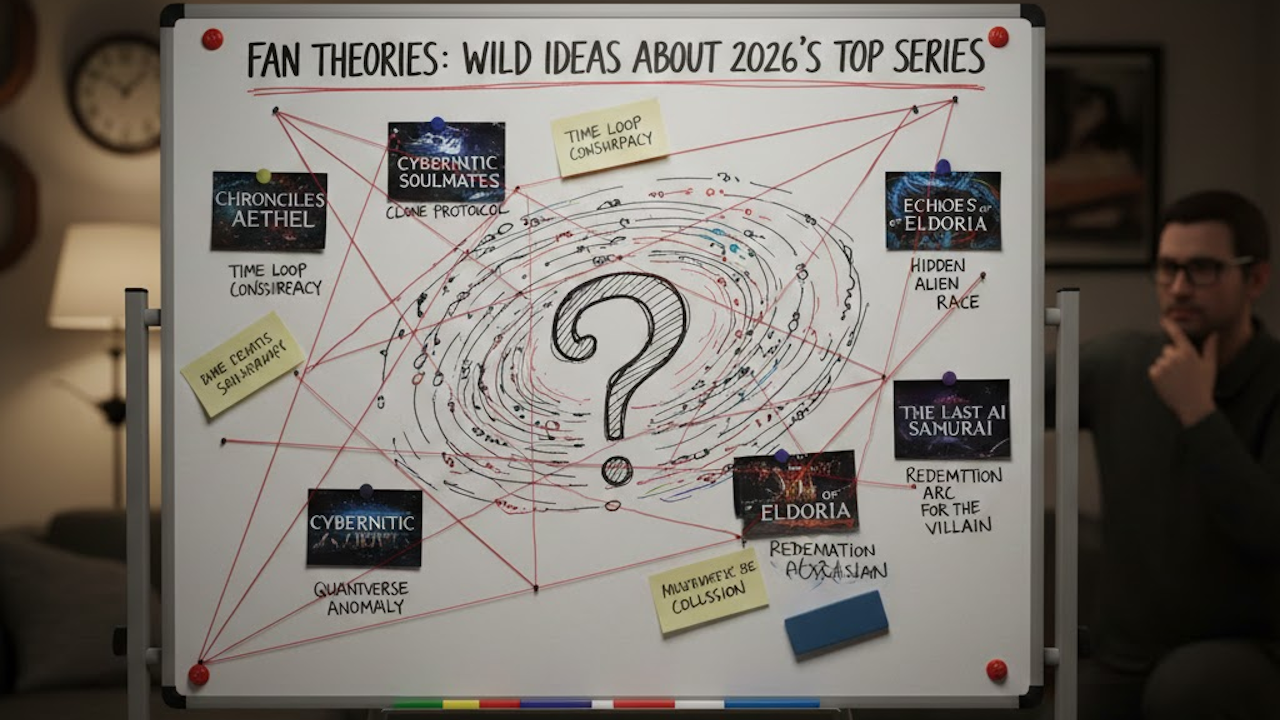
Television in 2026 has delivered a mix of returning favorites, bold new entries, and long-awaited finales that have sparked endless online speculation. Fans dissect every frame, Easter egg, and casting rumor on forums, social media, and Reddit threads, birthing theories that range from clever to completely unhinged. This article explores some of the wildest fan ideas circulating about the year’s standout series, from medical dramas and horror comedies to sci-fi epics and prestige limited runs. These speculations capture the passion and creativity of audiences deeply invested in their favorite worlds.
The Pitt: Endless Hospital Shifts Hide a Larger Conspiracy
Noah Wyle’s return to the medical genre in The Pitt has been a critical darling, with its intense, real-time emergency room storytelling earning high praise and strong Emmy buzz. Fans, however, see more than just gritty realism in the chaotic shifts.
One popular theory posits that the entire series takes place inside a massive government simulation designed to train doctors for a future pandemic or bioterror event. Proponents point to the unnaturally high volume of rare cases in a single Pittsburgh hospital, the recurring mysterious administrator figures who seem omniscient, and subtle visual glitches like inconsistent clock times or background patients who reappear with different injuries. “It’s like The Truman Show meets House,” one Reddit user argued, suggesting that Dr. Robby’s (Wyle) personal traumas are programmed tests to push the limits of empathy under pressure. Wild extensions claim that a season finale twist will reveal the “patients” as actors or AI constructs, forcing the staff to question their own realities.
Another fringe idea ties The Pitt to the Marvel Cinematic Universe through a background Easter egg: a patient chart mentioning “super soldier serum side effects.” While dismissed by many, it fuels crossover dreams where exhausted residents encounter low-key enhanced individuals during night shifts.
Widow’s Bay: The Cursed Town Is a Purgatory Loop
Apple TV+’s breakout horror-comedy Widow’s Bay, starring Matthew Rhys as the eccentric mayor of a haunted New England island, blends scares, laughs, and bureaucracy in a way that feels fresh. Its success has led to theories that the town itself is not just cursed but a literal purgatory or time loop.
Fans note how disasters reset in bizarre ways and how characters seem to forget major events between episodes. The wildest version suggests every resident died in a historic shipwreck (hence the name) and is reliving variations of their lives until they achieve collective redemption. Supporting “evidence” includes the mayor’s inexplicable plot armor, recurring ghostly ancestors who drop cryptic hints, and the fact that tourism efforts always fail spectacularly yet the town persists. Some speculate the series finale will break the loop by having the mayor sacrifice his position, allowing souls to move on, turning the comedy into a profound meditation on small-town regret.
A subset theory claims the show exists in the same universe as other Apple TV+ hits, with hidden crossovers via cursed artifacts linking to Silo‘s underground dystopia.
Beef: The Limited Series Anthology Connects Across Seasons
Beef‘s return as an anthology limited series, with Carey Mulligan and Oscar Isaac leading the latest installment, has viewers hunting for connective tissue between seemingly standalone stories.
The dominant theory is that all seasons form a multiverse of “road rage” incidents triggered by a single supernatural entity: a vengeful spirit born from an original 2023 incident. Fans cite recurring symbols like yellow cars, identical minor characters across seasons (played by the same actors in different roles), and escalating absurdity in interpersonal conflicts as proof of an overarching curse. One elaborate post maps dialogue parallels suggesting every protagonist is a reincarnation or alternate version of the same flawed soul learning (or failing) the same lesson about anger and forgiveness.
Wilder still: some believe the series is meta-commentary on Hollywood itself, with the “beef” representing industry feuds, and a hidden finale reveal that the entire narrative is an AI-generated script being pitched in real time.
Silo Season 3: The Outside World Is Already a New Silo
Apple TV+’s dystopian hit Silo continues to captivate with its layered mysteries of underground societies and forbidden knowledge. Season 3 has amplified theories about the true nature of the surface world.
A compelling idea holds that the “outside” is not a toxic wasteland but another, larger silo system designed by the same architects, with each “cleaning” ritual actually transporting people to different facilities. Fans point to inconsistencies in environmental footage, synchronized rebellions across silos, and Rebecca Ferguson’s Juliette Nichols encountering suspiciously familiar technology. The most out-there variant suggests the entire silo network is a generational starship in slow transit, and the rebellion will accidentally trigger an awakening that reveals humanity’s interstellar journey.
This ties into broader lore discussions, with some fans predicting crossovers or shared universe hints with other sci-fi series.
The Bear Season 5: Carmy’s Kitchen Is a Metaphor for Grief Therapy
The final season of FX/Hulu’s The Bear has been hailed as a high-stakes sendoff for the chaotic kitchen crew. Fans interpret it through a deeply psychological lens.
The leading theory frames the entire show, especially Season 5, as Carmy (Jeremy Allen White) processing grief in an elaborate mental construct. Supporters highlight how side characters represent aspects of his psyche: Richie as unchecked rage, Sydney as creative ambition, and the restaurant as a failing heart. “Time jumps” and recurring nightmares are seen as therapy breakthroughs, with the finale potentially revealing the kitchen closing as Carmy achieving closure. Extreme versions claim every kitchen disaster is a hallucinated metaphor, explaining the show’s rapid-fire editing and emotional intensity.
Foodies add layers, theorizing secret recipes contain clues to family secrets that unlock the “simulation” when prepared correctly.
Lucky and Ride or Die: Heist Universes Collide in a Shared Cinematic Timeline
New Apple TV+ and Prime Video entries Lucky (starring Anya Taylor-Joy as a con artist) and Ride or Die (Octavia Spencer and Hannah Waddingham as unlikely fugitives) have prompted crossover theories due to their thematic overlaps in crime and friendship.
Enthusiasts argue both shows inhabit the same universe, with Taylor-Joy’s character having orchestrated events in the background of Ride or Die. Evidence includes similar heist gadgets, overlapping cityscapes in establishing shots, and anonymous benefactors who might be the same shadowy organization. The wild speculation envisions a future team-up special where con artists and assassins collide, perhaps with Timothy Olyphant’s role linking the narratives as a mentor figure pulling strings across both.
Stranger Things Season 5: The Upside Down Is Eleven’s Imagination or a Parallel Government Experiment
As the long-running Netflix phenomenon wrapped (or neared its end), fan theories reached fever pitch. Many posit that the Upside Down is not an alternate dimension but a manifestation of Eleven’s (Millie Bobby Brown) powers or trauma, with every monster representing suppressed emotions.
Others connect it to real-world conspiracies, suggesting Hawkins is ground zero for CIA experiments that leaked into our world. The wildest claims involve time loops where Will Byers’ disappearance restarts the cycle, or that the final battle reveals the Duffers Brothers as in-universe creators manipulating events for entertainment.
Industry Season 4 and A Knight of the Seven Kingdoms: Finance Bros in Westeros?
HBO’s finance drama Industry and the Game of Thrones spin-off offer contrasting worlds but fuel shared-universe or thematic crossover jokes turned serious by fans. Some theorize Pierpoint traders could survive in Westeros due to their cutthroat skills, while others spot “dragon” metaphors in market crashes.
These ideas highlight how 2026’s lineup encourages bold, interconnected thinking among viewers.
Fan theories keep shows alive in cultural conversations long after episodes air. Whether any prove true remains to be seen, but the creativity behind them underscores television’s power to inspire. As new seasons drop and discussions rage, one thing is certain: audiences will keep dreaming up even wilder possibilities for whatever comes next.