

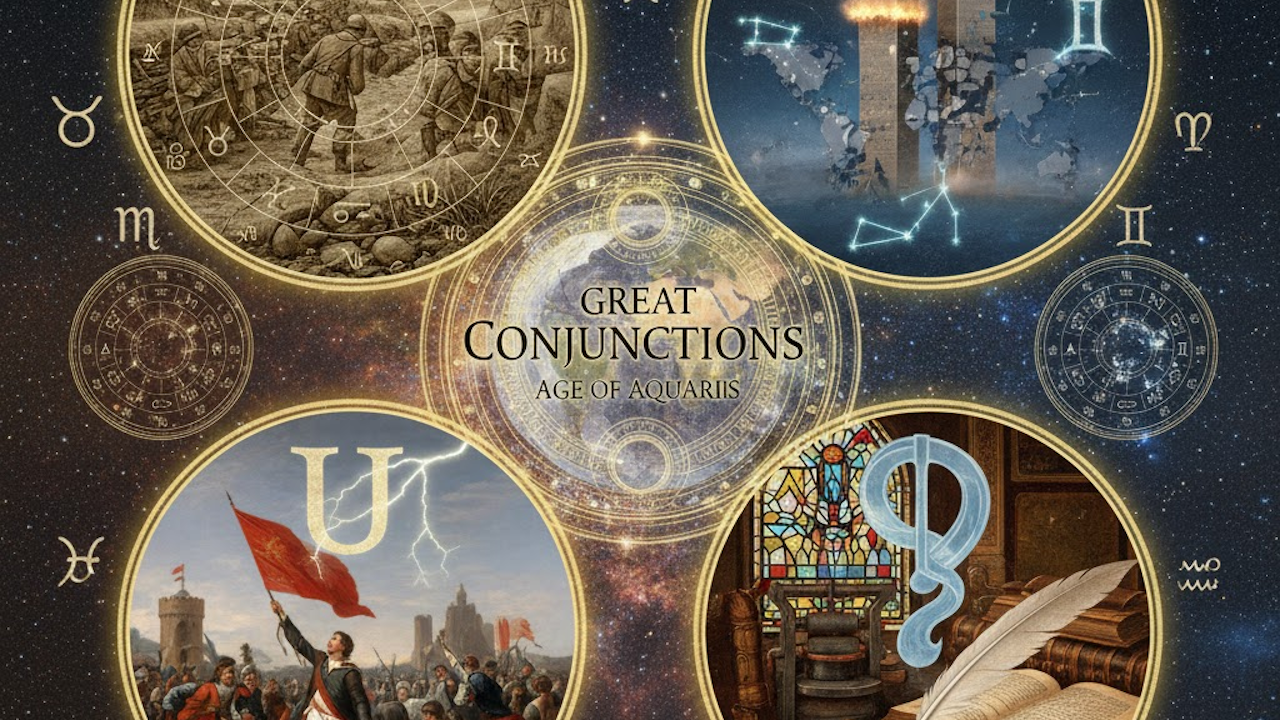
Astrology has long been intertwined with the interpretation of human history. Ancient civilizations, from the Babylonians and Egyptians to the Romans and beyond, viewed celestial movements as omens and influences on earthly affairs. Planets, signs, and aspects were believed to reflect broader patterns of destiny, transformation, conflict, and renewal. While modern science dismisses causal links, astrologers continue to draw parallels between planetary alignments and pivotal moments, seeing them as symbolic mirrors of collective energies. This article explores several famous historical events through an astrological lens, highlighting recurring themes such as revolutionary Uranus transits, transformative Pluto cycles, and tense Saturn-Pluto aspects.
The Assassination of Julius Caesar (March 15, 44 BCE)
One of the most dramatic events in ancient history, the assassination of Julius Caesar on the Ides of March marked the end of the Roman Republic and paved the way for the Empire. Caesar, a military genius and dictator, was stabbed to death by a group of senators, including his ally Brutus, in the Curia of Pompey.
Astrologically, this event aligns with Roman reliance on omens and augurs. Historical accounts describe warnings, including a soothsayer’s prophecy and ill omens reported by Caesar’s wife Calpurnia. In astrological terms, the period featured significant tensions. Caesar’s own chart (born around July 100 BCE) shows strong Cancer and Aries influences, emphasizing leadership and impulsivity. Transiting planets at the time of his death likely involved challenging aspects to key points, symbolizing betrayal and the clash between personal power and collective resistance.
Romans practiced astrology extensively, with leaders consulting charts for state decisions. The event underscores themes of hubris and the turning of fate, often linked to Saturnian restrictions or Martian aggression in traditional interpretations. It exemplified how celestial signs were seen as divine warnings ignored at peril.
The Discovery of America by Christopher Columbus (October 12, 1492)
Christopher Columbus’s landing in the Bahamas opened the Age of Exploration and forever altered global history, leading to European colonization of the Americas. Motivated by a desire to reach Asia by sailing west, Columbus’s voyage was influenced by cosmography, geometry, and astrological ideas prevalent in his era.
Astrologers note that Columbus was inspired by writings like those of Pierre d’Ailly, who discussed Jupiter-Saturn cycles and prophetic timelines tied to planetary conjunctions. Columbus viewed himself as part of a divine plan, with astrological motivations reinforcing his quest. His birth chart (October 20, 1451) features a Scorpio Sun, suggesting intensity, exploration, and transformation, paired with influences supporting long journeys.
The 1492 voyage occurred during a period of shifting outer planet influences, symbolizing discovery and expansion (Jupiterian themes). Eclipses and conjunctions were tracked closely in the Renaissance, and this event fits into broader cycles of exploration and cultural upheaval. It marked a profound shift in human perspective, from Old World isolation to global interconnectedness, echoing Pluto-like transformations of power and knowledge.
The Signing of the Declaration of Independence (July 4, 1776)
The American Revolution and the adoption of the Declaration of Independence on July 4, 1776, in Philadelphia birthed a new nation founded on ideals of liberty and self-governance. This event reshaped global politics and inspired future revolutions.
Astrological charts for this moment, such as the Sibly chart (around 5:10 PM or variations near 4:50-5:10 PM), place the Sun in Cancer, emphasizing home, protection, and emotional foundations for the nation. The Moon in Aquarius highlights innovation, humanitarianism, and rebellion against authority. Uranus, the planet of revolution and sudden change, opposes the Ascendant in many reconstructions, symbolizing the break from British rule.
This period coincided with Uranus in Gemini, fostering intellectual and communicative revolutions, and broader Pluto transits in Capricorn/Aquarius influencing societal structures. Astrologers like Ebenezer Sibly predicted transformative events, linking the chart to future prosperity and commerce. The event embodies Uranian freedom clashing with Saturnian tradition, setting a template for modern democratic movements.
The French Revolution (1789 onward)
The storming of the Bastille on July 14, 1789, ignited the French Revolution, which overthrew the monarchy, established a republic, and spread ideals of liberty, equality, and fraternity across Europe amid the Reign of Terror.
Astrologically, this era is strongly tied to Uranus in Leo, the planet of rebellion in the sign of dramatic self-expression and royalty. Pluto’s transit through Aquarius amplified collective upheaval and restructuring of power. These outer planet movements mirrored the radical dismantling of the ancien régime.
Jupiter-Uranus conjunctions around 1789 added explosive energy just before key events. Astrologers of the time, including Sibly, foresaw instability in France’s court leading to dethronement and revolution. The period reflects classic Uranian themes of innovation and disruption against Saturnian hierarchy, with Pluto driving profound societal rebirth through chaos. It influenced subsequent waves of change, including the Napoleonic era.
The Start of World War II (September 1, 1939)
Germany’s invasion of Poland on September 1, 1939, escalated into the deadliest conflict in history, reshaping alliances, technology, and geopolitics.
Astrological analyses point to Saturn square Pluto as a key indicator. Pluto had recently entered Leo, associated with powerful leaders and dramatic displays of will, while Saturn in Aries formed a tense square, symbolizing restrictive forces clashing with transformative destruction. This alignment echoed earlier war cycles.
Pluto in Cancer (earlier in the century) had fueled nationalist sentiments leading into the interwar period. The chart for the invasion shows Virgo influences, emphasizing precision and service turned toward conflict. Mars-Pluto signatures often appear in war charts, denoting intense power struggles. World War II exemplified the destructive and regenerative potentials of heavy planetary aspects, culminating in atomic explosions (Plutonian power) and postwar restructuring.
The September 11 Attacks (September 11, 2001)
The terrorist attacks on the World Trade Center and Pentagon profoundly impacted global security, politics, and culture, ushering in the War on Terror.
Astrologers highlight the Saturn-Pluto opposition (Saturn in Gemini, Pluto in Sagittarius) active around this time. This aspect represents confrontation between structure (Saturn) and transformation/extremism (Pluto), often linked to crises of power, ideology, and control. It culminated a cycle from their 1982 conjunction.
In the U.S. chart context, Pluto transits activated sensitive points, symbolizing deep national wounds and rebirth through challenge. Mercury retrograde influences were also noted by some for communication breakdowns and surprises. The event triggered massive shifts in surveillance, foreign policy, and collective trauma, aligning with Saturn-Pluto themes of testing and authoritarian responses.
Broader Patterns and Reflections
Across these events, certain cycles recur. Uranus transits frequently coincide with revolutions and breakthroughs, as seen in the American and French cases. Saturn-Pluto aspects mark periods of intense pressure, contraction, and rebuilding, evident in wars and attacks. Pluto’s slow journey through signs correlates with generational transformations in power, identity, and society. Eclipses and conjunctions have historically been interpreted as portents, from ancient battles to modern confirmations of scientific theories.
Astrology does not claim precise prediction but offers a framework for understanding archetypal energies. Skeptics view these as coincidences or retrospective fitting, yet the persistence of these observations across cultures invites contemplation. Whether one sees the stars as causal or symbolic, they provide a lens for reflecting on humanity’s journey through triumph, tragedy, and renewal.
In studying these alignments, we glimpse the enduring human impulse to find meaning in the cosmos. As history unfolds, new planetary cycles will undoubtedly inspire fresh interpretations, reminding us of the interconnectedness of heaven and earth.