

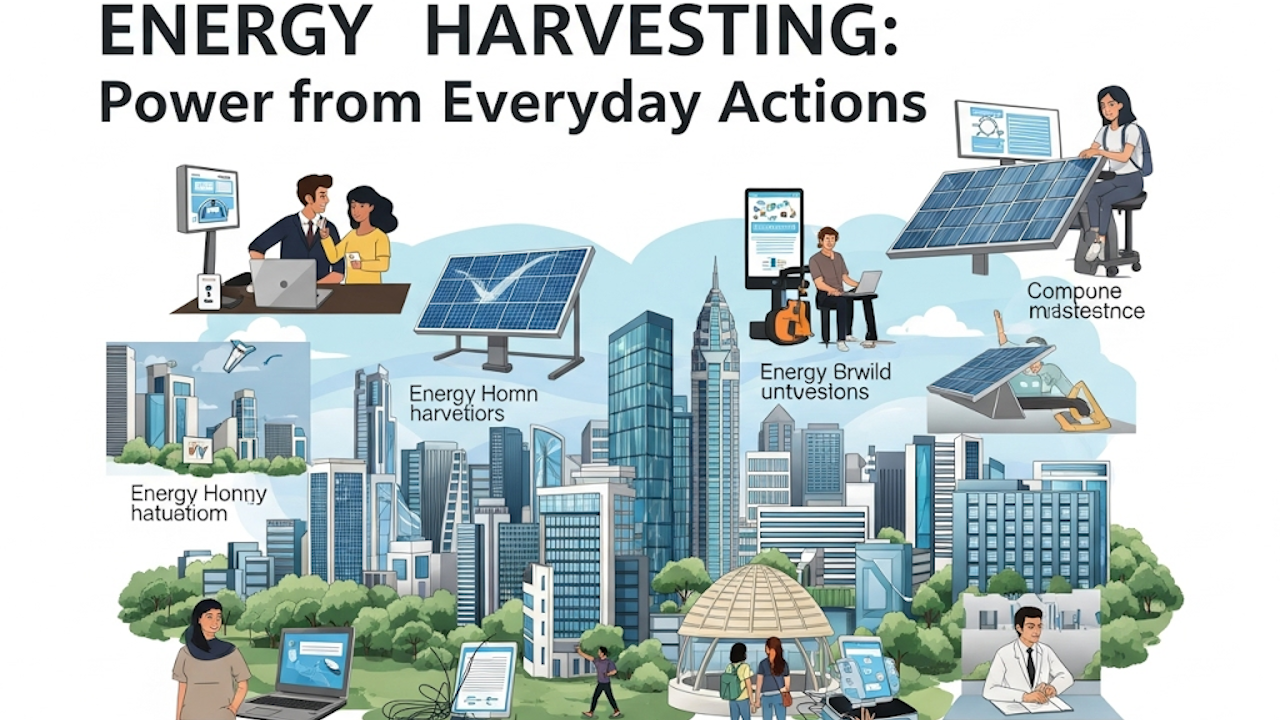
Energy harvesting represents one of the most promising frontiers in sustainable technology. It involves capturing small amounts of energy from surrounding environments or human activities and converting that energy into electricity for practical use. Rather than relying on traditional batteries or grid power, energy harvesting systems tap into ambient sources that are often wasted. This approach holds particular appeal because it aligns with the growing demand for low-power electronics, wearable devices, and the Internet of Things. Everyday actions such as walking, typing on a keyboard, or even breathing can generate usable power when paired with the right materials and designs.
The concept draws from basic physics. Energy exists in many forms around us, including kinetic, thermal, solar, and electromagnetic. Harvesting technologies convert these forms into electrical energy through mechanisms like piezoelectricity, thermoelectricity, and electromagnetic induction. What makes this field exciting is its potential to power devices without frequent battery replacements, reducing electronic waste and enabling applications in remote or inaccessible locations.
The Science Behind Energy Harvesting
At its core, energy harvesting relies on transducers that transform one type of energy into another. Piezoelectric materials, for instance, generate voltage when mechanically stressed. When you take a step, your foot applies pressure that deforms these materials, producing a small electric charge. Thermoelectric generators exploit temperature differences to create voltage through the Seebeck effect. If one side of the device is warmer than the other, electrons flow and generate power.
Triboelectric nanogenerators represent another innovation. They produce electricity through contact and separation of materials with different electron affinities. Rubbing clothes against skin or fabric against fabric during movement can create charge. Electromagnetic harvesters use coils and magnets to convert motion into electricity via Faraday’s law of induction. A simple shake or vibration can induce current in such systems.
These technologies typically yield small amounts of power, often in the microwatt to milliwatt range. However, modern low-power sensors and microprocessors require very little energy, sometimes as little as a few microwatts. This match makes energy harvesting viable for many applications.
Harvesting Energy from Walking and Movement
Walking is one of the most consistent everyday actions humans perform. Each step involves kinetic energy that can be captured. Piezoelectric floors in high-traffic areas, such as train stations or shopping malls, have been tested to generate power from footsteps. In one notable project, tiles embedded with piezoelectric crystals produced enough electricity to light nearby displays or charge small devices.
For personal use, researchers have developed shoes with embedded energy harvesters. These shoes might incorporate piezoelectric inserts in the sole or electromagnetic mechanisms that harvest energy from heel strikes. A person walking at a normal pace might generate several watts over the course of a day, sufficient to power a fitness tracker or smartwatch without batteries. Prototypes have shown that such shoes can also charge mobile phones during extended walks.
Beyond shoes, knee or hip braces with embedded generators can capture energy from joint movements. During normal gait, the human body expends significant mechanical energy. Harvesting even a small fraction of it could support medical devices like pacemakers or hearing aids. Studies indicate that up to 10 watts of power might be available from leg motion alone under optimal conditions, though practical systems achieve lower but still useful outputs.
Running, jumping, or cycling offer even greater opportunities. Bike-mounted harvesters can convert wheel rotation into electricity for lights or navigation systems. In developing regions, where reliable electricity is scarce, such solutions could provide lighting or communication capabilities during daily commutes.
Power from Typing, Gestures, and Daily Interactions
Office workers and students spend hours typing on keyboards or using touchscreens. Each keystroke represents a tiny mechanical input. Piezoelectric or triboelectric keyboards can harvest this energy. Early concepts demonstrated that typing for several hours could generate enough power for low-energy wireless sensors embedded in the desk or computer peripherals.
Smartphones and tablets offer another avenue. The constant swiping and tapping on screens can be coupled with flexible triboelectric layers. While the power yield is small, it could extend battery life marginally or power always-on sensors for health monitoring.
Even subtle gestures like hand movements or breathing produce harvestable energy. Wearable bands around the wrist or chest can use triboelectric effects from fabric flexing. Breathing involves rhythmic chest expansion and contraction. Flexible patches placed on the torso have harvested microwatts from this motion, potentially powering implantable sensors or external monitors for respiratory conditions.
Body Heat and Thermal Energy Harvesting
The human body maintains a relatively constant temperature around 37 degrees Celsius, creating a natural temperature gradient with the cooler ambient air. Thermoelectric generators worn as patches or integrated into clothing can exploit this difference. A wristband or jacket lining with thermoelectric modules might generate enough power for a basic fitness monitor or environmental sensor.
This approach works best in cooler environments where the temperature difference is larger. In cold weather, body heat harvesting becomes more efficient. Researchers have developed prototypes of smart clothing that use body heat to power integrated electronics for heating elements or communication modules. For elderly users or those in remote areas, such garments could provide continuous health monitoring without the need for battery changes.
Indoor environments also offer thermal gradients. Electronics themselves generate heat, and harvesting the waste heat from laptops or servers could power small auxiliary systems. In industrial settings, machinery and pipes with temperature variations become rich sources for thermoelectric harvesting.
Vibrations and Ambient Mechanical Energy
Everyday life is full of vibrations. Cars driving on roads, washing machines operating, or even footsteps in a building create mechanical oscillations. Vibration energy harvesters, often based on cantilever beams with piezoelectric elements, can capture these. In a factory, machinery vibrations might power wireless condition-monitoring sensors, eliminating wiring costs and battery maintenance.
Home appliances offer similar potential. A refrigerator compressor vibrates during operation. Small harvesters attached to it could power temperature sensors that communicate with smart home systems. Bridges and infrastructure experience wind-induced or traffic-induced vibrations. Embedding harvesters in such structures allows for self-powered structural health monitoring, detecting cracks or weaknesses in real time.
Electromagnetic and Radio Frequency Harvesting
Wireless signals surround us constantly. Radio frequency energy harvesting captures ambient electromagnetic waves from Wi-Fi routers, cell towers, and television broadcasts. Specialized antennas and rectifying circuits convert these waves into direct current. While power levels are low, they suffice for ultra-low-power devices like RFID tags or simple environmental sensors.
In urban environments, the density of wireless signals makes this approach more practical. A smart home could use RF harvesting to power small sensors that track temperature, humidity, or occupancy without batteries. Dedicated RF transmitters can also be used in targeted setups to boost harvesting efficiency for critical applications.
Applications in Wearables and Internet of Things
The Internet of Things depends on numerous small, distributed sensors. Traditional batteries limit deployment due to replacement needs and environmental impact. Energy harvesting enables battery-free or battery-light designs. Wearable health devices, for example, can monitor heart rate, steps, or blood oxygen levels using power from body movement and heat.
Smart agriculture benefits too. Soil moisture sensors in fields can harvest energy from temperature differences or solar exposure during the day, transmitting data wirelessly without maintenance visits. In buildings, self-powered sensors can optimize lighting and HVAC systems based on occupancy detected through harvested vibration or thermal data.
Medical implants represent a high-impact area. Pacemakers and glucose monitors traditionally require surgical battery replacements. Energy harvesting from heartbeat motion, blood flow, or body heat could extend device lifespan dramatically, improving patient outcomes and reducing medical costs.
Challenges in Energy Harvesting Technologies
Despite its promise, energy harvesting faces several hurdles. Power output remains inconsistent and depends on user activity levels or environmental conditions. A sedentary person generates less kinetic energy than an active one. Storage solutions like supercapacitors or thin-film batteries are necessary to buffer intermittent power.
Efficiency is another concern. Many harvesting materials convert only a small percentage of available energy into electricity. Material durability poses issues as well. Piezoelectric elements can fatigue over time with repeated stress, while thermoelectric materials may degrade in humid or variable conditions.
Integration into everyday objects requires careful design. Devices must remain comfortable, lightweight, and aesthetically pleasing. Cost remains a barrier for widespread adoption, though prices decrease as manufacturing scales.
Regulatory and standardization challenges also exist. Ensuring harvested power meets safety standards for medical or consumer electronics demands rigorous testing.
Future Prospects and Innovations
Advancements in materials science drive progress. Flexible electronics and nanomaterials improve efficiency and comfort. Perovskite-based thermoelectric materials and advanced piezoelectrics promise higher conversion rates. Hybrid systems that combine multiple harvesting methods, such as kinetic plus thermal, provide more reliable power output.
Artificial intelligence can optimize energy management. Smart algorithms predict energy availability based on user patterns and adjust device operation accordingly. For instance, a wearable might prioritize data transmission during high-activity periods when more power is available.
Urban planning may incorporate energy harvesting infrastructure. Sidewalks with piezoelectric tiles, public transport with vibration harvesters, and buildings with integrated thermal systems could generate community-level power for lighting or charging stations.
In developing countries, portable harvesters could address energy poverty. Backpack-style devices that generate power from walking or arm swings provide electricity for lighting, phone charging, or small appliances in off-grid areas.
Research into bio-inspired designs draws from nature. Some plants and animals efficiently harvest energy from their environments. Mimicking these could yield new breakthroughs.
Environmental and Societal Impact
Energy harvesting contributes to sustainability by reducing reliance on disposable batteries, which contain toxic materials. It supports circular economy principles through longer-lasting electronics. On a larger scale, widespread adoption could lower carbon emissions associated with battery production and electricity generation.
Societally, it enables greater independence for users. Elderly individuals or those in remote locations gain reliable access to monitoring devices. Children in underserved areas might benefit from powered educational tools.
However, equitable access matters. Technologies must be affordable and adaptable to different climates and lifestyles to avoid widening technological divides.
Conclusion
Energy harvesting from everyday actions transforms how we think about power. Instead of seeing human movement, body heat, or ambient vibrations as mere byproducts of life, we recognize them as valuable resources. From piezoelectric shoes that light up paths to thermoelectric clothing that monitors health, these technologies bridge the gap between human activity and sustainable energy use.
As materials improve and systems become more efficient, energy harvesting will likely become commonplace in consumer products, infrastructure, and medical devices. The journey from laboratory prototypes to everyday integration requires continued research, collaboration across disciplines, and thoughtful implementation. Ultimately, this field empowers individuals to generate their own power through simple actions, fostering a more self-sufficient and environmentally conscious future.
The potential is vast. Every step taken, every keystroke typed, and every breath drawn carries untapped energy. By harnessing these sources, society moves closer to a world where power flows naturally from the rhythms of daily life.