

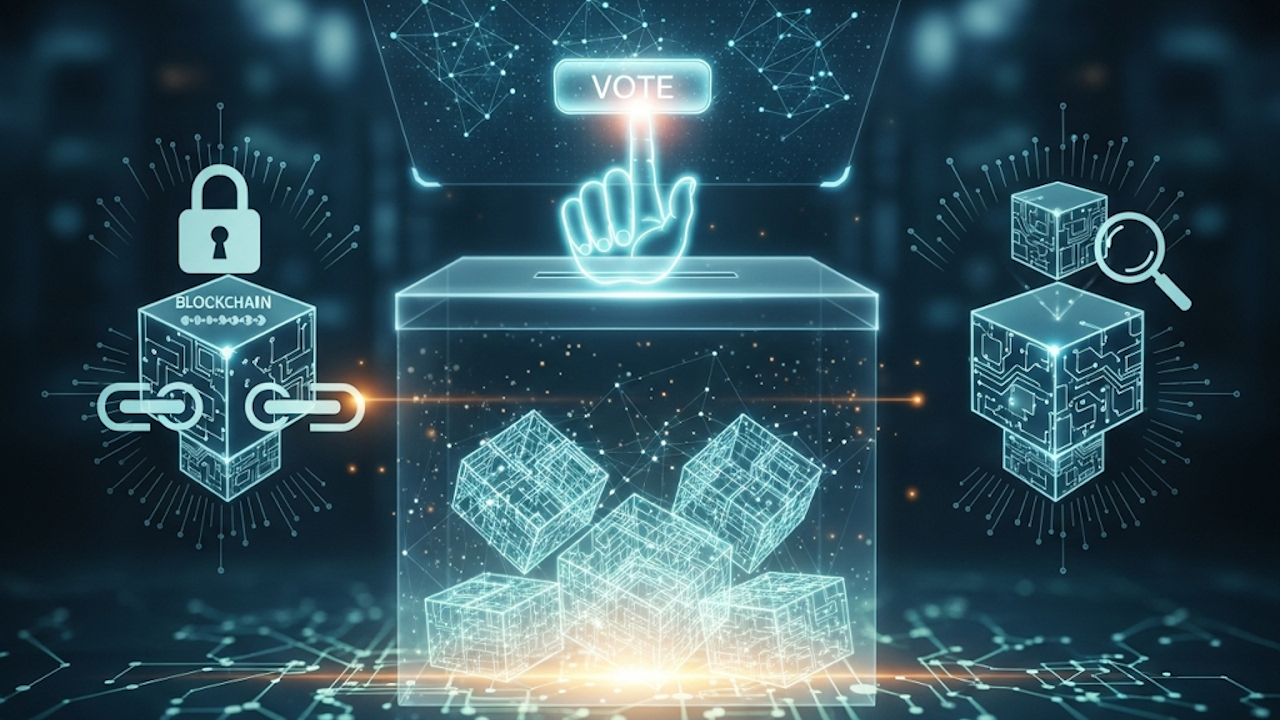
Elections form the foundation of democratic governance, yet they face persistent challenges around security, transparency, and accessibility. As societies grapple with reports of foreign interference, allegations of fraud, and declining voter turnout in many regions, technology advocates have proposed digital solutions to modernize the process. Among these, blockchain technology has emerged as a prominent candidate. Proponents argue that its decentralized, immutable ledger could revolutionize voting by making results tamper-proof and verifiable by anyone. Skeptics, including leading computer security experts, counter that blockchain does not resolve the fundamental vulnerabilities of digital systems and may even introduce new risks. This article examines the technical foundations, potential benefits, significant drawbacks, real-world applications, and future prospects of blockchain-based voting systems.
To understand the appeal, consider the shortcomings of existing voting methods. Traditional paper ballots offer a physical record that can be audited manually, but they are susceptible to logistical errors, chain-of-custody issues, and claims of manipulation during counting. Electronic voting machines, used in polling stations in various countries, improve speed but have faced criticism for proprietary software that lacks independent verification and for potential vulnerabilities to insider tampering or supply-chain attacks. Internet-based voting, which allows remote participation via computers or mobile devices, promises greater convenience and higher turnout, especially for overseas voters or those with disabilities. However, it introduces severe risks because votes travel over insecure networks and devices prone to malware, phishing, or coercion.
Blockchain enters this landscape as a distributed database that records transactions across multiple computers, known as nodes, in a way that makes altering past entries extremely difficult without consensus from the network. Each block contains a cryptographic hash of the previous block, creating a chain that links all records chronologically. Consensus mechanisms, such as proof-of-work or proof-of-stake, ensure that participants agree on the validity of new entries. In theory, this structure provides immutability, transparency, and resistance to single-point failures. For voting, a blockchain could serve as a digital ballot box where each vote becomes a transaction. Voters would authenticate themselves, cast encrypted ballots, and have those records added to the ledger. The public or authorized observers could then verify the entire tally without relying on a central authority.
In a typical blockchain voting workflow, the process begins with voter registration. Eligible citizens link their identity to a digital credential, often using biometrics or government-issued identifiers, while preserving anonymity through techniques like zero-knowledge proofs. These cryptographic tools allow a voter to prove eligibility and that they have cast only one vote without revealing their specific choice or personal details. Once verified, the voter receives a unique token or private key associated with their ballot. Casting a vote involves encrypting the selection and submitting it as a transaction to the blockchain network. Smart contracts, which are self-executing code on the blockchain, enforce rules such as preventing double voting or ensuring the election period has not expired. After submission, the vote joins the immutable ledger. At the end of polling, anyone with access to the chain can independently recompute the totals from the public records, providing end-to-end verifiability in principle.
Advocates highlight several advantages that could address longstanding election integrity concerns. First, immutability means that once a vote is recorded, it cannot be altered retroactively without detection by the network. This property could reduce opportunities for post-casting manipulation compared to centralized databases. Second, decentralization distributes trust across many nodes rather than concentrating it in a single election authority or vendor, potentially mitigating risks from insider threats or targeted hacks on central servers. Third, transparency allows real-time auditing; observers worldwide could monitor the ledger for anomalies without compromising individual ballot secrecy if proper encryption is used. Fourth, remote accessibility might boost participation by enabling voting from anywhere with an internet connection, lowering costs associated with physical polling stations, ballot printing, and transportation. Some analyses suggest these features could make elections more affordable and inclusive, particularly in developing nations or for expatriate communities.
Additionally, blockchain systems could integrate with mobile applications for biometric authentication, adding layers of security against unauthorized access. In small-scale settings, such as corporate board elections or organizational referendums, these benefits have proven practical, with reports of hundreds of successful deployments using permissioned blockchains that restrict participation to trusted entities. Proponents also note that the technology aligns with broader trends toward digital governance, where citizens expect the same convenience and security they experience in online banking or cryptocurrency transactions.
Despite these theoretical strengths, a broad consensus among cybersecurity researchers indicates that blockchain does not deliver the security guarantees needed for public elections. The core problem stems from the fact that blockchain secures data only after it enters the system. Votes must originate from voters’ devices, which are often personal smartphones or computers riddled with vulnerabilities. Malware could silently alter a voter’s choice before encryption and submission, or keyloggers could steal credentials. Coercion remains a threat; a voter could be forced to reveal their private key or vote under surveillance, undermining the secret ballot principle. These issues plague all internet voting proposals, and blockchain adds no inherent protection against them.
Experts further argue that blockchain introduces additional complexities without solving them. Public blockchains like those modeled on Bitcoin suffer from scalability limitations; national elections could generate millions of transactions per hour, overwhelming networks and driving up costs or delays. Energy-intensive consensus like proof-of-work exacerbates environmental concerns, while alternatives such as proof-of-stake risk centralization if a few large stakeholders dominate validation. Privacy presents another hurdle. Even with zero-knowledge proofs or homomorphic encryption, which allow computations on encrypted data, achieving both anonymity and verifiability at scale remains technically challenging and computationally expensive. A fully public ledger might inadvertently leak patterns through metadata analysis, while overly restrictive designs could erode trust by limiting observability.
Moreover, the distributed nature of blockchain does not eliminate reliance on trusted parties entirely. Voter registration databases, device security, and network infrastructure still require centralized oversight or hybrid models. In permissioned blockchains, where only approved nodes participate, the system reintroduces elements of central control that undermine the decentralization promise. Security audits of actual implementations have repeatedly uncovered flaws. For instance, independent reviews of mobile blockchain voting platforms have identified vulnerabilities allowing vote alteration, denial-of-service attacks, or exposure of voter data through server-side weaknesses, even when blockchain storage is employed.
Real-world pilots illustrate both the enthusiasm and the limitations. In the United States, West Virginia piloted a blockchain-based mobile voting app called Voatz for overseas military personnel and civilians during the 2018 midterm and 2020 general elections. The system used encryption and blockchain to record votes, aiming to provide greater security than traditional mail-in ballots for remote voters. Utah County also experimented with blockchain technology for a presidential election pilot in 2020, marking one of the first uses in a binding U.S. contest. Similar trials have occurred internationally, including explorations in Estonia, which already operates a mature internet voting system and has considered blockchain enhancements for audit trails. Other nations, such as Ecuador and Panama, have tested online voting mechanisms, sometimes incorporating distributed ledger elements for specific phases like result transmission. Private-sector and nonprofit applications have scaled more readily; one analysis documented experiences from over 200 elections in societies, cooperatives, and corporations using permissioned ledgers with anti-coercion features and voter receipt schemes.
These deployments have generally been limited in scope, often serving small voter pools or non-governmental contexts. Post-pilot evaluations frequently reveal low turnout relative to expectations and persistent security questions. For Voatz, detailed technical examinations by academic teams and private firms highlighted risks including malware on voter devices and potential insider compromises, prompting calls to halt expansion. No country has adopted blockchain for a full-scale national election as of 2026, reflecting caution from election officials and regulators. Recent developments, such as partnerships between blockchain platforms and European election bodies for local pilots or mergers enhancing threat detection in existing apps, show continued experimentation. Yet these remain test cases rather than proven solutions for high-stakes democracy.
Critics emphasize that alternatives exist that achieve many of blockchain’s goals without its drawbacks. End-to-end verifiable voting systems, which use cryptographic receipts allowing voters to confirm their ballot was counted without revealing choices, can operate on centralized or hybrid architectures with paper backups. Optical-scan paper ballots combined with risk-limiting audits provide high assurance through statistical sampling, a method already implemented successfully in several jurisdictions. These approaches prioritize a voter-verifiable paper trail as the authoritative record, something pure blockchain systems often lack. Experts overwhelmingly recommend against internet or blockchain voting for public elections until fundamental advances in device security and cryptographic protocols emerge, arguing that the risks of undetectable large-scale manipulation outweigh potential gains in convenience.
Looking ahead, blockchain could find niche roles in elections rather than serving as the primary mechanism. It might secure voter registries by creating auditable trails of registrations and updates, or facilitate secure transmission of aggregate results between polling stations and central tabulators. Hybrid models combining blockchain for specific audit functions with traditional paper or optical systems could offer incremental improvements. Advances in privacy-preserving technologies, such as more efficient zero-knowledge proofs or sharding for better scalability, may address some current limitations. Regulatory frameworks will also play a decisive role; governments must balance innovation with rigorous standards for certification, testing, and public oversight.
Ultimately, the question of whether blockchain can secure elections hinges on realistic expectations. The technology excels at creating tamper-evident records in trusted environments, but elections demand far more: protection against nation-state actors, individual coercion, and everyday device compromises. While blockchain enthusiasts point to its success in finance and supply chains, the adversarial nature of political contests amplifies every weakness. Current evidence suggests that blockchain voting, like other forms of internet voting, elevates risks without providing the ironclad assurances citizens deserve. Elections require systems where the public can trust not just the outcome but the process itself. Until blockchain or any digital alternative demonstrably meets that standard through exhaustive, independent scrutiny, traditional methods augmented by targeted technology may remain the safer path. The pursuit of secure digital voting should continue through careful research and small-scale testing, but haste in adoption could erode the very trust it seeks to strengthen. Democracy’s integrity depends on getting this right.