

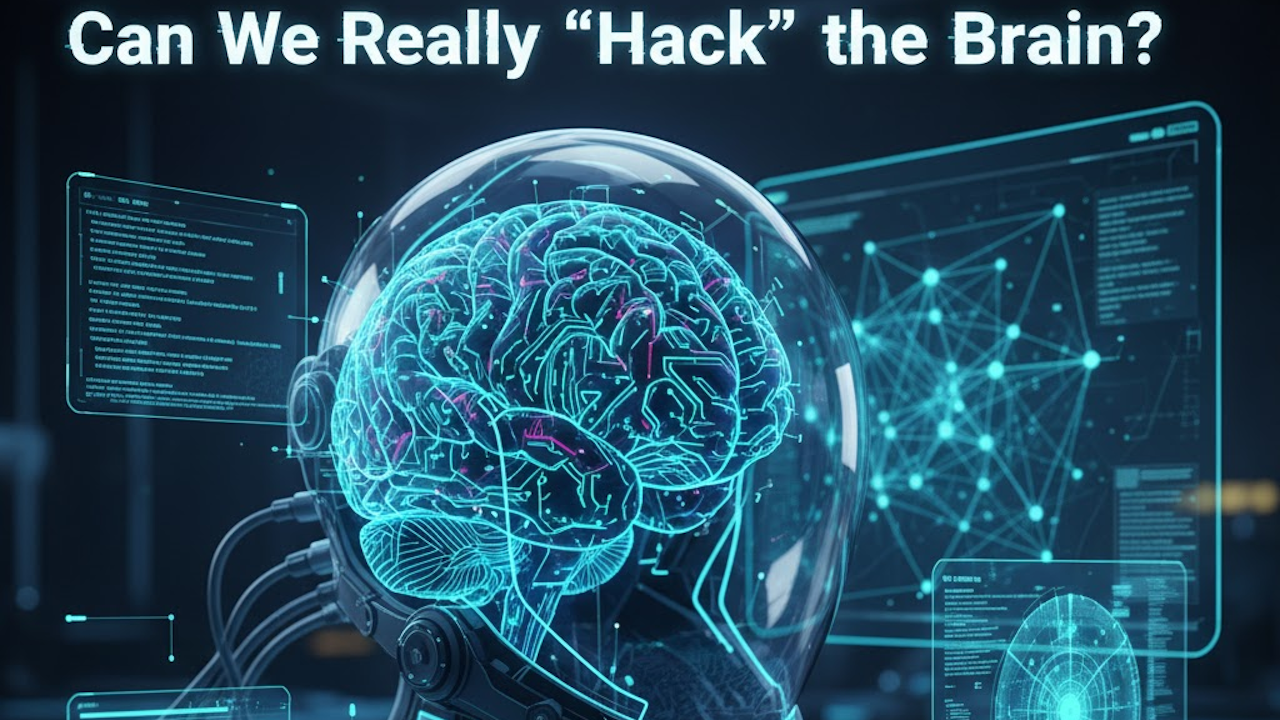
The idea of hacking the brain has captured public imagination for decades. From science fiction stories of mind control to modern headlines about brain-computer interfaces and smart drugs, the notion suggests that we can reprogram, enhance, or manipulate neural processes much like editing code in a computer. But how accurate is this metaphor? The human brain is an extraordinarily complex organ with approximately 86 billion neurons forming trillions of connections. Unlike digital systems with clear inputs, outputs, and debuggable code, the brain operates through electrochemical signals, plasticity, and emergent properties that defy simple reprogramming.
This article explores the current state of brain “hacking,” examining technological, pharmacological, and behavioral approaches. It weighs real achievements against limitations and considers profound ethical questions that arise when we intervene in the seat of human identity and cognition.
What Does “Hacking” the Brain Mean?
In computing, hacking often implies unauthorized access, optimization, or exploitation of vulnerabilities. Applied to the brain, it broadly refers to deliberate interventions that alter perception, cognition, mood, or behavior. These range from non-invasive lifestyle changes to invasive implants. Proponents argue that such techniques could treat neurological disorders, restore lost functions, or even augment healthy individuals. Critics caution that the brain’s complexity makes precise, safe, and reversible control far more difficult than enthusiasts claim.
Early attempts at brain intervention were crude. In the mid-20th century, lobotomies severed connections in the prefrontal cortex to treat mental illness, often leaving patients with severe personality changes. Electroconvulsive therapy (ECT) has evolved into a more refined tool for severe depression but still induces controlled seizures. These historical examples highlight both the potential and the risks of tampering with neural circuitry.
Neurotechnology: Reading and Writing to the Brain
One of the most prominent frontiers is brain-computer interfaces (BCIs). Companies like Neuralink are developing implantable devices with thousands of electrodes that record neural activity and potentially stimulate the brain. In 2024, Neuralink implanted its first device in a human patient with quadriplegia. The individual reportedly played chess and video games using only thought-controlled cursor movements. Subsequent patients have demonstrated similar capabilities, and the technology received breakthrough status for vision restoration via cortical stimulation.
These systems translate brain signals into actions, bypassing damaged pathways. For people with paralysis, this restores autonomy. Future iterations might enable silent communication or control of external devices. However, current performance remains limited. Information throughput is often low, around 4 to 10 bits per second in early trials, far below natural speech rates. Long-term challenges include electrode degradation, tissue response, surgical risks, and device longevity.
Non-invasive alternatives exist too. Electroencephalography (EEG)-based BCIs allow users to control cursors or prosthetics via scalp-recorded signals, though with lower precision. Transcranial magnetic stimulation (TMS) uses magnetic pulses to modulate cortical activity and is FDA-approved for treating depression. It can temporarily disrupt or enhance specific brain regions. Transcranial direct current stimulation (tDCS) applies weak electrical currents through scalp electrodes and has shown promise in accelerating learning or aiding stroke recovery in research settings.
These tools demonstrate that we can influence brain activity. Yet “hacking” implies mastery. In reality, effects are often broad, variable across individuals, and temporary. Understanding which neurons to target amid the brain’s noisy, distributed processing remains a formidable obstacle.
Pharmacological Approaches: Smart Drugs and Psychedelics
Nootropics, or cognitive enhancers, represent another popular avenue. Substances like caffeine reliably improve alertness by modulating neurotransmitters. Prescription options such as modafinil enhance focus in sleep-deprived individuals. Over-the-counter supplements including racetams, Bacopa monnieri, or creatine have mixed evidence. While some studies suggest modest benefits for memory or attention, strong proof of significant, sustained enhancement in healthy adults is lacking. Many products sold online lack rigorous testing for safety or efficacy.
Psychedelics like psilocybin have gained attention for their effects on brain plasticity. Research shows they can promote dendritic spine growth and disrupt rigid neural patterns, potentially aiding conditions like depression or PTSD. Controlled studies indicate rapid, sometimes lasting mood improvements after guided sessions. However, effects are highly context-dependent, involving set and setting, and not everyone experiences benefits. Risks include psychological distress in vulnerable individuals.
These chemical interventions highlight the brain’s adaptability but underscore that “hacking” is rarely precise. Drugs flood broad receptor systems rather than targeting specific circuits, leading to side effects and tolerance.
Behavioral and Lifestyle “Hacks”
The most accessible and evidence-backed methods involve lifestyle. Regular exercise increases neurogenesis in the hippocampus, improving memory. Quality sleep consolidates learning and clears metabolic waste. Meditation and mindfulness training can thicken cortical regions associated with attention and emotional regulation. Cognitive training apps show limited transfer to real-world skills, but deliberate practice in domains like music or languages demonstrably rewires networks.
These approaches work with the brain’s natural mechanisms rather than overriding them. They are safe, cumulative, and holistic, yet they demand consistent effort without the instant gratification promised by gadgets or pills.
Limitations and Challenges
Despite progress, true brain hacking faces fundamental barriers. The brain is not a digital computer. It exhibits massive parallelism, context-dependent computation, and constant adaptation. Decoding intentions from neural signals requires sophisticated algorithms, and “writing” information back risks unintended consequences. Animal testing and early human trials reveal issues like inflammation, signal degradation, and variable outcomes.
Individual variability complicates matters. Genetics, age, health status, and prior experiences influence responses to stimulation or drugs. What boosts one person might impair another. Long-term effects of chronic interventions remain poorly understood, raising questions about dependency or subtle personality shifts.
Hype often outpaces reality. Claims of merging with artificial intelligence or achieving telepathy remain speculative. Engineering feats in implantation are impressive, but neuroscience lags in fully interpreting the resulting data.
Ethical and Societal Implications
Intervening in the brain raises profound concerns. Privacy is paramount: neural data could reveal thoughts, emotions, or intentions. Malicious hacking of BCIs, termed “brainjacking,” might enable thought manipulation or physical control, though current risks are lower for non-invasive devices.
Equity issues loom large. Enhancements could widen social divides if accessible mainly to the wealthy. Coercion in workplaces or military settings might pressure individuals to adopt technologies. Questions of identity arise: does altering neural activity change who we are? Cognitive liberty, the right to mental self-determination, becomes a key principle.
Informed consent is tricky when benefits are uncertain and risks include permanent changes. Regulatory frameworks must evolve to balance innovation with protection, especially as commercial interests accelerate development.
Animal welfare in testing also demands scrutiny, as seen in debates around primate studies for neural implants.
The Path Forward
We can influence the brain in meaningful ways today. BCIs restore function for the disabled. Stimulation techniques aid rehabilitation. Pharmaceuticals and psychedelics offer therapeutic promise. Lifestyle factors provide reliable optimization. These are powerful tools, not magic hacks.
Future advances will likely come from interdisciplinary efforts combining neuroscience, engineering, ethics, and computing. Closed-loop systems that adapt stimulation based on real-time feedback represent progress. Better biomarkers and personalized approaches could improve precision.
Ultimately, the brain’s resilience and complexity may be its greatest defense against simplistic hacking. Rather than seeking total control, the wisest path embraces partnership with our biology: enhancing capabilities while respecting limits.
The question “Can we really hack the brain?” yields a nuanced answer. In limited, targeted ways, yes. As a comprehensive rewrite of human cognition, no, not yet, and perhaps never fully. This boundary invites humility alongside ambition. As neurotechnology advances, society must prioritize safety, equity, and the preservation of human autonomy. The brain remains one of nature’s most sophisticated creations, and our interventions should aim to heal and empower rather than dominate.