

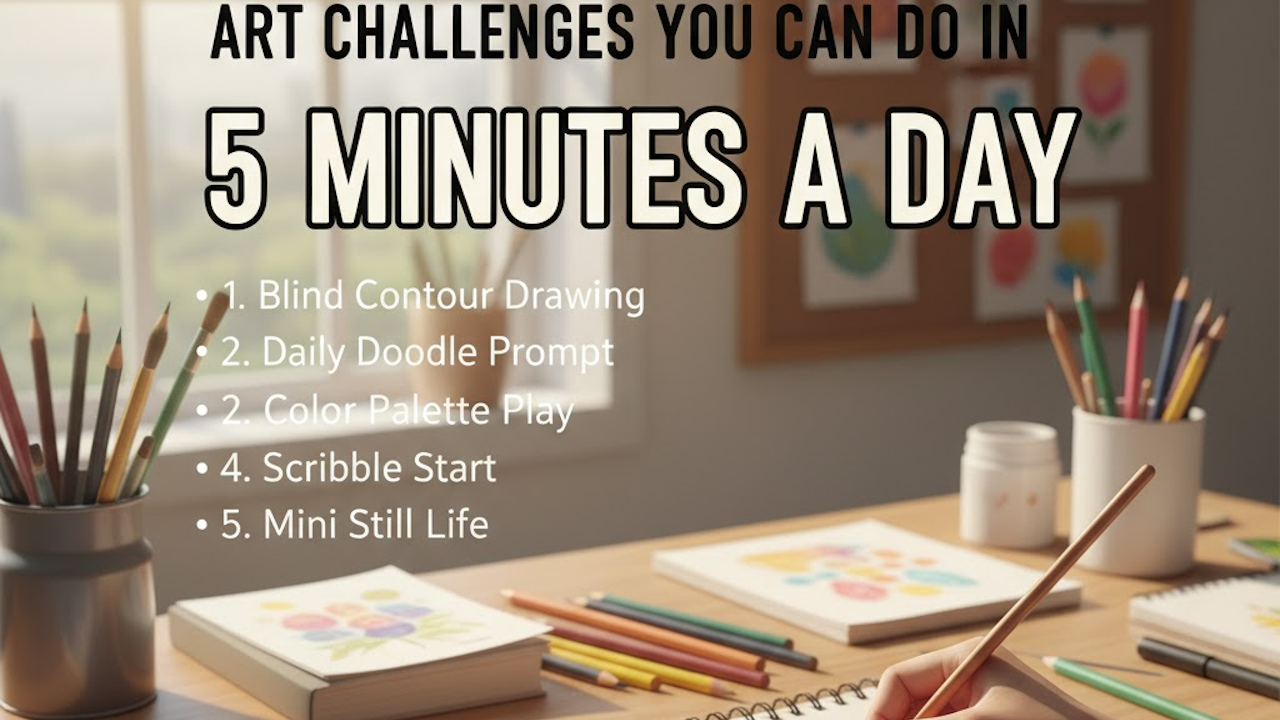
In our busy lives, finding time for creative pursuits often feels impossible. Between work, family, and daily responsibilities, carving out hours for art seems like a luxury. Yet creativity does not require marathon sessions. Short, consistent practice can yield surprising results. Five-minute art challenges offer an accessible way to build skills, reduce stress, and nurture imagination without overwhelming your schedule. These quick exercises fit into coffee breaks, commutes, or quiet moments before bed. Over time, they compound into noticeable improvement and a deeper appreciation for the artistic process.
The idea of micro-habits has gained popularity in fitness, learning, and productivity. Art benefits from the same principle. Spending just five minutes daily trains your hand-eye coordination, sharpens observation, and keeps creative juices flowing. Unlike longer projects that can lead to burnout or procrastination, these bite-sized challenges feel achievable. You finish each one with a sense of accomplishment rather than frustration.
Why Commit to Five Minutes of Art Every Day
Daily short art practice delivers multiple advantages. First, it builds discipline. Showing up consistently, even briefly, reinforces the habit of creating. Many artists struggle with perfectionism or blank-page syndrome. Limiting sessions to five minutes lowers the pressure, making it easier to start.
Second, regular practice improves technical skills gradually. Quick sketches enhance speed and looseness in your lines. Repeated observation exercises sharpen your ability to capture shapes, proportions, and values. Over weeks and months, these small gains accumulate.
Third, art serves as a powerful mindfulness tool. Focusing intently for five minutes pulls attention away from worries and into the present moment. The repetitive motions of drawing or coloring can lower cortisol levels and provide emotional release.
Fourth, it sparks joy and playfulness. Art challenges encourage experimentation without stakes. You might discover new interests, styles, or mediums through these brief explorations.
Finally, completing daily challenges creates a visible record of progress. A sketchbook filled with five-minute entries becomes a personal archive of growth, motivation, and memories.
Essential Materials for Quick Art Sessions
You do not need fancy supplies. Most challenges work with basic items already at home:
- A small sketchbook or notebook
- Pencils, pens, or markers
- Eraser
- Colored pencils, crayons, or watercolors if desired
- Timer on your phone
For digital artists, a tablet or even finger drawing apps suffice. The goal remains simplicity. Keep materials accessible so starting feels effortless.
15 Five-Minute Art Challenges to Try
Here are practical challenges you can rotate through. Aim for one per day or mix them based on mood and available tools.
1. One-Line Wonder Set a timer for five minutes and draw a subject using a single continuous line without lifting your pen. Choose everyday objects like a coffee mug, plant, or your hand. This exercise improves flow and forces decisive mark-making. Focus on capturing the essence rather than perfection.
2. Blind Contour Drawing Look only at your subject, not your paper, and draw its outline without glancing down. This classic warm-up heightens observation and reduces self-criticism. Try it with a face in a mirror or a still life arrangement. The results may look abstract, but they train accurate seeing.
3. Shape Breaker Deconstruct an object into basic shapes: circles, squares, triangles, and rectangles. Spend the time mapping these forms before adding details. This builds understanding of structure and proportion, useful for more complex drawings later.
4. Daily Doodle Dump Fill a page with random doodles, patterns, and marks. Let your hand move freely without planning. Incorporate swirls, hatching, dots, or repeating motifs. This challenge releases creative blocks and generates unexpected ideas for future work.
5. Gesture Figure Sketch If you have a mirror or reference photo, sketch quick human poses emphasizing movement and energy over detail. Use loose, sweeping lines to capture the thrust of the body. Even simplified stick figures help when done rapidly.
6. Mini Still Life Arrange three small items on your desk and sketch them in five minutes. Focus on relationships between objects rather than fine rendering. Vary lighting or angles on different days to keep it fresh.
7. Color Mood Study Choose one emotion or atmosphere and express it through color swatches and simple marks. Use limited palettes: warm tones for energy, cool for calm. This develops color intuition without complex subjects.
8. Pattern Play Create a repeating pattern within a border or grid. Experiment with geometric designs, floral motifs, or abstract shapes. This meditative challenge improves symmetry awareness and decorative skills.
9. Quick Master Copy Select a small portion of a famous artwork and recreate it rapidly. Focus on composition or a single element like an eye or leaf. Studying masters accelerates learning of techniques and styles.
10. Word Illustration Pick a word or short phrase and illustrate it literally or metaphorically. Turn “adventure” into a tiny scene or embellish the letters themselves. This combines typography and imagery creatively.
11. Nature Window Look outside or at a houseplant and capture a small detail: a leaf vein, tree branch, or cloud formation. Outdoor observation hones attention to natural forms and textures.
12. Value Scale Sketch Draw a simple object and shade it using only five values from light to dark. This exercise strengthens understanding of light, shadow, and form in a short time.
13. Emoji Expansion Start with a standard emoji and transform it into a detailed mini-drawing. Add background, personality, or narrative elements. This playful approach bridges digital and traditional art.
14. Memory Drawing Draw something from memory, such as your childhood home, a recent meal, or a dream scene. Memory work strengthens visualization and recall abilities central to artistic expression.
15. Abstract Emotion Lines Use only lines, no recognizable objects, to convey a feeling experienced that day. Thick, jagged lines might represent frustration while flowing curves suggest peace. This non-representational challenge frees you from realism expectations.
Tips for Success and Consistency
To maintain momentum, integrate art into existing routines. Draw during morning coffee, while waiting for transportation, or as a wind-down activity. Set a daily reminder on your phone. Track streaks in a calendar to build motivation through visible progress.
Start simple. If five minutes feels too long initially, begin with two or three. The key is regularity over intensity. Some days your drawings will feel uninspired. That is normal. The practice itself matters more than individual results.
Vary challenges to prevent boredom. Rotate between observational, abstract, and playful exercises. Challenge yourself occasionally by changing mediums or drawing with your non-dominant hand.
Share your work selectively. Posting daily sketches online can provide accountability and community support, but avoid comparison traps. Focus on your personal journey.
Review progress monthly. Flip through your sketchbook and note improvements in confidence, line quality, or creativity. Celebrate small victories like completing 30 days straight.
Overcoming Common Obstacles
Many people face similar hurdles with daily art habits. “I am not good enough” is a frequent thought. Remember that every artist started somewhere. Five-minute challenges exist precisely to bypass perfectionism.
Lack of inspiration strikes often. Keep a list of prompts or photo references handy. Everyday surroundings offer endless subjects: shoes, keys, fruit bowls, or window views.
Time constraints arise unexpectedly. Prepare by keeping a pocket sketchbook and pencil always available. Even a two-minute version counts on hectic days.
Fatigue can dull creativity. On low-energy days, choose relaxing challenges like pattern play or color studies rather than demanding observation exercises.
Expanding Beyond Five Minutes
Once the habit solidifies, these quick sessions often lead naturally to longer creative periods. You might extend a promising sketch or explore new techniques discovered during challenges. The five-minute foundation provides skills and confidence for bigger projects.
Consider themed weeks: one week focused on animals, another on architecture, or a monochrome series. Seasonal challenges, such as holiday motifs or nature changes, add variety.
Many artists maintain multiple sketchbooks: one for daily five-minute work and others for developed pieces. This separation prevents pressure from building in your practice book.
The Long-Term Impact of Daily Micro-Creativity
Committing to five minutes of art daily transforms more than technical abilities. It cultivates patience, resilience, and joy in the process. You begin noticing beauty in ordinary moments: the curve of a shadow, texture of fabric, or interplay of colors in a sunset.
Over a year, 365 five-minute sessions total more than 30 hours of dedicated practice. That represents substantial growth. Professional artists often credit consistent small efforts for their mastery.
Beyond skills, daily art nurtures mental well-being. It offers a reliable outlet for expression during stressful times. Many practitioners report improved focus, problem-solving abilities, and overall life satisfaction.
Parents, professionals, students, and retirees alike benefit. Age and experience level do not matter. The challenges scale easily: children enjoy doodle time while experienced artists use them for warm-ups or experimentation.
Getting Started Today
Open your sketchbook right now. Choose one challenge from the list and set your timer. Do not worry about quality. The first page may look rough, but each subsequent entry builds upon the last.
Remember that consistency beats intensity. Showing up daily, even imperfectly, creates momentum that sporadic longer sessions rarely match.
Art belongs to everyone. These five-minute challenges remove barriers of time, talent myths, and resource limitations. They invite you to reclaim creativity as a natural part of daily life rather than a distant hobby.
Start small, stay curious, and watch your artistic voice emerge through steady, joyful practice. Your future self, and your filled sketchbooks, will thank you for the investment of those brief daily moments.
The path to artistic fulfillment does not require grand gestures or unlimited free time. It begins with a pencil, a timer, and the decision to create for just five minutes today. What will you draw first?