

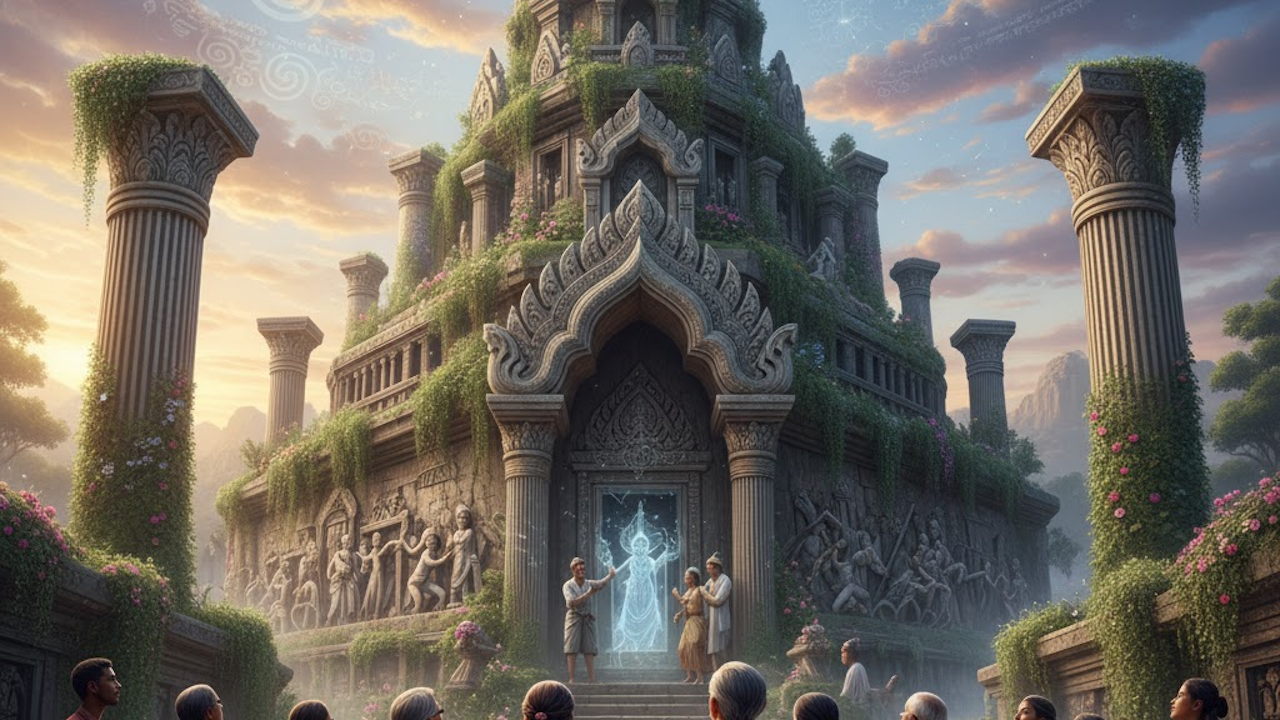
Architecture stands as one of the most enduring expressions of human civilization. Beyond providing shelter or facilitating daily functions, buildings and urban spaces serve as repositories of collective experience, values, and historical narratives. They embody cultural memory, the shared recollection of a society’s past that shapes its present identity and future aspirations. This concept draws from thinkers like Maurice Halbwachs, who emphasized that memory is inherently social and collective, and Pierre Nora, who introduced the idea of “places of memory” or lieux de memoire, sites where history and memory intersect to preserve a group’s heritage. In architecture, these places become tangible, physical anchors that transmit knowledge across generations without relying solely on written records or oral traditions.
Cultural memory differs from individual memory in its scope and persistence. While personal recollections fade with time, cultural memory is reinforced through communal practices, symbols, and environments. Architecture excels in this role because it is both durable and experiential. A structure does not merely stand; it is inhabited, navigated, and interpreted by people over centuries. Its materials weather, its forms adapt, and its meanings evolve, yet it retains traces of the intentions and contexts that birthed it. This makes architecture a living archive, one that records triumphs, traumas, rituals, and everyday life in ways that texts or artifacts alone cannot match.
Theoretical Foundations
The link between architecture and memory has deep roots. John Ruskin, the 19th-century critic, argued that historic buildings allow us to connect with past ways of life by representing them materially. Robert Hopkins builds on this, suggesting that certain structures symbolize an “ethnic domain,” the distinctive form of life of a culture, enabling collective remembrance. Memory here is not just mental but representational, using physical forms as vehicles for shared understanding.
Halbwachs viewed memory as framed by social groups and their spatial contexts. Groups remember through the spaces they occupy and modify. Nora extended this by highlighting how modern societies, facing rapid change, create deliberate sites of memory to combat forgetting. Monuments, historic districts, and public buildings become such sites, crystallizing events or identities that might otherwise dissolve. In architecture, this manifests in both intentional designs, like memorials, and unintentional accumulations, where layers of construction reflect successive eras.
Architecture thus temporalizes space. It locates individuals and communities in time as well as place, embedding history into the built environment. The materials themselves carry memory: stone from local quarries speaks of regional geology and labor; reused elements from older structures link eras; ruins evoke loss and resilience.
Monuments and Commemorative Spaces
Monuments provide some of the clearest examples of architecture as cultural memory. They are designed to honor events or figures, but their forms often reveal deeper collective priorities. Studies of commemorative projects show that designs vary based on whether memory emphasizes historical facts or human dimensions, such as suffering or heroism. For instance, abstract forms might evoke universal themes, while figurative ones anchor specific narratives.
Consider war memorials. The Vietnam Veterans Memorial in Washington, D.C., with its reflective black granite wall inscribed with names, invites personal interaction and reflection. Visitors touch the surface, leave offerings, and see their own images superimposed on the dead, merging individual and collective remembrance. This design transforms passive viewing into active memory work. Similarly, Holocaust memorials worldwide use voids, fragmented structures, or stark geometries to convey absence and irretrievable loss, ensuring that the horror remains inscribed in the landscape.
In post-conflict or post-colonial contexts, rebuilding becomes a powerful act of memory reconstruction. After destruction, societies often choose reconstruction strategies that either restore pre-existing forms or introduce new ones to signal renewal. This process can create a paradox of “ever-fresh heritage,” where rebuilt structures maintain cultural continuity while adapting to contemporary needs. Examples from various regions illustrate how such rebuilding reinforces identity amid change.
Historic Cities and Urban Fabric
Entire cities function as archives of cultural memory. Historic districts preserve layered histories through their street patterns, building typologies, and public spaces. Rome exemplifies this, with its palimpsest of ruins, medieval overlays, Renaissance palaces, and modern interventions. Walking its streets means traversing centuries of imperial power, religious devotion, artistic flourishing, and political shifts. The Colosseum, Pantheon, and Forum are not isolated monuments but parts of a larger mnemonic urban system.
In Asia and the Middle East, traditional architecture often integrates memory through ritual and adaptation. Stepwells like the Rani Ki Vav in India combine practical water management with intricate carvings that depict mythological and historical scenes, embedding cultural stories into functional infrastructure. In Europe, cathedrals such as the Sagrada Familia in Barcelona continue to evolve, their ongoing construction symbolizing persistent faith and communal aspiration.
Vernacular architecture, built by communities rather than elite architects, holds intimate cultural memories. Farmhouses, villages, and indigenous settlements reflect local climates, materials, and social structures. Their forms encode knowledge of sustainability, kinship patterns, and seasonal cycles. When these are lost to modernization, communities experience a rupture in cultural continuity, underscoring architecture’s role in identity preservation.
Architecture in Times of Conflict and Change
Destruction of architecture often targets cultural memory deliberately. Wars and regimes have razed heritage sites to erase identities, as seen in various historical campaigns. Conversely, preservation efforts become acts of resistance and reclamation. The reconstruction of war-damaged cities after World War II, for example, balanced restoration with modernization, shaping postwar European identities.
In rapidly urbanizing societies, the tension between development and memory intensifies. Gentrification, infrastructure projects, and climate-driven relocation can overwrite historic layers, leading to the erasure of working-class or minority narratives. Architects and planners increasingly advocate for designs that incorporate collective memory, such as adaptive reuse projects that retain old structures while introducing new functions. These approaches maintain physical links to the past, fostering social sustainability.
Contemporary Practices and Challenges
Today, architects consciously engage with cultural memory through various strategies. Some draw on local traditions to create contextual designs that resonate with inhabitants. Others use digital tools or innovative materials to reinterpret historical motifs. Museums and cultural centers, such as the Jingdezhen Imperial Kiln Museum in China, integrate ruins with new construction to bridge past craftsmanship and present innovation.
Memorial architecture continues to evolve. Designs for victims of political repression or natural disasters emphasize healing, education, and prevention. Interactive elements, landscapes, and community involvement ensure that memory remains dynamic rather than static.
Challenges persist. Globalization and homogenization risk diluting unique cultural expressions. Climate change threatens vulnerable heritage sites. Digital media offers new ways to document and experience architecture, but it cannot fully replace the embodied encounter with physical space. Virtual tours provide access but lack the sensory weight of stone, light, and scale that imprints memory.
Furthermore, whose memory is preserved? Architecture often reflects dominant narratives, marginalizing others. Inclusive design processes that consult diverse stakeholders help address this, creating spaces that honor multiple histories.
The Enduring Power of Built Memory
Architecture’s capacity to serve as cultural memory stems from its materiality, permanence, and social use. It outlasts individuals, providing continuity amid flux. By shaping how people move, gather, and reflect, buildings influence behavior and reinforce values. A public square designed for assembly carries democratic ideals; a sacred space oriented toward natural phenomena connects spirituality and environment.
In an age of accelerated change, architecture reminds us that the past is not distant but embedded in our surroundings. It invites us to read the built environment as a text, decoding stories of migration, innovation, conflict, and coexistence. Preserving and thoughtfully creating such architecture ensures that cultural memory remains vibrant, guiding societies toward thoughtful futures grounded in shared heritage.
Ultimately, architecture does more than shelter bodies; it houses the soul of a culture. Through its forms, we remember who we were, understand who we are, and imagine who we might become. This profound role underscores the responsibility of architects, policymakers, and citizens to treat the built environment with the reverence it deserves as a bridge across time.