

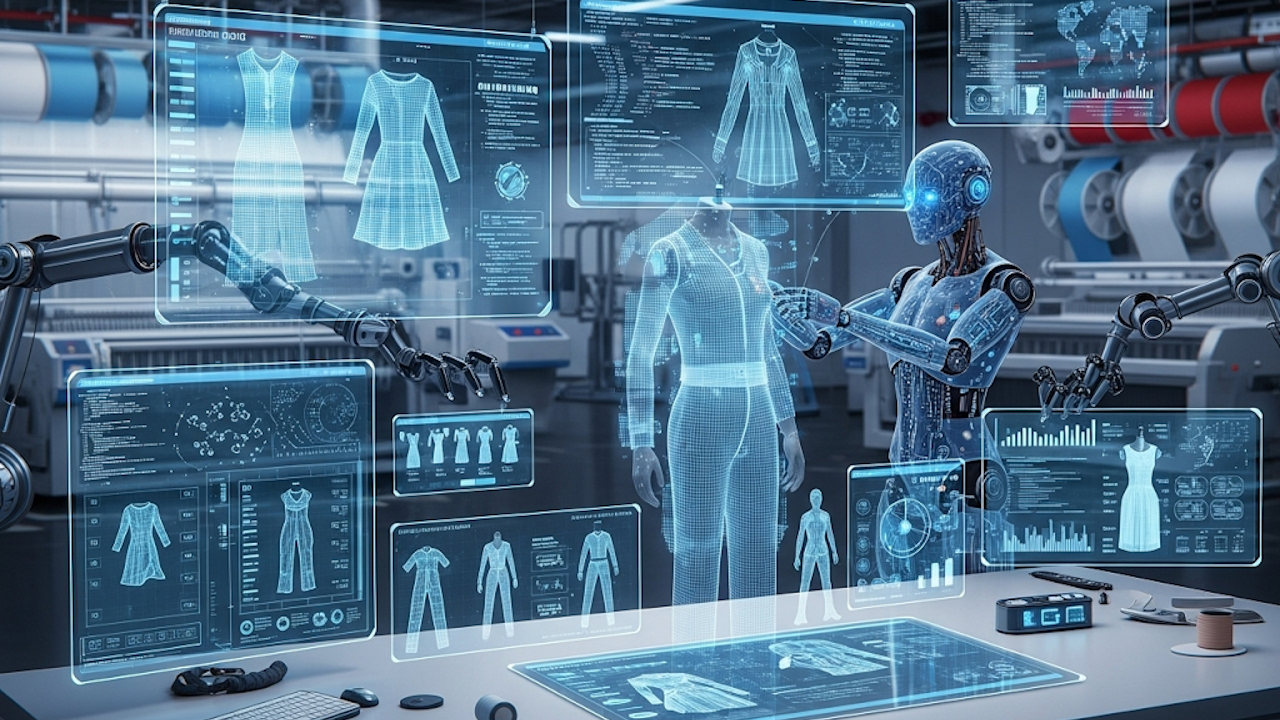
The fashion industry, long defined by human creativity, intuition, and cultural insight, stands at a transformative crossroads. Artificial intelligence now designs garments, curates wardrobes, and acts as a virtual stylist for millions. Algorithms analyze vast datasets of trends, body types, preferences, and behaviors to generate clothing concepts or recommend outfits with remarkable precision. This shift raises profound questions about creativity, personalization, sustainability, and the future role of human designers.
The Rise of AI in Fashion Design
Fashion has always embraced technology, from sewing machines to computer-aided design software. AI represents a more profound evolution. Early applications focused on recommendation systems and supply chain optimization. Today, generative AI tools create original designs from text prompts, images, or data inputs.
Designers and brands feed historical archives, trend data, and customer feedback into machine learning models. These systems, often based on generative adversarial networks or diffusion models, produce sketches, patterns, and photorealistic visuals. Human teams then refine these outputs for production.
Norma Kamali stands out as a pioneer. The veteran designer trained a custom AI model on 57 years of her archives in collaboration with Maison Meta. The system generates fresh sketches and garment concepts that reimagine her iconic styles while sparking new directions. Similarly, Collina Strada fed its design history into AI to create elements of its Spring 2024 collection. Moncler worked with the same studio to innovate quilted textures for extreme-weather gear.
Revolve took a different approach by hosting an AI Fashion Week where winners used tools like Midjourney and Stable Diffusion to design collections later manufactured and sold. These examples illustrate how AI accelerates ideation and lowers barriers for experimentation.
How Algorithms Function as Stylists
AI stylists go beyond design to personal recommendation and virtual try-on. Platforms like Alta allow users to upload photos of their existing wardrobe. The AI builds a digital closet, creates a virtual avatar, and suggests outfits based on weather, occasion, lifestyle, budget, and personal style history.
Stitch Fix combines AI with human stylists. Its algorithms process customer surveys, purchase history, and feedback to curate boxes of clothing. Machine learning models continuously refine predictions, improving keep rates and satisfaction. Other retailers such as ASOS employ visual search and virtual fitting rooms, while White Fox Boutique uses AI for personalized recommendations across international markets.
At the core of these systems lie several technologies. Machine learning models trained on fashion imagery recognize colors, silhouettes, textures, and proportions. Computer vision identifies garments in user photos. Natural language processing interprets feedback like “more casual” or “edgier.” Over time, the AI builds a profile that evolves with the user, learning subtle preferences that even close friends might miss.
Tools like The New Black offer comprehensive platforms for brands and independent designers. Users generate clothing designs, virtual models, try-ons, and even tech packs in one workspace. This integration speeds up the path from concept to market.
Benefits Transforming the Industry
AI brings multiple advantages. Personalization stands paramount. Traditional fashion operates on standardized sizes and trends. AI tailors suggestions to individual body shapes, skin tones, and lifestyles, potentially reducing returns that plague online retail.
Sustainability gains traction too. Better demand forecasting minimizes overproduction. Virtual try-ons and AI-generated samples cut waste from physical prototypes. Brands can simulate fabrics and fits digitally before committing resources.
Speed and accessibility improve dramatically. What once took weeks in a design studio now happens in hours. Emerging designers or small brands gain professional-grade tools without massive budgets. Consumers enjoy stylist-level advice at their fingertips, democratizing fashion advice previously available mainly to the wealthy.
AI also aids trend forecasting by analyzing social media, runway data, and sales patterns faster than human analysts. This helps brands stay relevant in a fast-changing market.
Challenges and Ethical Considerations
Despite the promise, significant hurdles remain. Intellectual property questions loom large. When AI trains on existing designs, who owns the output? Can a generated garment infringe on protected styles? Brands and courts continue to navigate these issues.
Bias presents another concern. AI models reflect the data they train on. If datasets underrepresent certain body types, ethnicities, or styles, recommendations may exclude or stereotype users. Fashion has long struggled with inclusivity. AI risks amplifying those problems unless developers prioritize diverse training data and oversight.
Job displacement worries many in the industry. Pattern makers, illustrators, and entry-level designers fear automation of routine tasks. Yet proponents argue AI handles drudgery, freeing humans for higher-level creativity, strategy, and storytelling. The reality likely involves hybrid roles requiring AI literacy alongside traditional skills.
Aesthetic homogenization is a subtler risk. Because many models train on similar popular datasets, outputs can converge toward safe, trending aesthetics rather than bold innovation. Critics worry fashion could lose its cultural edge and diversity of expression.
Privacy also matters. AI stylists collect detailed personal data: body measurements, style preferences, location, and schedule. Companies must handle this information responsibly with transparent consent and security.
Environmental costs of training large AI models add irony to sustainability claims, though efficiencies in production may offset some impacts over time.
The Human-AI Collaboration
Most experts view AI not as a replacement for human designers but as a powerful collaborator. Designers provide cultural context, emotional resonance, and brand narrative that algorithms struggle to replicate. AI excels at iteration, variation generation, and data-driven optimization.
Successful implementations maintain human oversight. Stylists review and tweak AI suggestions. Creative directors curate collections blending algorithmic concepts with artistic vision. This partnership leverages strengths of both: the tireless pattern recognition of machines and the intuitive spark of people.
Looking Ahead
The trajectory points toward deeper integration. Future AI systems may predict personal style evolution, suggest wardrobe updates for life changes, or even generate adaptive clothing that responds to environment or mood via smart fabrics.
Virtual worlds and the metaverse will expand opportunities for digital fashion. AI could create limitless collections for avatars while informing physical production.
Mass customization may become standard. Consumers could describe or sketch ideas, receive AI-refined designs, and order made-to-measure garments produced on demand.
Regulatory frameworks will likely emerge around transparency, bias mitigation, and IP. Brands that adopt ethical AI practices may gain consumer trust and competitive advantage.
Conclusion
AI-designed clothing and algorithmic stylists mark more than a technological upgrade. They represent a fundamental rethinking of how fashion is created, consumed, and experienced. Algorithms democratize style advice, accelerate innovation, and promote efficiency. Yet they also challenge traditional notions of creativity, authorship, and human connection to clothing.
The most promising path forward embraces augmentation rather than automation. When algorithms serve as stylists and co-designers, they amplify human potential instead of diminishing it. Fashion has always reflected society and technology. In the AI era, it will continue to do so, weaving code and couture into garments that tell new stories about who we are and how we wish to present ourselves to the world.
This evolution invites everyone, from industry veterans to everyday consumers, to engage thoughtfully. By addressing challenges proactively while harnessing opportunities, the fashion world can create a future that is more creative, inclusive, and sustainable than ever before. The algorithms are ready. The question is how humans will guide them.